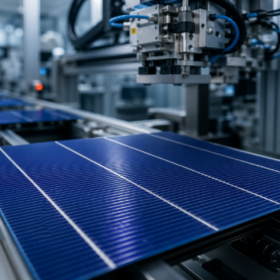
Solar Manufacturing USA 2026: Production and technology at the heart of U.S. solar
The upcoming Solar Manufacturing USA 2026 conference in Austin will focus on real U.S. solar manufacturing progress, shifting attention from capacity announcements to actual production, costs, yields, and technology choices across the full value chain. It will also examine how policy changes and tariffs are driving domestic expansion in ingots, wafers, cells, and modules, while highlighting competing technologies like back contact, heterojunction and TOPCon.
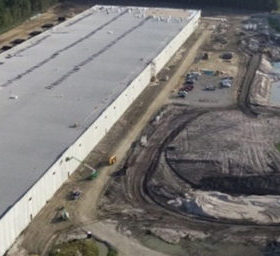
Boviet Solar sells U.S. PV module factory to Indian manufacturer Inox Solar
The divestment, already partially secured via escrow, reflects regulatory pressure from U.S. FEOC policy changes. Boviet Solar also continues negotiations to sell a separate U.S. cell project.
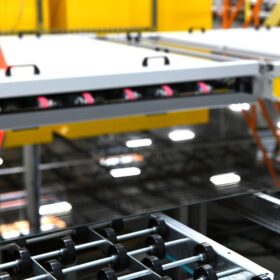
Manufacturing partnership brings new PV technology to U.S.-sourced solar
Solx’s Aurora hybrid module with Caelux’s perovskite glass aims to compete on performance beyond federal tax sunsets.
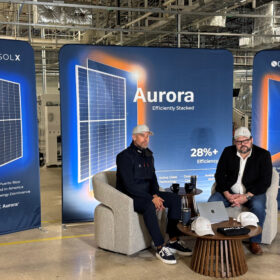
Solx and Caelux announce partnership to offer domestic perovskite-silicon tandem solar modules
The companies say they will supply 3 GW of Solx Aurora modules — which combine domestic silicon cells from Suniva and a top layer of Caelux “Active Glass” to reach 28% efficiency — with commercial volumes available in the U.S. market by 2027.
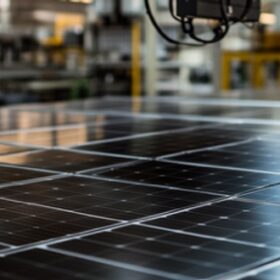
Tandem PV launches commercial perovskite-silicon manufacturing in California
Tandem PV has opened a 40 MW commercial demonstration factory in Fremont, California, marking a significant transition for perovskite-silicon technology from laboratory development to repeatable manufacturing at scale.
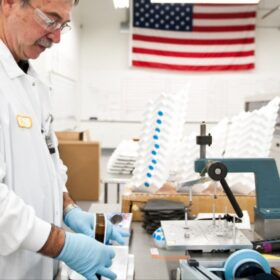
Suniva to build 4.5 GW solar cell factory in South Carolina
The expansion will bring the company’s total domestic cell capacity to 5.5 GW, cementing its position as the largest merchant solar cell manufacturer in the United States.

Maxeon filing reveals the company has applied for restructuring in Singapore court
Company statements in the filing indicate it will seek an arrangement between itself and creditors that may allow it to survive “as a going concern.”
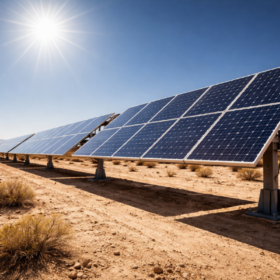
Researchers find higher UV degradation in tracker-based PV systems
New research from the University of New South Wales shows that PV module degradation varies widely with system design and location, driven by UV exposure, temperature, humidity, and atmospheric conditions. Tropical and desert regions face the highest stress, highlighting the need for climate-specific testing and system design.
U.S. solar module prices face upward pressure as trade risks and FEOC rules dominate Q1 2026
Median solar module pricing in the United States reached $0.28 per watt as the market adjusted to intensified trade enforcement and new Foreign Entity of Concern compliance requirements, according to the Q1 2026 Quarterly Pricing & Domestic Content Report from Anza.

Why domestic solar manufacturing matters now more than ever
The United States is at a critical inflection point where speed to deployment of energy technologies contributes to economic strength and energy security, but policy certainty is paramount, according to a panel of three solar manufacturing experts.