
Batteries: The game has changed – and it’s not what you think
A single benchmark no longer exists. In some cases, charging speed is what matters; in others, it is energy density, and in still others, cost and scalability. In other words, the battery is ceasing to be a simple component. It is becoming the transversal energy infrastructure of the next industrial cycle. And those who can control not only the technology but also production, integration, and the grid will have an advantage that will be difficult to recover.

Solar Manufacturing USA 2026: Production and technology at the heart of U.S. solar
The upcoming Solar Manufacturing USA 2026 conference in Austin will focus on real U.S. solar manufacturing progress, shifting attention from capacity announcements to actual production, costs, yields, and technology choices across the full value chain. It will also examine how policy changes and tariffs are driving domestic expansion in ingots, wafers, cells, and modules, while highlighting competing technologies like back contact, heterojunction and TOPCon.
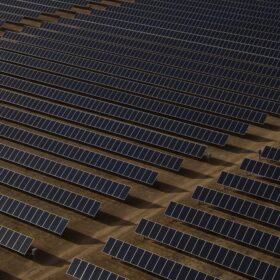
Electrical contractors step into a bigger role as solar and storage scale up
The U.S. solar market is shifting toward larger projects, and that is changing the kind of electrical work those jobs require.

Supply chain constraints, not demand, will define the solar decade
As global solar installations approach 600 GW, the industry is shifting from a technology-driven market to one defined by the industrial capacity and supply chain resilience required to meet record demand.
The battery cost disconnect
For years, the battery energy storage (BESS) story has followed a familiar script: costs fall, deployment accelerates, economics improve. Even when cell costs rose and system prices briefly flattened during the 2021-22 lithium price spike, the narrative largely held. Paola Perez Peña, senior principal analyst at S&P Global Energy, examines why the latest jump in lithium prices has only had limited impacts on overall BESS costs so far.

Resisting rust in solar
Over a 30-year asset life, corrosion can evolve into a structural, electrical, and fire safety issue. Corrosion drives up operations and maintenance (O&M) costs, reduces resilience to extreme events, and in some cases, can force premature decommissioning or complete structural replacement Intertek CEA’s Nicholas Hudson and Ankil Sanghvi advise on best practices.
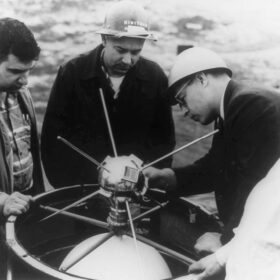
Prepare for launch: Solar powers the $600 billion space industry
Human activities in space have been solar powered for more than 70 years. Now, as the space industry accelerates, new opportunities are emerging for specialized solar manufacturers, writes Jake Veloza of Eternal Sun Wavelabs. The extreme and unforgiving conditions of space demand a high level of performance and durability, and accurate testing methods will be needed to get these new solutions off the ground.
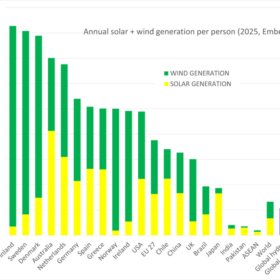
Solar and wind take over global power growth in 2025
In 2025, solar and wind dominated global energy growth, delivering around six times more new capacity than all other power sources combined and supplying nearly all new electricity demand. With rapid expansion led by countries like Australia and several European nations, solar and wind are now the fastest-growing and central drivers of the global energy transition.
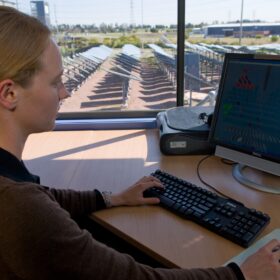
Navigating the new NERC requirements for vendor remote access
As of April 1, 2026, the enforcement of NERC Reliability Standard CIP-003-9 mandates that renewable energy operators transition from informal vendor management to a rigorous, evidence-based cybersecurity framework for all low-impact assets.

De-risking distributed solar: Foundations are a critical bottleneck
As solar deployment accelerates across the United States, engineering, procurement, and construction (EPC) firms are facing a persistent challenge: early-stage construction risks, particularly in foundations, continue to disrupt project timelines.