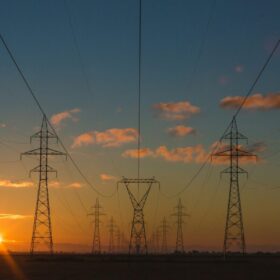
IRENA proposes global electrification target of 35% by 2035
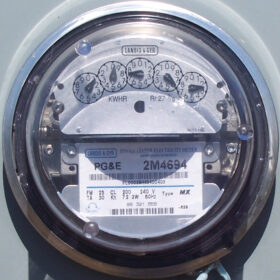
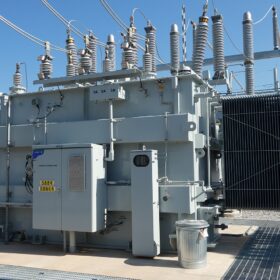
New report from the International Renewable Energy Agency (IRENA) says renewables will be key to meeting rising global demand for electricity but with up to 2.5 TW of solar, storage and wind projects already in connection queues worldwide, increased investment in grid infrastructure will be pivotal.
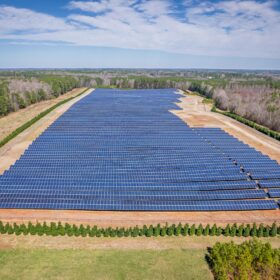
Data shows solar development on farmland avoids driving up food prices
A county-level agricultural economic model demonstrates that utility-scale solar expansion has a negligible impact on national commodity markets.
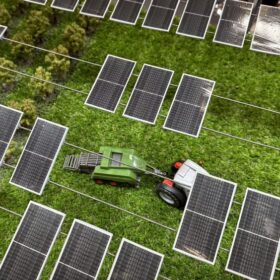
Plug-and-play control framework for adjusting panel tilt in agrivoltaics
A Cornell University research team developed a control framework that simultaneously considers past and future conditions when determining solar panel tilt angle. The researchers told pv magazine it is designed to be plug-and-play, allowing for software developers and solar operators to incorporate their optimization algorithms directly into the framework.
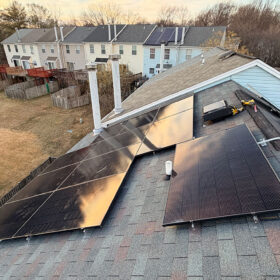
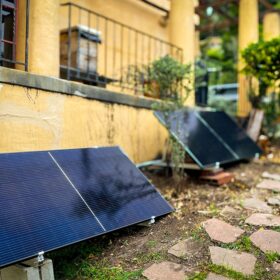
Maryland nonprofit Housing Unlimited leads initiative to install more than 270 kW of solar on 40+ Maryland homes
The installations will deliver an estimated $500,000 in savings over 25 years, allowing Housing Unlimited to reinvest the funds toward its core mission of serving adults in mental health recovery.
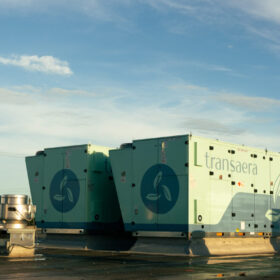
Rooftop heat pump tech with metal-organic framework dehumidification tested by Amazon
Amazon has conducted a six-month field trial of a rooftop heat pump system developed by U.S. startup Transaera at one of its logistics facilities. The system uses metal–organic framework (MOF)–based dehumidification to remove moisture from outdoor air before cooling.
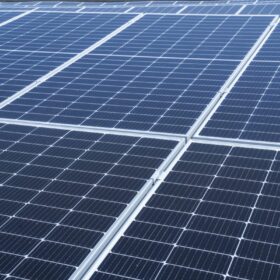
PV module recycling technologies ‘progressing’, says IEA-PVPS
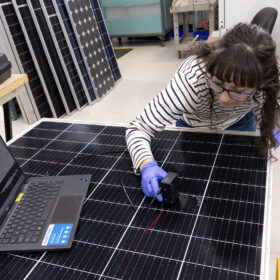
Latest report from the International Energy Agency’s (IEA) Photovoltaic Power Systems Programme (PVPS) finds measurable advancements in PV module recycling performance compared to its prior studies, including higher material recovery rates, improved process yields and higher output purity.

Clean energy will help power FIFA World Cup this summer
Gillette Stadium in Foxboro, Massachusetts sports a 2 MW fuel cell energy server, a 1 MW solar array and the owners purchase renewable energy certificates, with a goal of reducing the environmental impact of the stadium complex.
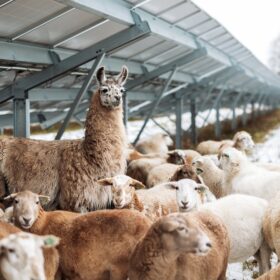
SEIA: Local solar bans threaten the economic survival of family farms
Solar development occupies a tiny fraction of U.S. farmland. Farmers shouldn’t be blocked by restrictive local zoning boards to install onsite solar, said the Solar Energy Industries Association.
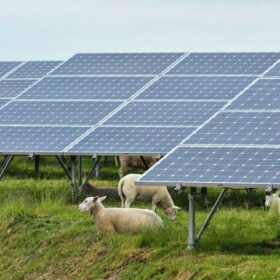
Agrivoltaics maintain or enhance forage quality, study finds
Researchers have analyzed the biomass and nutritional value of grasses and legumes for grazing dairy cattle, growing in agrivoltaics fields. The results showed that forage quality may be maintained or even enhanced in agrivoltaic environments.
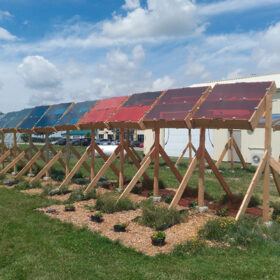
Agrivoltaics for turnips
Researchers in Canada found that semi-transparent cadmium telluride and low-transparency crystalline silicon solar panels can boost turnip root and leaf yields in agrivoltaic systems by optimizing light quality, distribution, and heat stress. Their study highlights that PV module type, transparency, and spectral transmission must be carefully matched to plant physiology to maximize both crop productivity and renewable energy generation.