Ryan Kennedy


Western grid enters new era as CAISO launches Extended Day-Ahead Market
The May 1 go-live of the Extended Day-Ahead Market (EDAM) marks the first time Western utilities can coordinate large-scale solar and storage resources 24 hours in advance, a move projected to significantly slash curtailment and boost regional reliability.

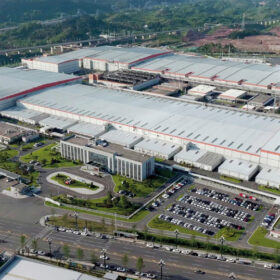
Batteries: The game has changed – and it’s not what you think
A single benchmark no longer exists. In some cases, charging speed is what matters; in others, it is energy density, and in still others, cost and scalability. In other words, the battery is ceasing to be a simple component. It is becoming the transversal energy infrastructure of the next industrial cycle. And those who can control not only the technology but also production, integration, and the grid will have an advantage that will be difficult to recover.
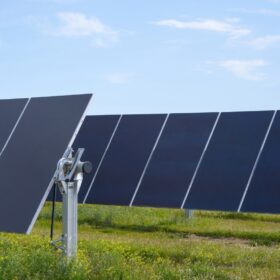
First Solar reaffirms 2026 guidance as CuRe launch and record India sales drive Q1 margin expansion
Thin-film manufacturer First Solar delivered a robust start to 2026, posting record first-quarter revenue of $1.04 billion and maintaining its full-year outlook despite signaling a seasonal dip in second-quarter profitability.
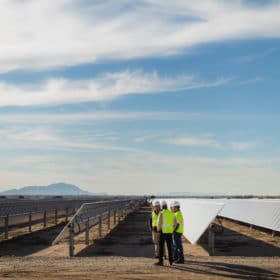
SRP and NextEra Energy Resources partner on massive solar and storage expansion
Salt River Project and NextEra Energy Resources have signed a power purchase agreement for 3,000 MW of solar and 1,000 MW of battery storage to be built in Arizona through 2027.
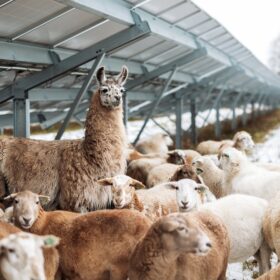
SEIA: Local solar bans threaten the economic survival of family farms
Solar development occupies a tiny fraction of U.S. farmland. Farmers shouldn’t be blocked by restrictive local zoning boards to install onsite solar, said the Solar Energy Industries Association.

Ann Arbor launches first-of-its-kind city direct purchase of residential solar and storage
The Michigan city’s new Sustainable Energy Utility has begun installing FranklinWH systems in the Bryant neighborhood, testing a municipal model for grid resilience and energy equity.

Solar Manufacturing USA 2026: Production and technology at the heart of U.S. solar
The upcoming Solar Manufacturing USA 2026 conference in Austin will focus on real U.S. solar manufacturing progress, shifting attention from capacity announcements to actual production, costs, yields, and technology choices across the full value chain. It will also examine how policy changes and tariffs are driving domestic expansion in ingots, wafers, cells, and modules, while highlighting competing technologies like back contact, heterojunction and TOPCon.

California sets precedent by overriding local blockade for Soda Mountain
California is asserting state authority to revive the $700 million Soda Mountain project, marking a new era where Sacramento can reclaim authority from local counties to force stalled utility-scale solar and storage across the finish line.

Clean power captures 91% of new U.S. grid capacity as 2025 installations hit 50 GW
The U.S. clean energy sector set a blistering pace in 2025, with utility-scale solar, wind, and energy storage accounting for 91% of all new power capacity added to the domestic grid.
Electrical contractors step into a bigger role as solar and storage scale up
The U.S. solar market is shifting toward larger projects, and that is changing the kind of electrical work those jobs require.