‘Buy the dip’ on T1 Energy’s Fuzzy Panda domestic doubt, Roth says
A short-seller report suggesting T1 Energy is not compliant with FEOC restrictions from claiming US clean energy tax credits sent the stock down 13%, before heavy market activity drove the price back toward 52-week highs the next day.

U.S. PV manufacturing capex could reach $7 billion in 2027 in breakout year for domestic supply-chain
Driven by multi-billion-dollar investments from the likes of Tesla and Corning, U.S. solar manufacturing capital expenditure is forecast to skyrocket 150% year-on-year to $7 billion in 2027, marking a massive breakout year as silicon-based technology eclipses thin-film spending and cements a domestic supply chain.

U.S. solar faces massive gap between stated capacity and real factory output
The U.S. solar industry tracks billions in new factory investments, but upstream bottlenecks and strict trade enforcement mean active factory production continues to trail behind headline numbers. Solar Energy Industries Association organized the American Solar and Storage Manufacturing Expo on Capitol Hill, which brought manufacturers together to highlight $43.1 billion in announced domestic manufacturing investments since 2022.
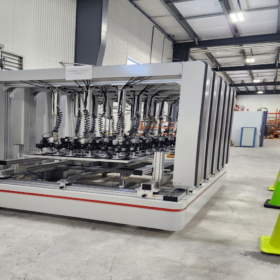
Cost-effective hail resistance comes from R&D and insurance feedback
Heliene CEO Martin Pochtaruk says research is the best way to achieve bankable and survivable modules.
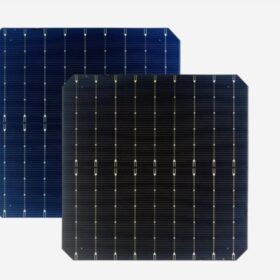
Toyo denies Ethiopia duty evasion, confirms 4 GW ramp and U.S. cell plant
Toyo Co. says a new anti-circumvention petition targeting its Ethiopian solar cell facility is “riddled with misinformation.” The Japanese manufacturer tells pv magazine that the site reached 4 GW of capacity last year and that it is planning a U.S. onshore cell plant.
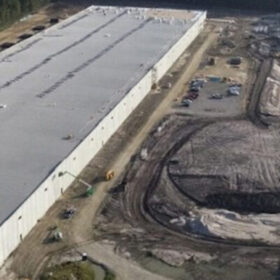
Inox Clean buys U.S. PV manufacturing assets of Boviet Solar for $750 million
Through this million asset purchase, Inox Clean acquires 3 GW of operational TOPCon solar module manufacturing capacity in the United States, aligning with the “Make in America, For America” initiative.

How T1 Energy is ramping up multi gigawatt U.S. solar manufacturing
Ahead of Solar Manufacturing USA 2026, Conference Chair Finlay Colville sits down with T1 Energy CEO Daniel Barcelo to discuss the company’s rapid multi-gigawatt module ramp-up and its strategic push to onshore the U.S. solar cell supply chain.
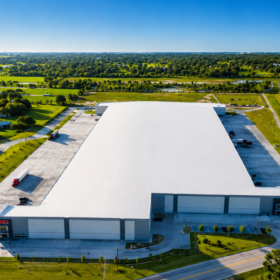
SEG Solar to expand U.S. manufacturing with 4 GW Houston module plant
The $200 million investment will bring the company’s total domestic production capacity to 6 GW by late 2026.
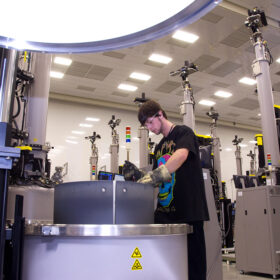
U.S. solar panel manufacturers need to learn to solder
CEA’s 2026 manufacturing quality report finds that yield rates vary widely based on the age of solar module assembly facilities, with mature Chinese firms nearing 100% and U.S. outlier facilities ranging all the way down to 30%.
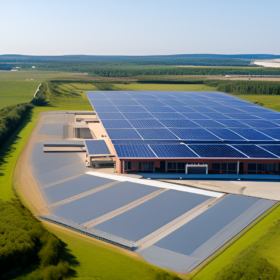
Texas PV module production to exceed 15 GW in 2026
Propelled by a select group of high-capacity manufacturers including T1 Energy and Canadian Solar, Texas is set to exceed 15 GW of solar PV module production in 2026, accounting for nearly half of all U.S. silicon-based manufacturing and serving as the primary hub for the inaugural Solar Manufacturing USA conference in Austin this September.