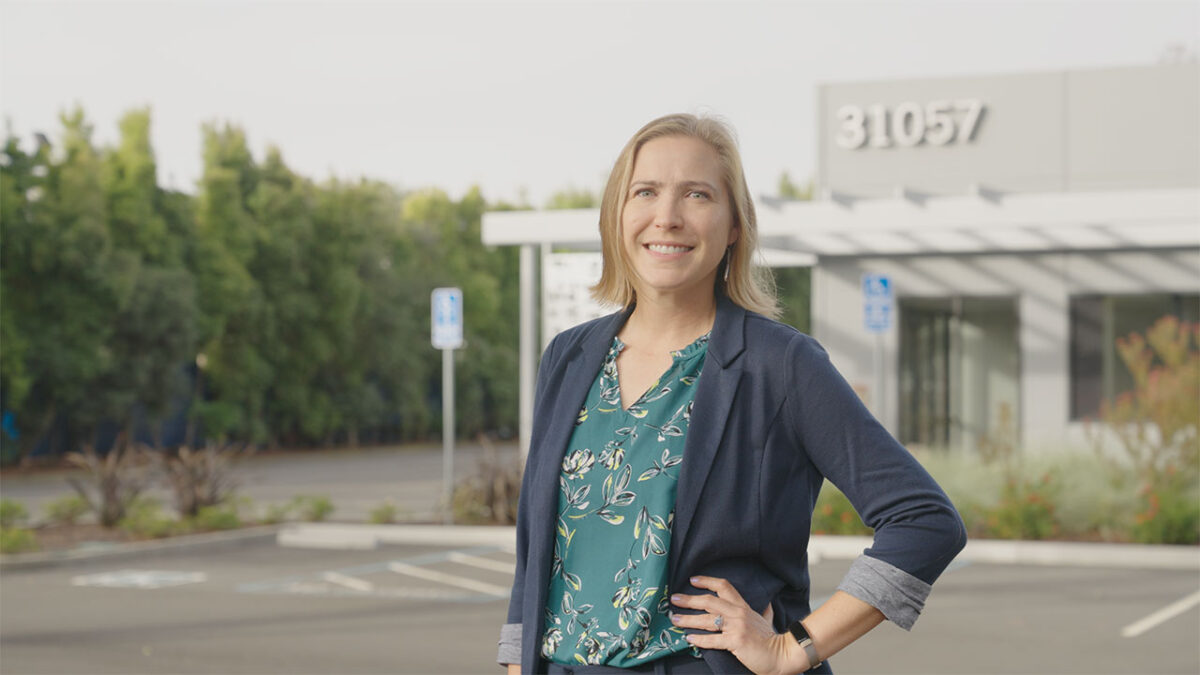





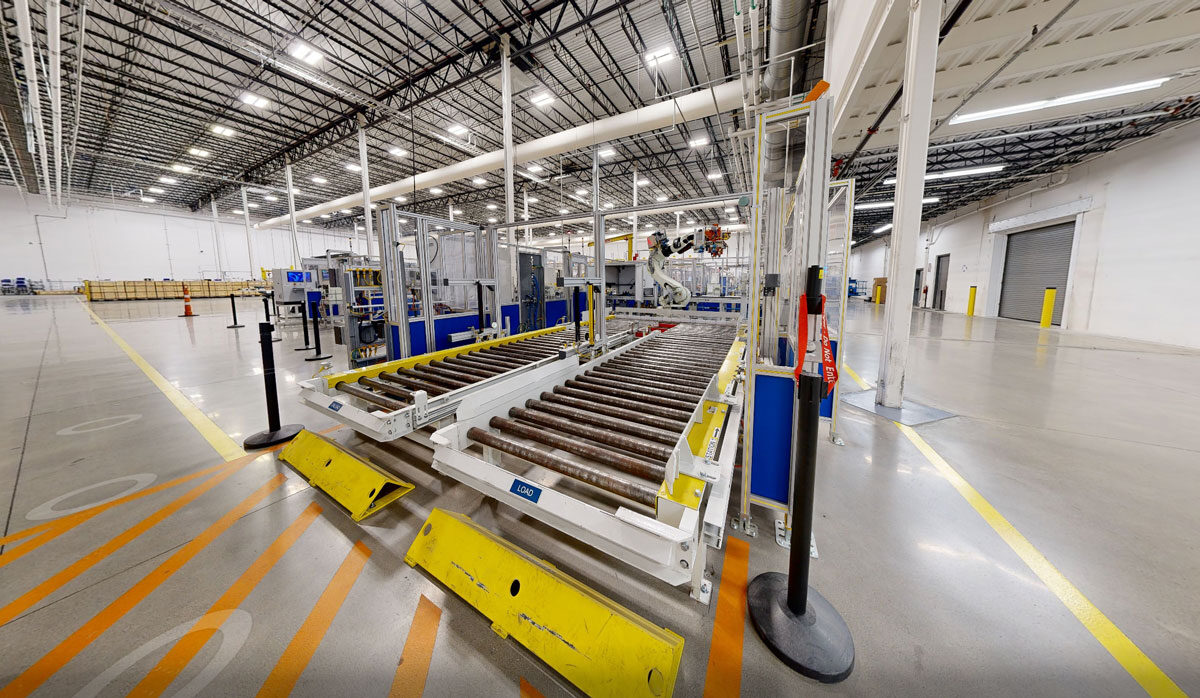
Electrochemistry Foundry (ECF) co-founder and CEO Dr. Brenna Teigler wants the battery cells of the future to come from the United States. To that end, the newly-launched nonprofit plans to open a 20,000-square-foot open-access, shared-use pilot manufacturing facility for battery and electrochemical technologies in Hayward, California before the end of 2026.
The organization aims to give early- and mid-stage battery technology startups a way to prove the commercial viability of their nascent technologies without building a $10 million facility of their own.
The core mission of ECF is to support hardware developers through the costly transition between lab research and industrial-scale production — the so-called “pilot-scale gap.” The organization says the facility will have the capacity to produce at least 10,000 cells per year, supporting both pouch and cylindrical formats.
Because ECF operates as a nonprofit, it will serve as an IP-neutral innovation hub, meaning researchers can refine cell assembly and process scale-up without giving up a commercial stake in their technologies.
In an interview with pv magazine USA, Teigler explained the incubator’s role in the manufacturing ecosystem.
“We are proving that you can have shared infrastructure and shared expertise along with full service entrepreneurial support so that people can scale their technology and their workforce,” Teigler said. “Once you have that better technology, that’s when you can go get the private capital or get acquired. We’re trying to make it cheaper to do that full transition from the lab to pilot-scale.”
State funding and early partners
Backed by a $28 million award from the California Energy Commission (CEC), the manufacturing facility is expected to host its first users in the first quarter of 2027.
Teigler said the CEC award will act as a catalyst not just for the facility’s construction, but also for its future pipeline of users. Because ECF is state-funded, there is a strong incentive for startups receiving California state grants to utilize the facility, as state funding often requires capital to be spent within California.
ECF already has five initial customers lined up for when the facility opens. These include startups such as Sepion Technologies, Anthro Energy, Sylvatex, and Southern California-based Project K. The final partner is Arkema, a larger OEM engaging with the battery innovation ecosystem.
To ensure the pilot line yields industry-grade products from the start, ECF says it is partnering with South Korean battery manufacturer Top Material, which will operate the pilot line for its first two years.
Additional collaborating partnerships with Catalyst Innovation Group, the Volta Foundation and a number of California colleges and Universities will help bring ECF’s vision to fruition.
Roots in the Activate community
The founding team of ECF brings deep experience from Activate, a deep-tech incubator community. Teigler and ECF board member Matt Price were among Activate’s co-founders. ECF co-founder Richard Wang was an Activate fellow in the 2016 cohort, where he took his battery technology from the lab to acquisition as the founder of Cuberg, which was later acquired by Northvolt.
In comments to Activate following the ECF launch, Wang noted that the Activate community exposed the gaps in the U.S. ecosystem regarding pilot manufacturing for electrochemical technologies, directly inspiring the vision for ECF.
Building on that foundation, ECF says it plans to continue working closely with the Activate community and has formed early partnerships with companies founded by other Activate fellows, such as Liminal Insights and SirenOpt, to share equipment.
Supply chain resilience
In Teigler’s view, the overarching goal of ECF is to keep the United States competitive in the global energy storage sector by securing a robust domestic supply chain, described the nonprofit as taking part in a “stacking support system” for domestic battery manufacturing.
“I truly believe that batteries are fundamental for our economy,” Teigler said, adding that relying on foreign suppliers for these critical devices is not a wise long-term strategy. “In this world where we have more challenges getting battery components, let alone the full battery cells, from foreign entities of concern, that’s just not guaranteed anymore.”
“I see ECF as building up that chain to have a domestic, resilient battery industry. We can enable improvement in lithium batteries,” she affirmed, but added that more work will be necessary to develop the small and medium-scale facilities in the U.S. that are the next step after ECF.
“We should be able to make and produce our own batteries here. The next step, once people prove out their technology, is they can go and do contract manufacturing at full scale in this country, and that doesn’t really exist yet.”
While that may be true now, there are some hopeful signs for the future, in the form of billions of dollars in funding opportunities, which have recently been announced from the Department of Energy’s Office of Manufacturing and Energy Supply Chains (MESC).
This content is protected by copyright and may not be reused. If you want to cooperate with us and would like to reuse some of our content, please contact: editors@pv-magazine.com.



By submitting this form you agree to pv magazine using your data for the purposes of publishing your comment.
Your personal data will only be disclosed or otherwise transmitted to third parties for the purposes of spam filtering or if this is necessary for technical maintenance of the website. Any other transfer to third parties will not take place unless this is justified on the basis of applicable data protection regulations or if pv magazine is legally obliged to do so.
You may revoke this consent at any time with effect for the future, in which case your personal data will be deleted immediately. Otherwise, your data will be deleted if pv magazine has processed your request or the purpose of data storage is fulfilled.
Further information on data privacy can be found in our Data Protection Policy.