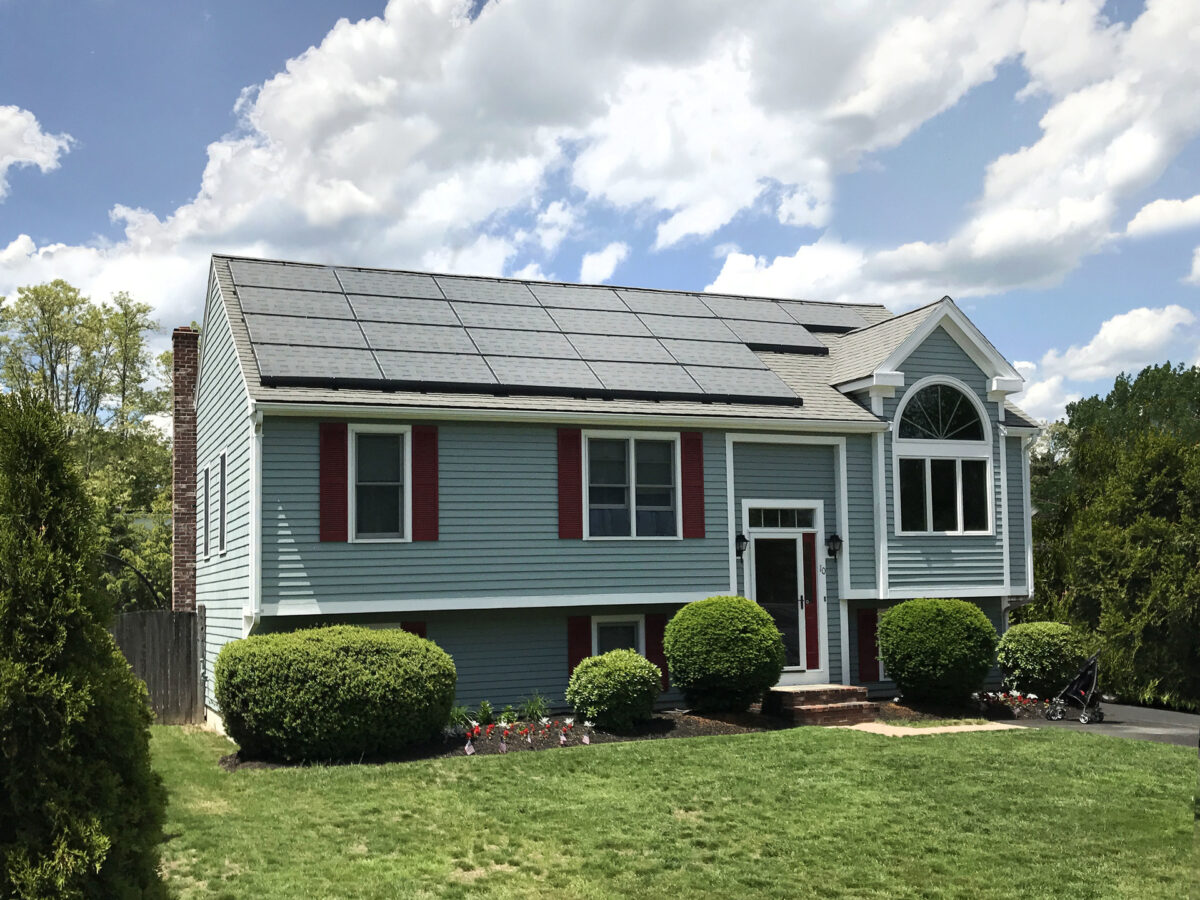





As the Massachusetts pursues net zero emissions by 2050, the electrification of building and transportation sectors is projected to double peak electricity demand to 24 GW. Behind the meter (BTM) resources, specifically rooftop and canopy solar paired with energy storage, offer a massive underutilized opportunity to meet this rising demand without new fossil fuel investments. Pairing this solar buildout with storage at a 0.4 ratio would create 40 GW of storage capacity. This combined capacity represents 165% of the state total 2050 peak demand forecast.
This potential is explored in a report from the Applied Economics Clinic titled Electrification with Equity, Part 1: The Opportunity for Behind-the-Meter Solar and Storage in Massachusetts.
Despite this vast potential, current deployment remains minimal with only 157 MW of BTM storage capacity currently installed. The report suggests the chief barrier is not technology but program design.
Interconnection remains a critical technical hurdle for developers, as stakeholders report that while hundreds of systems enter the queue annually, very few receive timely authorization to connect. The traditional cost causation model, which requires project owners to fund all grid upgrades, continues to act as a deterrent for many BTM projects. While the Department of Public Utilities has introduced a provisional system to share these costs through Capital Investment Projects, the default remains an expensive barrier for projects that do not meet specific utility criteria.
Cost and equity
High upfront costs remain out of reach for many, as existing incentives like the Solar Massachusetts Renewable Target (SMART) and ConnectedSolutions provide performance based payments but do not cover initial installation. For example, a 5 kW solar installation averages $15,510, while a 13 kWh storage system averages $21,970.
Equity gaps are particularly stark, finds the report, with very low participation rates among low income and environmental justice communities. Although the state has committed to ensuring all residents can participate in the low carbon transition, current programs lack the necessary equity provisions. Low-income households often cannot utilize tax credits if they have zero tax liability, and recent revisions to the SMART program actually removed storage adders for small residential systems under 25 kW. Furthermore, residents in environmental justice neighborhoods often face additional hurdles such as older building stock requiring expensive electrical upgrades.
To bridge the gap between technical potential and actual deployment, the report issues 23 policy recommendations. Recommendations include establishing a 50% participation target for environmental justice neighborhoods in statewide programs and providing upfront financial incentives for low income households.
Other proposals include restoring the storage adder for small systems and increasing the cap on the residential energy tax credit for low-income participants. The authors also call for better coordination between programs so that customers can enroll in efficiency, solar, and storage incentives simultaneously.
Expanding distributed resources would provide localized benefits beyond carbon reduction, said the report. Solar and storage systems provide backup power for essential services like grocery stores and hospitals during grid outages. By displacing peaker plants that disproportionately pollute minority and low income areas, these resources also offer significant public health advantages. Ultimately, the shift toward thousands of small scale community investments can foster energy autonomy while securing an affordable and reliable grid.
The economic benefits of such a transition are substantial for all residents. Widespread BTM deployment reduces the need for costly transmission and distribution upgrades that would otherwise be funded through rate increases. Additionally, localized storage can discharge during peak hours to lower wholesale energy prices across the entire ISO New England market. These systemic savings, combined with the personal resilience of onsite generation, position distributed energy as a central pillar of the Massachusetts energy strategy.
This content is protected by copyright and may not be reused. If you want to cooperate with us and would like to reuse some of our content, please contact: editors@pv-magazine.com.



By submitting this form you agree to pv magazine using your data for the purposes of publishing your comment.
Your personal data will only be disclosed or otherwise transmitted to third parties for the purposes of spam filtering or if this is necessary for technical maintenance of the website. Any other transfer to third parties will not take place unless this is justified on the basis of applicable data protection regulations or if pv magazine is legally obliged to do so.
You may revoke this consent at any time with effect for the future, in which case your personal data will be deleted immediately. Otherwise, your data will be deleted if pv magazine has processed your request or the purpose of data storage is fulfilled.
Further information on data privacy can be found in our Data Protection Policy.