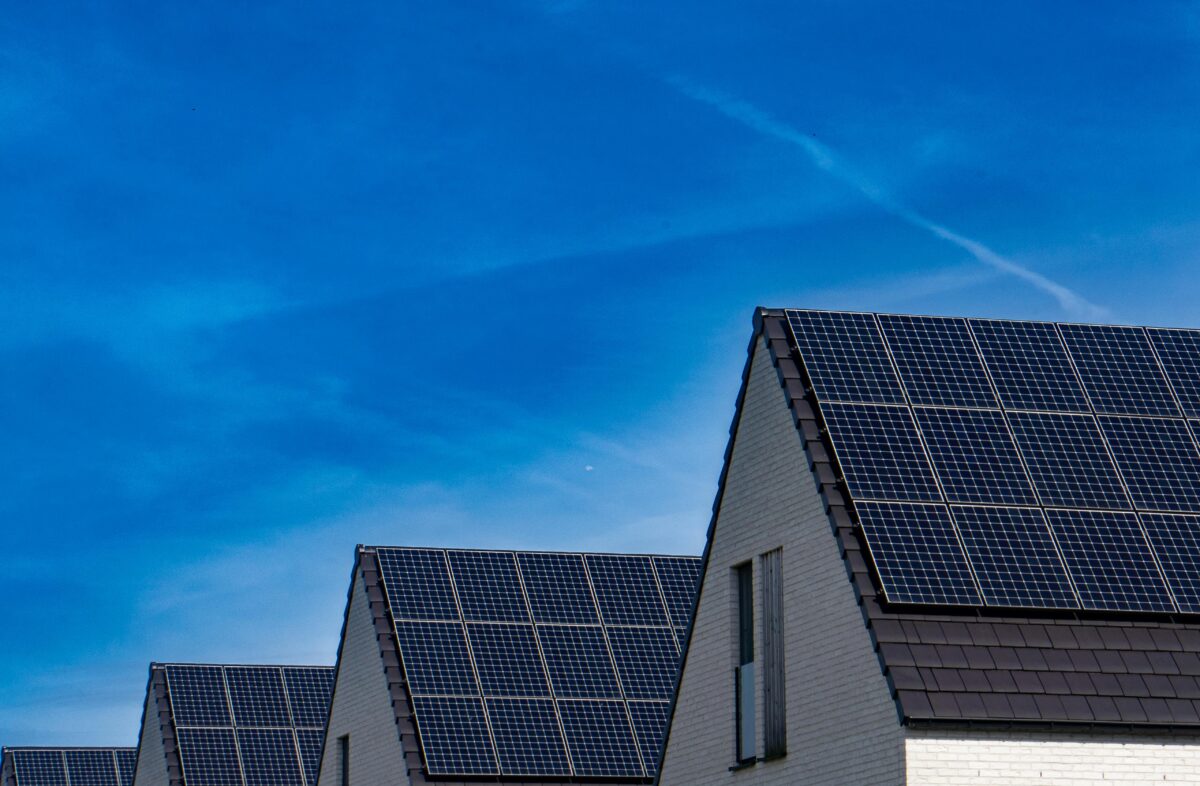





The U.S. residential solar market is undergoing a significant shift, driven both by policy changes and homeowners wanting more control over their energy usage. Rising electricity prices, economic uncertainty, and increasing grid instability are converging, causing a growing desire for energy independence and pushing consumers to view these systems not as optional upgrades, but as essential infrastructure. This shift is reshaping the value proposition of solar and storage, and changing how systems are designed, financed, and deployed.
Motivations evolve as incentives fade
For years, residential solar adoption was largely incentive driven, with the federal 30% ITC playing a central role in improving project economics. For many homeowners, solar was a financial optimization decision. But with the expiration of 25D, that dynamic is changing.
The market is now transitioning from incentive-driven to necessity-driven demand. Homeowners are increasingly evaluating solar and storage as core infrastructure—similar to roofing or HVAC—rather than a discretionary purchase.
Rising utility rates are a primary driver, pushing homeowners to seek more predictable, long-term energy costs. At the same time, reliability concerns are becoming more prominent. More frequent outages and noticeable grid strains are leading customers to prioritize resilience, with batteries now considered as essential for backup power.
Electrification is further reinforcing this trend. As households adopt EVs, heat pumps, and electric appliances, their electricity consumption rises—making on-site generation and storage even more compelling.
The broader shift is that the conversation has moved from “Should I install solar?” to “How do I make solar and storage work?” This change indicates a maturing market, where customers are more informed, intentional, and less dependent on incentives.
Expansion follows grid pressure, not just price
Residential solar demand has traditionally been concentrated in high-cost electricity markets like California, Hawaii, and the Northeast. While those regions remain strong solar markets, demand is expanding into new geographies.
Markets such as Texas, Arizona, and parts of the Southeast are seeing increased interest in solar-plus-storage systems, driven by reliability concerns, extreme weather, and rising costs. In many cases, grid strain—not just high prices—is driving adoption.
There is also an emerging connection between solar demand and areas experiencing significant load growth from data centers and AI infrastructure. As these pressures build, homeowners are increasingly feeling the downstream effects through higher costs or reliability concerns.
The high-level trend is that solar demand is becoming less niche and more tied to underlying grid conditions. It’s no longer just about where incentives are the strongest, it’s increasingly about where the grid is under the most pressure and where homeowners feel that impact directly.
This shift is also broadening the customer base. While higher-income households remain active, there is growing interest from more practical adopters focused on cost control, electrification, and resilience.
Financing dynamics reshape adoption
Even as long-term demand strengthens, near-term economics have become more complex. Rising electricity rates are improving the lifetime value of solar and storage, but higher interest rates and the absence of 25D have made upfront costs more challenging. This is particularly true for price-sensitive homeowners. The result is a more segmented market. Customers who are focusing on long-term savings, reliability, or energy independence are continuing to adopt, while others are pausing or reevaluating.
This shift is also changing how projects are structured. With cost efficiencies becoming more critical, homeowners and installers are focusing on reducing system costs, simplifying installations, or phasing projects over time. In this environment, rising electricity rates may be creating demand, but execution, including system design and financing, determines whether that demand converts into installations.
A more engaged energy consumer
A deeper transformation is also underway in how homeowners interact with their energy usage. Historically, consumption was passive. Today, as storage adoption grows and rate structures become more complex, homeowners are becoming more aware of when they use electricity, not just how much.
Load shifting is increasingly part of the equation, whether through behavior or automation. Smart systems now manage when to store, use, or export energy, lowering the barrier to participation in complex rate structures.
It’s not just that homeowners are moving from being passive consumers, they are becoming active participants—even if the technology is doing most of the work. They may not think in terms of “load curves,” but they are increasingly making decisions based on cost, reliability, and timing. As this trend extends into broader home energy management, it points to a more informed and engaged customer base than ever before.
 Deep Patel is the founder and CEO of Gigawatt Inc., the parent company of Unbound Solar and Real Goods. Unbound Solar has provided DIY solar kits and expert support for over 19 years, serving homeowners, contractors, and professionals. Real Goods, established in 1978, is a legacy brand in the solar industry known for reliable solar and energy storage products. Through these brands, Deep is focused on expanding access to clean energy by combining education, high-quality components, and a customer-first approach.
The views and opinions expressed in this article are the author’s own, and do not necessarily reflect those held by pv magazine.
This content is protected by copyright and may not be reused. If you want to cooperate with us and would like to reuse some of our content, please contact: editors@pv-magazine.com.




By submitting this form you agree to pv magazine using your data for the purposes of publishing your comment.
Your personal data will only be disclosed or otherwise transmitted to third parties for the purposes of spam filtering or if this is necessary for technical maintenance of the website. Any other transfer to third parties will not take place unless this is justified on the basis of applicable data protection regulations or if pv magazine is legally obliged to do so.
You may revoke this consent at any time with effect for the future, in which case your personal data will be deleted immediately. Otherwise, your data will be deleted if pv magazine has processed your request or the purpose of data storage is fulfilled.
Further information on data privacy can be found in our Data Protection Policy.