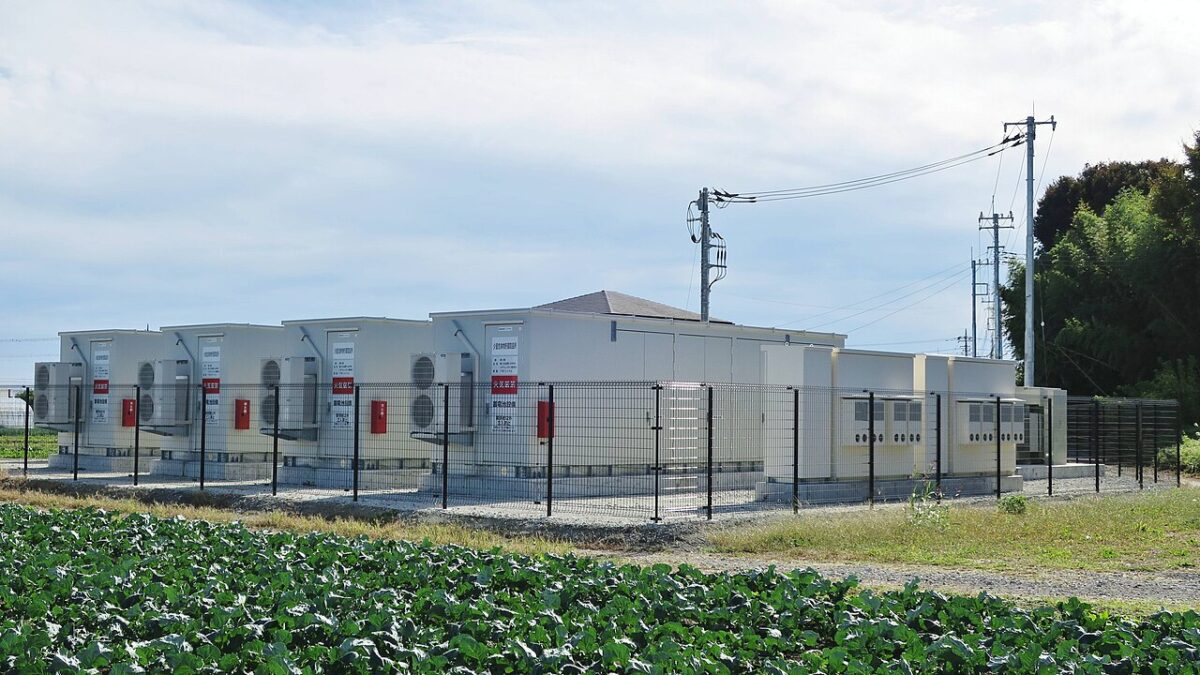





After months of waiting, energy storage developers finally have an update on FEOC from the Treasury Department. The Department’s release of Notice 2026-15 in mid-February provided the first set of guidance on how FEOC restrictions will actually apply to storage projects. For 2026, at least 55% of equipment costs must come from non-FEOC sources. By 2030, that threshold climbs to 75%. Notice 2026-15 did not provide comprehensive guidance, and Treasury said it expects to release further guidance, regulations and safe harbor tables in the future. Questions are still unanswered over some elements of FEOC restrictions—so uncertainty remains.
The guidance was in line with expectations, so developers have been working hard to get into compliance. That work includes restructuring supply chains, vetting supplier contracts, and ensuring that documentation is airtight before capital is committed and construction begins.
All that work takes time and money — and it has to be done when capital is under significant strain.
According to Crux’s State of Clean Energy Finance: 2025 Market Intelligence Report, drawing on $55 billion in transactions, total lending to clean power projects reached $120 billion in 2025 — but growth slowed sharply, from 22% year-over-year in 2024 to just 5.8% in 2025. Capital remained available, but increasingly only for the largest, most established sponsors. Smaller and mid-sized developers found themselves competing for a shrinking pool of accessible, reasonably priced financing — and paying for it. In 2025, investment-grade sponsors earned a material pricing premium while non-investment-grade sponsors received less favorable pricing than the year before. The market is actively pricing developer size and credit quality across the entire capital stack.
This makes the standard mark-up for pre-construction capital even more painful. According to project finance executives at Bank of America, JPMorgan, Apollo and MUFG speaking in January 2026, pre-NTP capital is still priced at 350 to 800 basis points over SOFR (secured overnight financing rate) benchmark rates. And despite three Federal Reserve rate cuts totaling 75 basis points in 2025, long-term project finance rates were essentially unchanged by year end. The relief many developers had been modeling simply did not arrive.
One pool of capital remains largely insulated from these pressures: real estate.
Developers who hold land under operating storage projects, or who have purchase options on sites that have reached Notice to Proceed, are sitting on a real asset that can be converted to cash without diluting equity and without competing for the same constrained channels as traditional project finance. Storage sites often command higher land values on a per-acre basis than other project types, driven by grid interconnection quality, proximity to load, and the site characteristics that make a location viable in the first place. That embedded value is frequentlyunderestimated.
This is not a workaround. It is a financing strategy that matches the actual problem. Real estate secured capital, properly structured, closes in 30 to 45 days. When an equipment deposit needs to be placed before a slot is lost, or an interconnection deposit deadline is approaching, that speed matters enormously. The ability to deploy capital on your own terms, without waiting for a counterparty is critical to project success right now.
Storage developers have something solar and wind developers are desperately short on right now: time. The 2033 tax credit runway is real. But time only creates advantage if you have the capital to use it. FEOC compliance thresholds increase every year through 2030, each escalation requiring earlier supply chain decisions, faster documentation, and more capital deployed well before construction begins.
The land under your storage projects has value. In today’s environment, unlocking it may be the most consequential financing decision you make this year.
Laura Paglisrulo is the chief executive officer of SolaREIT.
The views and opinions expressed in this article are the author’s own, and do not necessarily reflect those held by pv magazine.
This content is protected by copyright and may not be reused. If you want to cooperate with us and would like to reuse some of our content, please contact: editors@pv-magazine.com.





By submitting this form you agree to pv magazine using your data for the purposes of publishing your comment.
Your personal data will only be disclosed or otherwise transmitted to third parties for the purposes of spam filtering or if this is necessary for technical maintenance of the website. Any other transfer to third parties will not take place unless this is justified on the basis of applicable data protection regulations or if pv magazine is legally obliged to do so.
You may revoke this consent at any time with effect for the future, in which case your personal data will be deleted immediately. Otherwise, your data will be deleted if pv magazine has processed your request or the purpose of data storage is fulfilled.
Further information on data privacy can be found in our Data Protection Policy.