Republican legislators seek to restore clean energy tax credits
Four Republican representatives introduced The American Energy Dominance Act to help lower costs, strengthen domestic supply chains, drive long-term investment in energy infrastructure, and support good-paying union jobs.
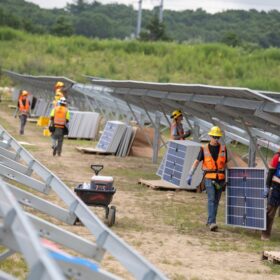
Workforce gap of 53,000 threatens 2026 solar deployment targets
The U.S. solar industry faces a critical shortage of 53,000 workers as developers rush to meet July 4, 2026 construction deadlines to secure federal tax credits.
Energy tax credit restoration bill submitted to Congress
Two members of the U.S. House of Representatives have submitted a wide-ranging energy bill titled the “Energy Bills Relief Act” that essentially reverses any changes made to tax credits by the One Big Beautiful Bill.

AI datacenters rewrite the solar PPA playbook
Power purchase agreements (PPAs) are evolving into complex risk-sharing structures as hyperscale data center operators trade fixed pricing for physical delivery and grid-bypass certainty. The US solar industry is entering 2026 as the foundational technology for a new era of power demand, even as the sector navigates a volatile federal policy landscape.
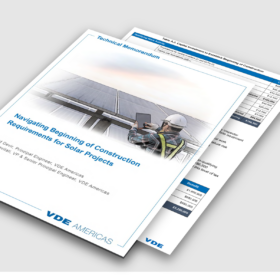
VDE Americas releases “Physical Work Test” playbook to clear OBBBA regulatory hurdles
With the July 4 “start of construction” deadline looming, a new technical memorandum provides a roadmap for developers to navigate the end of the 5% safe harbor and secure tax credit eligibility.

Navigating the OBBBA cliff for solar tax credits
The passing of the One Big Beautiful Bill Act (OBBBA) in July 2025 brought forward deadlines for PV projects to receive U.S. tax credits introduced by previous legislation, and set new requirements to demonstrate start of construction and other eligibility criteria. Project developers must move quickly to adapt to this new regulatory landscape.

Treasury, IRS release interim guidance on ‘prohibited foreign entity’ restrictions for solar tax credits
The guidance covers requirements in the One, Big, Beautiful Bill Act to establish methods to determine whether a clean energy facility or manufactured component was produced using material assistance from a prohibited foreign entity.
A “sorting year” for solar and storage
2026 is emerging as a decisive moment as capital concentrates around projects that can demonstrate early procurement and execution certainty.
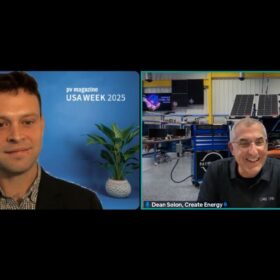
Watch: Solar industry leaders discuss unlocking capital and navigating post-tax credit market
Day 1 of pv magazine USA Week 2025 focused on “Unlocking Capital,” addressing the urgent financial and regulatory challenges facing U.S. solar and energy storage. Industry leaders discussed strategies to accelerate solar growth despite tightened tax credit deadlines, increased import restrictions, and reduced federal funding.

Residential geothermal systems positioned to save energy for new construction projects
Dandelion Energy CEO says OBBBA provisions open new pathways to make geothermal more accessible and affordable.