Assets of XALT Michigan battery manufacturing facility to be auctioned
The auction, which features machinery and equipment from the state-of-the-art battery pouch cell production plant, will take place in late March and early April in a live virtual webcast from BidItUp Auctions Worldwide
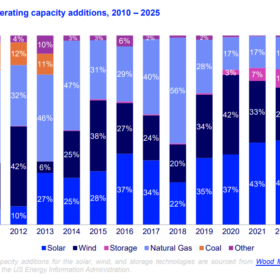
U.S. solar industry adds 43 GW in 2025, leading capacity additions for fifth consecutive year
The latest Solar Market Insight report from SEIA and Wood Mackenzie reveals that solar and energy storage accounted for 79% of all new U.S. electrical capacity in 2025 even as installation volumes fell late in the year, while domestic manufacturing reached major milestones despite uncertain federal policy.

PowerBank secures funding, clears environmental hurdles for its 7 MW New York community solar project
The Jordan Rd 1 project, which will operate as a community solar facility following construction, has already secured nearly $2 million in funding from the NY-Sun program and is expected to earn another nearly $1.6 million for serving income-qualified subscribers.

Beazley acquires kWh Analytics to scale renewable energy underwriting
The London-based specialty insurer aims to leverage kWh Analytics’ data-driven modeling to capture a larger share of the U.S. solar and storage risk-mitigation market.

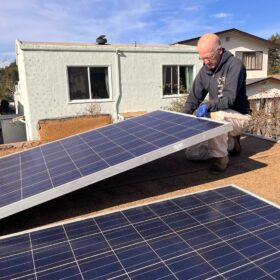
California court upholds NEM 3.0, dealing blow to rooftop solar
California appellate court has affirmed the Public Utilities Commission decision to sharply cut compensation for homeowners and businesses that export rooftop solar electricity production to the grid.

NeoVolta introduces residential ESS with grid-forming capabilities
The manufacturer says its new NVWave platform ushers in the category of “Residential Microgrid-Ready” energy storage systems and is targeted toward the needs of installers seeking flexible, scalable all-in-one systems for homeowners.
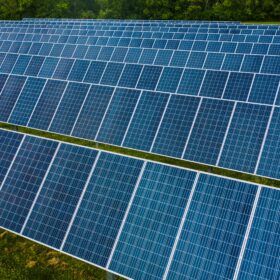
Repowering: A smarter path for aging renewable infrastructure
Many GW of aging U.S. solar installations will require electrical upgrades in the coming years, and smart owners will turn to repowering and cable rejuvenation as cost-effective ways to extend the lifespan of aging infrastructure at a fraction of the cost of new builds or full site reconstruction, with the added benefit of preserving existing interconnection rights.

VDE Americas enhances Hail Risk Model to improve survivability of utility-scale solar
CEO Brian Grenko explains how models influence tracker design and storm response strategies.
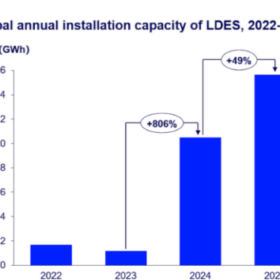
Long-term storage grows by 49% in 2025 despite the financing crisis
A report by Wood Mackenzie indicates that the deployment of long-duration energy storage (LDES) technologies exceeded 15 GWh in 2025, but declining venture capital investment and falling lithium battery costs are hindering their commercial viability.
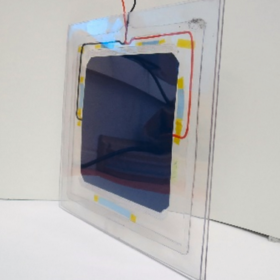
First attempt to build solar modules using polycarbonate encapsulant
Canadian researchers proposed a laminate-free solar module using polycarbonate instead of EVA and glass. The new encapsulation technique reportedly enables easy disassembly, reuse of solar cells, and open-source local manufacturing.