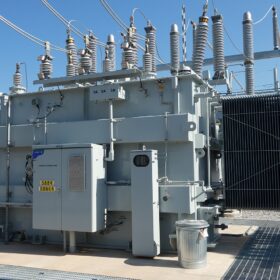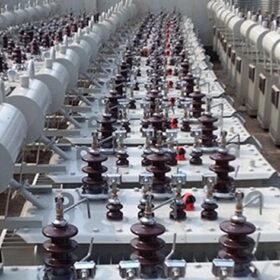
A look at the great transformer shortage affecting U.S. utilities
An NREL team finds that lead times for transformers has grown fourfold in three years, with orders sometimes taking two years. Additionally price increases of four to nine times have been reported in the past 3 years.
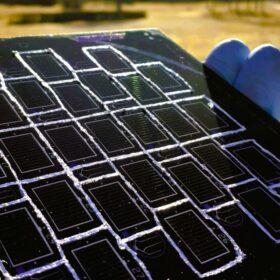
First Solar unit achieves world record CIGS solar efficiency of 23.64%
The new solar cell achieved a maximum power conversion efficiency of 23.75% and a certified efficiency of 23.64%, thus beating the previous world record of 23.35% achieved in 2019 by Japan’s Solar Frontier. The result was confirmed by the Fraunhofer ISE.

Solar now accounts for over 50% of new electricity capacity added to the U.S. grid
Looking back at the first full year since passage of the Inflation Reduction Act, the U.S. Solar Market Insight, Year-in-Review 2023 shows that the legislation has skyrocketed the industry and will have a lasting economic impact in terms of energy, jobs and investment opportunity.
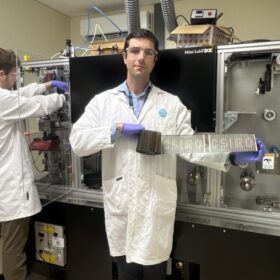
Printed flexible solar cells for space applications
Printed flexible solar cell technology developed by Australia’s national science agency has been successfully launched into space as part of billionaire Elon Musk’s Space X’s Transporter-10 mission.
Chevron announces solar-to-hydrogen project in California
The oil giant expects the facility to produce about 2.2 tons of hydrogen per day by 2025.
Amazon Web Services helps Duke Energy complete power flow studies in hours, not months
Adding residential solar or commercial-scale electric vehicle chargers on a utility’s distribution feeder may require the utility to conduct power flow calculations. Duke Energy can now complete those studies in hours, an Amazon executive said at a policy forum held by ACORE.
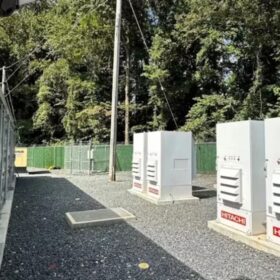
Baltimore Gas and Electric installs battery storage system to manage winter peaks
The 2.5 MW/9.74 MWh Hitachi Energy facility helped the utility avoid distribution upgrade costs and also participates in the PJM Interconnection.

Cadmium telluride solar cell based on indium gallium oxide emitter achieves 17.2%
Developed by the University of Toledo, the cell achieved the highest efficiency ever reported for flexible cadmium telluride solar cells to date. The device reached an open-circuit voltage of 861 mV, a short-circuit density of 27.8 mA/cm2, and a fill factor of 71.7%.
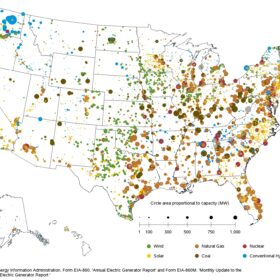
Solar generated 5.5% of U.S. electricity in 2023, a 17.5% increase
Solar generation grew by 17.5% compared to 2022, albeit at a lower rate, adding just over 33 TWh of generation compared to the 40 TWh added in 2022.

Calculating potential impact of EPA’s $7 billion Solar for All program
Solar for All can jumpstart the solar market and expand the benefits of solar far beyond the initial five years of the program. Clean Energy States Alliance notes that after the award decisions are announced, additional states will be evaluating strategies and more households will benefit from this funding over time.