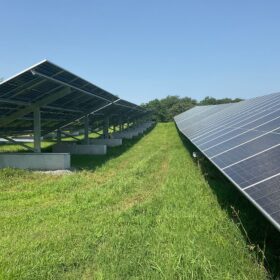
Safe-harbored panel strategy enables acquisition of six-project community solar portfolio
Standard Solar’s inventory of safe harbored solar modules reduces schedule and pricing risks for completion of the project portfolio acquired from AC Power
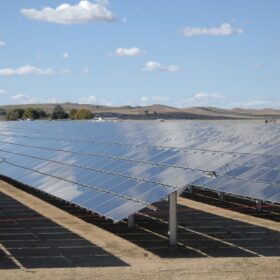
Could mixed-module sourcing give more than mixed results for FEOC compliance?
Blended approaches that combine FEOC and non-FEOC compliant modules can help meet MACR thresholds while keeping costs low.
Expiring incentives led to record demand, more diverse market for residential solar in 2025, says EnergySage
EnergySage reported a 205% increase in homeowner engagement on its home energy marketplace, alongside median pricing of $2.49 per watt, an average system size of 11.8 kW and a decrease in storage attachment rates in the rush to install systems before the end of 2025.

Global energy transition hits a hardware bottleneck
As transformer lead times double and U.S. prices surge 79%, a manufacturing “supercycle” struggles to keep pace with the explosive growth of AI data centers and renewable energy.
Supplier attestations alone won’t satisfy FEOC scrutiny
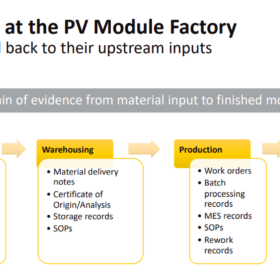
As MACR thresholds rise under the One Big Beautiful Bill Act, traceability audits and contract reviews are becoming essential to avoid long-term tax credit recapture exposure.

The changing US solar supply chain
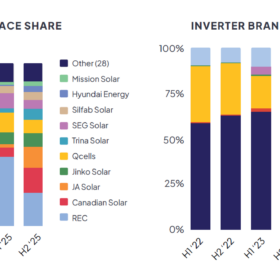
Demand in the US solar market remained broadly stable in 2025, but the supply-side landscape told a markedly different story. Shipments to the United States from major vertically integrated module manufacturers plunged by more than 40% year on year in the first half. Analysis from InfoLink’s Alan Tu reveals that the challenge lies not in end-market demand, but in whether supply chains can effectively function under current conditions.

Treasury, IRS release interim guidance on ‘prohibited foreign entity’ restrictions for solar tax credits
The guidance covers requirements in the One, Big, Beautiful Bill Act to establish methods to determine whether a clean energy facility or manufactured component was produced using material assistance from a prohibited foreign entity.

DOJ drops defense of tariff moratorium, leaving industry exposed to $70 billion in retroactive duties
The Department of Justice has withdrawn from the legal defense of a two-year tariff pause on solar modules, leaving private developers and trade groups to face the threat of billions in retroactive duties alone.

TotalEnergies signs 1 GW of solar PPAs for Google’s Texas data centers
The two 15-year power purchase agreements cover a 805 MW and a 195 MW solar project, set for construction this year, that will power data centers in Texas belonging to Google.

U.S.-India trade deal reduces solar tariffs
Tariff reductions under the new U.S.-India trade agreement lower import costs for solar modules and energy storage components. Reciprocal tariffs were effectively reduced from 50% to 18%.