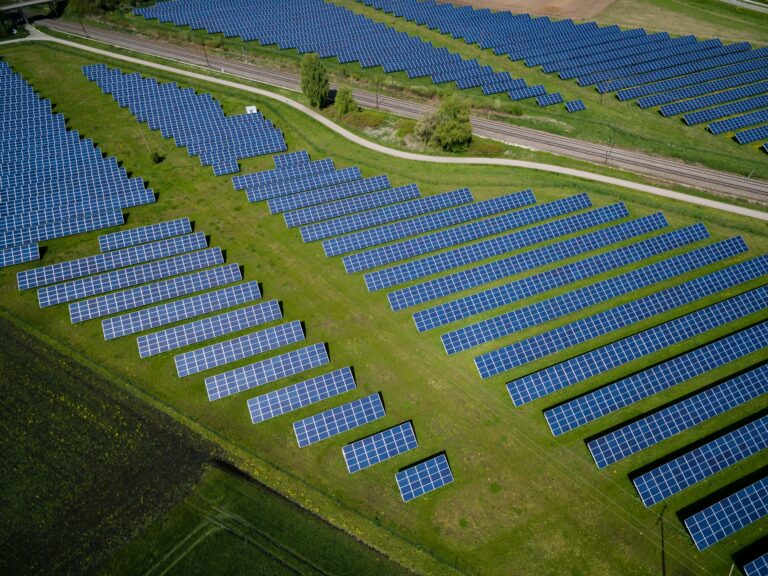





A study from the University of Massachusetts Amherst shows that local opposition to utility-scale solar installations occurs less frequently than news coverage indicates. Researchers found that a majority of projects encounter little public friction during development. Data from recent deployments shows that organized resistance is an exception to the baseline trend.
The study analyzed the relationships between public pushback, project capacity, and regulatory structures. Siting friction relates to plant capacity and regional oversight models rather than the political alignment of host communities.
Researchers Juniper Katz, Natalie Baillargeon, and Alice Potapov built a database of 686 solar installations that entered commercial operation between January 2022 and November 2023. Analysis shows that 56% of the facilities fell into categories with no conflict or low conflict. This portion of the sample progressed without significant public or media pushback.
The research team identified high conflict levels at 19% of the operational plants. The team measured these trends by scanning news articles and social media posts for terms related to public disputes, including protests and lawsuits.
Oversight models, which determine whether a state agency or a local county board has the final permitting authority, influence the probability of local opposition, found the study. Siting rules vary by state, with some regions delegating authority to county boards, others consolidating reviews at the state level, and some using hybrid systems based on capacity.
State-level permitting jurisdiction, as opposed to local jurisdiction, correlates with a 16.9 percentage point increase in zero-conflict outcomes. It also correlates with a 9.4 percentage point reduction in high-conflict cases compared to local processes. State frameworks often feature unified submission portals, fixed timelines, and standardized rules for public comments.
Solar project size remains a driver of opposition. As an installation increases in megawatt capacity, the land footprint expands. The probability of a project facing high conflict more than doubles when comparing the largest capacity quartile to the smallest quartile, found the study.
The researchers quantified project resistance by constructing a conflict-attention index that paired the total volume of news and social media coverage with a specialized lexicon scanning for terms like protest, lawsuit, and opposition. By analyzing these observable public signals, the model categorized each of the 686 projects into four distinct intensity tiers, ranging from no conflict to high conflict. The methodology allowed the team to measure active public disputes statistically across a large population without needing to infer the unobserved personal motivations of local residents.
The data contrasts with historical trends in wind energy development regarding demographics and political party affiliation. Partisan voting patterns showed no correlation with local opposition metrics. Siting disputes center on land use and local geography rather than national party lines. Higher median income levels correlated with lower conflict metrics, which differs from previous wind research where wealthier communities mobilized resources to block infrastructure.
The findings appear in the journal Energy Research and Social Science.
This content is protected by copyright and may not be reused. If you want to cooperate with us and would like to reuse some of our content, please contact: editors@pv-magazine.com.




By submitting this form you agree to pv magazine using your data for the purposes of publishing your comment.
Your personal data will only be disclosed or otherwise transmitted to third parties for the purposes of spam filtering or if this is necessary for technical maintenance of the website. Any other transfer to third parties will not take place unless this is justified on the basis of applicable data protection regulations or if pv magazine is legally obliged to do so.
You may revoke this consent at any time with effect for the future, in which case your personal data will be deleted immediately. Otherwise, your data will be deleted if pv magazine has processed your request or the purpose of data storage is fulfilled.
Further information on data privacy can be found in our Data Protection Policy.