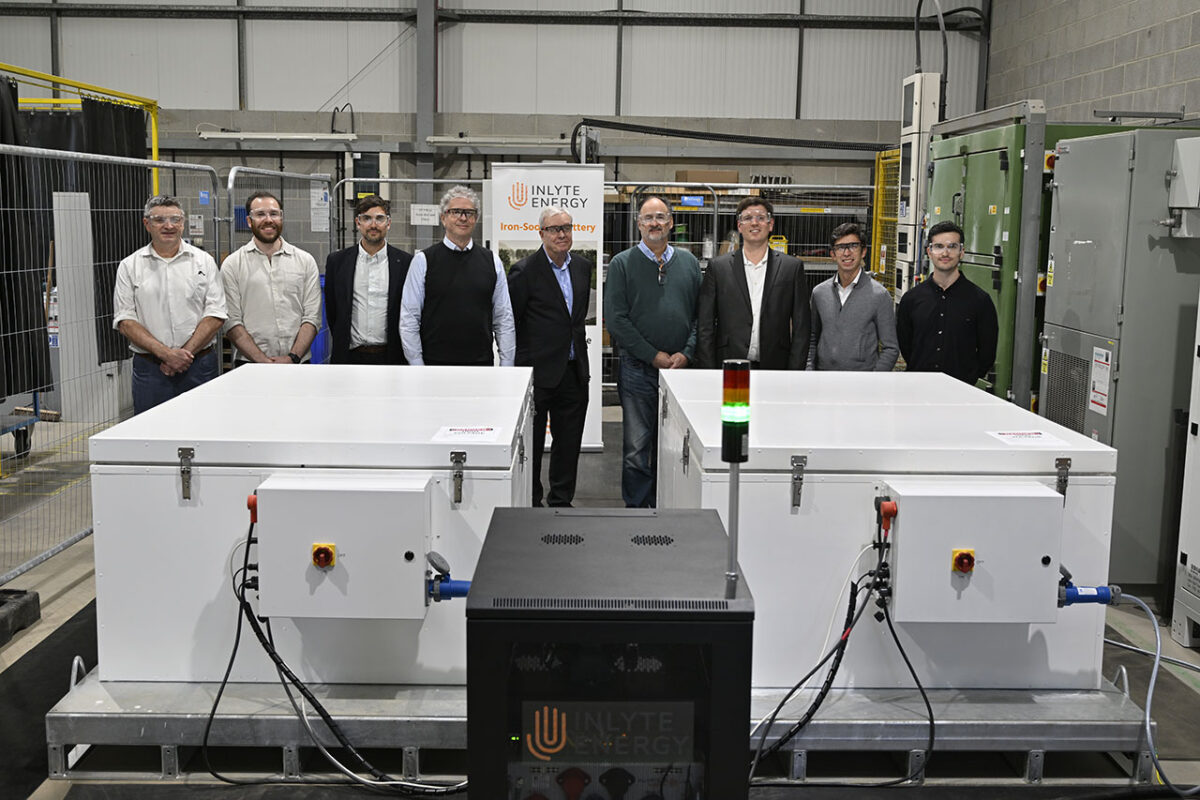





California-based sodium-iron battery startup Inlyte Energy is preparing to deploy its technology in two major pilot programs in 2026, aiming to prove the systems’ viability as a safe, long-duration backup power source.
The company is specifically targeting the rapidly growing data center market, positioning its technology as an alternative to fossil fuel generators and conventional lithium-ion batteries.
It plans to commission a 600 kWh (25 kW) pilot installation with Swiss data center operator NTS Colocation at a Tier IV facility in Bern, Switzerland by the end of 2026, aiming to evaluate the system’s performance and integration with the facility’s existing systems.
If the initial installation is successful, the partners plan to deploy up to 2 MW of iron-sodium battery capacity across NTS facilities by 2028.
According to Inlyte Energy CEO Antonio Baclig and chief commercial officer Ben Kaun, who spoke with pv magazine USA about the plans, the company’s iron-sodium battery technology is a great match for the unique needs of data centers, which demand always-on uptime and need safe energy storage technology that can smooth out the volatile nature of their power demands.
Kaun pointed out that it is common practice for data centers to employ diesel generators and other on-site fossil fuel-based generation, because these sources of power can handle their volatility better and run for longer periods during prolonged outages than short-duration lithium-based energy storage.
However, the diesel generators and gas turbines in use at many data center facilities produce carbon emissions and noise pollution, and require on-site fuel storage, leading to pushback from nearby communities.
Inlyte says data center operators should be looking for something that addresses all of those concerns — meeting the data centers’ needs for storage duration, ability to handle volatility, and safety.
“Replacing diesel generators is something that a lot of data center companies want to do,” said Baclig, noting that Microsoft has even made a pledge to stop using the technology by 2030. “But there’s not a great alternative right now in terms of the economics and the practicality of having that long of a duration of backup. It’s something where we feel like we have a really good fit.”
Baclig said the company’s battery architecture contributes to its extraordinarily long life and ability to handle the volatile power demand of data centers. The company currently estimates the batteries will have a 7,000-cycle lifespan, good for 20 years of operation.
In addition to the long lifespan, Kaun said the battery has no risk of fire or thermal runaway, which are concerns for other electrochemical energy storage technologies like lithium.
“Our technology actually has an intrinsic safety where cells themselves when they break or internally short, it doesn’t lead to a thermal runaway situation and a fire and or explosion. In fact the modules can continue to operate even with cell failures internally.”
Kaun said this allows the batteries to be installed in dense physical configurations, allowing the company to deploy up to a gigawatt-hour of energy storage capacity per acre.
Domestic pilot and manufacturing
In addition to Inyte’s data center pilot, the company will also deploy its first integrated utility demonstration system in collaboration with Southern Company, a utility that operates in several southeastern states, whose executives attended a demonstration of Inlyte’s technology in the UK last year.
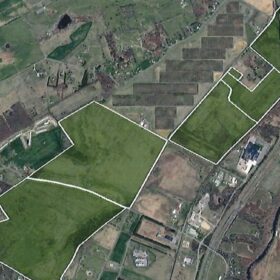
The Inlyte battery will be installed at an energy storage test site in Wilsonville, Alabama, to undergo at least a year of rigorous evaluation.
As its pilot programs get underway, Inlyte is also moving to establish a domestic manufacturing footprint in the United States. The company is working in collaboration with Horien Salt Battery Solutions to open its first domestic production facility, aiming for an initial capacity of 2 GWh.
Baclig said the company is excited to begin sourcing materials domestically, and that the batteries from its U.S. facility will contain 70% domestic content. To that end, Inlyte recently announced it would collaborate with metal materials company Ervin Industries to engineer new iron powder formulas for its batteries.
Commercial shipments of domestically produced Inlyte batteries are targeted for 2027.
This content is protected by copyright and may not be reused. If you want to cooperate with us and would like to reuse some of our content, please contact: editors@pv-magazine.com.


By submitting this form you agree to pv magazine using your data for the purposes of publishing your comment.
Your personal data will only be disclosed or otherwise transmitted to third parties for the purposes of spam filtering or if this is necessary for technical maintenance of the website. Any other transfer to third parties will not take place unless this is justified on the basis of applicable data protection regulations or if pv magazine is legally obliged to do so.
You may revoke this consent at any time with effect for the future, in which case your personal data will be deleted immediately. Otherwise, your data will be deleted if pv magazine has processed your request or the purpose of data storage is fulfilled.
Further information on data privacy can be found in our Data Protection Policy.