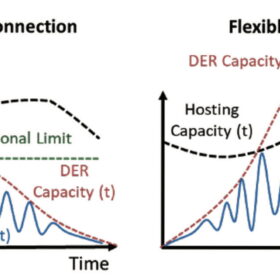
New York SEIA says flexible interconnection could enable 3.3 GW more community solar
Much more community solar could be built in upstate and western New York to bring solar bill savings to more customers, if utilities offered flexible interconnection as an option for solar developers, NY SEIA has projected. Retail battery storage hosting capacity could more than double in ConEdison territory with flexible interconnection, the group said.
Policy playbook shows how to tap into distributed energy resource solutions
The Pew Charitable Trust DER playbook offers examples of success stories for policy makers and regulators to follow to scale critical power options in the United States.
Massachusetts Senate considers DER peak reduction mandate to curb grid costs
Advocates are pushing for a new standard that requires utilities to leverage distributed energy resources (DER) for peak load management, offering a potential fix for the state’s high retail rates.
Managing cyber risks in the era of decentralized energy
The move toward decentralized energy resources offers resilience and flexibility in power generation, but it also introduces new complexities that demand proactive security measures.
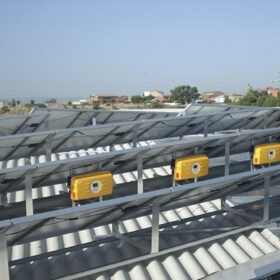
Solar cyber threats expand, but inverters still stay in the crosshairs
In an interview with pv magazine, Jay Johnson, the CTO of US-based cybersecurity firm DERSec, explains that PV systems face cybersecurity risks that extend far beyond inverters, as demonstrated by a December attack on Polish solar plants where wiper malware targeted substation equipment rather than the inverters themselves. Vulnerabilities often lie in backhaul communication channels like APIs and mobile apps, making layered defenses, network segmentation, and vigilant monitoring essential to safeguard distributed energy resources.
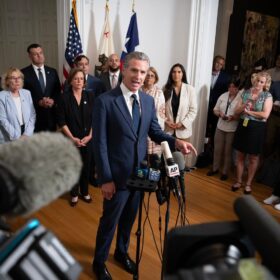
Newsom vetoes another bill to curb California’s rising energy demand
Gov. Newsom said the virtual power plant bill would not have improved electric grid reliability planning because it did “not align with the California Public Utility Commission’s Resource Adequacy framework.”

Newsom strikes down bill to help reduce electric demand despite unanimous approval
Gov. Newsom said the bill would not have improved electric grid reliability planning because it did “not align with the California Public Utility Commission’s Resource Adequacy framework.”

Virtual power plant legislation lay in Gov. Newsom’s hands after sailing through California Assembly
California lawmakers passed two bills that aim to facilitate how the state and its utilities handle virtual power plants.
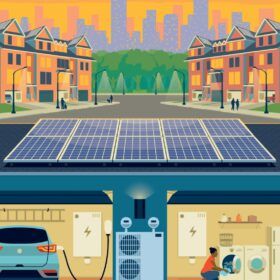
The importance of transparency in the distributed energy value stack
The distributed energy value stack is the collection of benefits and revenue streams that distributed energy resources (DERs) — such as solar, storage, demand response, and flexible generation — can deliver to customers, utilities, and the grid. As the market evolves, the value stack has become increasingly complex. For sellers of DERs and virtual power plants (VPPs), transparency into this value stack is no longer optional.
Virtual power plants in action: How rules and markets enable (or block) aggregation
The final, third part of this series explores how DERs and Virtual Power Plants are participating in today’s energy markets—including a close look at ISO/RTO-specific programs, qualification requirements, and market rules. We examine how these policies and procedures affect the real-world ability of aggregated DERs to operate as grid resources and the complexity stakeholders face when navigating these systems.