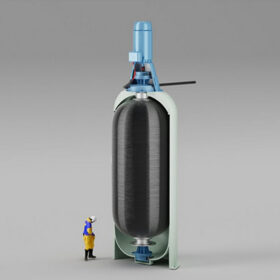
U.S. startup begins manufacturing grid-scale flywheel ESS
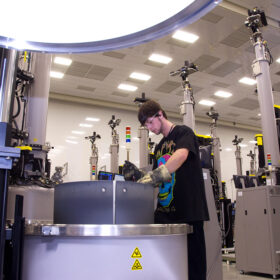
SOSV-backed Qnetic is aiming to raise $20 million in 2026. Over the next two years it will work with the National Lab of the Rockies and other partners on field testing and validating its technology across multiple use cases.

PJM states could lower electric bills by enabling retail choice with household batteries
As state governors across the PJM grid region “have expressed alarm over capacity prices” that drive up electric bills, retail choice models that can quickly deploy thousands of distributed batteries can make consumers “the primary source of new capacity,” says the author of a new report.

The “Swiss Army Knife” behind AI-powered solar design
While automation and artificial intelligence can generate and optimize layouts, human expertise remains essential in evaluating risk and constructability.
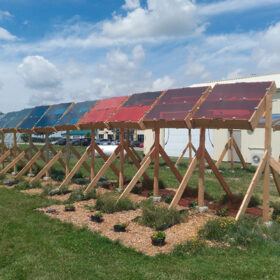
Agrivoltaics for turnips
Researchers in Canada found that semi-transparent cadmium telluride and low-transparency crystalline silicon solar panels can boost turnip root and leaf yields in agrivoltaic systems by optimizing light quality, distribution, and heat stress. Their study highlights that PV module type, transparency, and spectral transmission must be carefully matched to plant physiology to maximize both crop productivity and renewable energy generation.
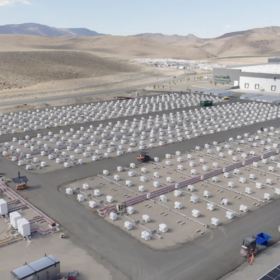
Second-life EV batteries approved for data center microgrid expansion
Crusoe and Redwood Energy are scaling a microgrid in Sparks, Nevada, by using repurposed electric vehicle batteries and solar to supply additional modular data centers.
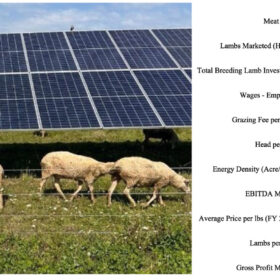
Study finds solar sheep grazing business models outperform agricultural benchmarks
A financial analysis of Ontario-based sheep farming integrated with utility-scale solar reveals EBITDA margins as high as 40%, far exceeding traditional farming returns.

Aurora Solar releases 2026 Solar Snapshot report detailing shift toward third-party ownership
The company’s fourth annual snapshot report highlights an industry transitioning from incentive-driven growth to a focus on affordability and resilience. Third-party ownership is becoming the preferred financing method as consumer concerns over upfront costs and policy changes reshape the residential market.

Why battery storage is becoming the engine of AI growth
Data centers are using batteries to run more AI on the same grid connection.
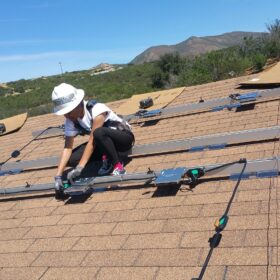
HelioVolta report outlines fire risk from module-level rapid shutdown devices
The report authors contend such devices — which are designed to protect firefighters while they work around rooftop solar installations — actually add significant risk by increasing installation complexity and multiplying potential points of failure by a factor of two to three.

Sandia Labs benchmarks PV software providers in first ever blind comparison analysis
Sandia National Laboratories conducted the first-ever blind comparison of seven commercial PV modeling software, revealing that differences in weather handling, system modeling, derates, and assumptions grow as system complexity increases. The study emphasizes that software choice should consider project complexity, workflow, and modeling features rather than relying on rankings alone.