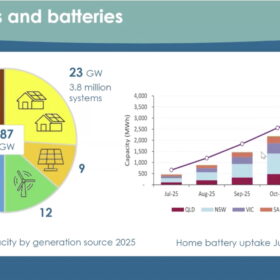
Why battery storage is becoming the engine of AI growth
Data centers are using batteries to run more AI on the same grid connection.
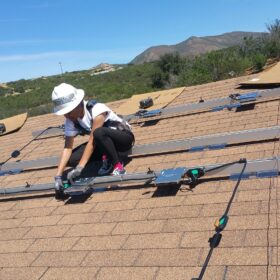
HelioVolta report outlines fire risk from module-level rapid shutdown devices
The report authors contend such devices — which are designed to protect firefighters while they work around rooftop solar installations — actually add significant risk by increasing installation complexity and multiplying potential points of failure by a factor of two to three.
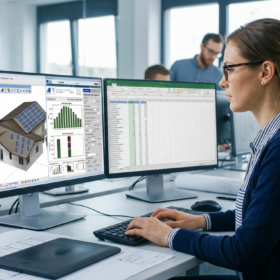
Sandia Labs benchmarks PV software providers in first ever blind comparison analysis
Sandia National Laboratories conducted the first-ever blind comparison of seven commercial PV modeling software, revealing that differences in weather handling, system modeling, derates, and assumptions grow as system complexity increases. The study emphasizes that software choice should consider project complexity, workflow, and modeling features rather than relying on rankings alone.
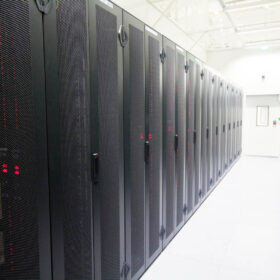
U.S. data center pipeline growth slows as grid constraints mount
New data center capacity additions fell 50% quarter-over-quarter in Q4 2025, signaling a shift in developer focus toward executing existing projects amid power queue bottlenecks.
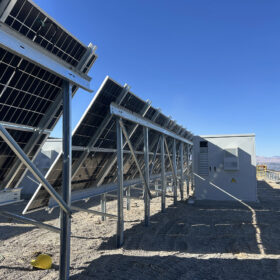
Inside the massive private power grids fueling the U.S. data center boom
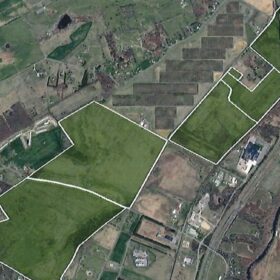
As the buildout of data centers in the United States accelerates, developers are often targeting remote locations where land availability is high. Off-grid solar paired with batteries offers an opportunity to power data centers in areas that would otherwise not have access to dependable utility infrastructure.
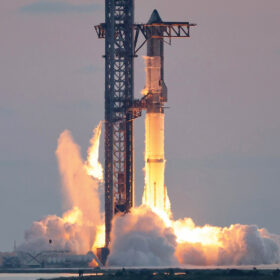
Solar key to space-based AI
Elon Musk, the CEO of both Tesla and SpaceX, raised some eyebrows at this year’s World Economic Forum (WEF) in Davos, Switzerland, when he predicted “that the lowest cost place to put AI will be space and that will be true within two to three years, three at the latest.” pv magazine reported on Musk’s vision on our global website www.pv-magazine.com on Jan. 26, 2026, and exactly one week later SpaceX announced that it was acquiring xAI “to form the most ambitious, vertically integrated innovation engine on (and off) Earth, with AI, rockets, space-based internet, direct-to-mobile device communications, and the world’s foremost real-time information and free speech platform.”
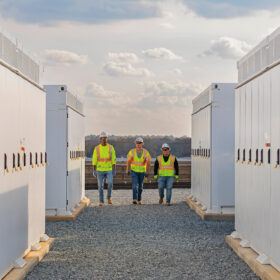
How on-site batteries are fast-tracking data center grid connections
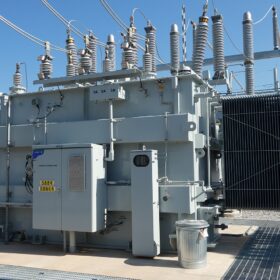
Battery energy storage systems (BESS) are already regularly deployed in uninterruptible power supply (UPS) applications for data centers, but current market conditions are now driving new deployment needs and strategies. Blathnaid O’Dea hears from industry insiders about increasingly popular approaches like bring your own capacity (BYOC) and flexible grid connections (FGC), and why batteries can provide services beyond speed to power that gas turbines can’t.
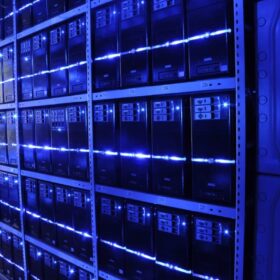
Tackling the AI power conversion tax
SolarEdge and Enteligent are stripping away AC bottlenecks to reclaim gigawatts of wasted data center capacity.
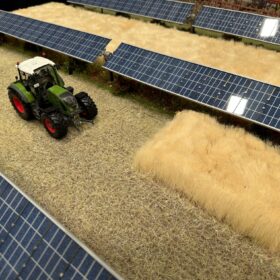
Increased spacing between solar module rows boosts agrivoltaics viability
U.S. researchers developed a framework showing that wider spacing between solar PV rows can make agrivoltaic systems economically viable for large-scale mechanized farming. Their simulations in Colorado demonstrated that optimized row spacing maintains crop production while improving combined agricultural and energy revenues.

AI datacenters rewrite the solar PPA playbook
Power purchase agreements (PPAs) are evolving into complex risk-sharing structures as hyperscale data center operators trade fixed pricing for physical delivery and grid-bypass certainty. The US solar industry is entering 2026 as the foundational technology for a new era of power demand, even as the sector navigates a volatile federal policy landscape.