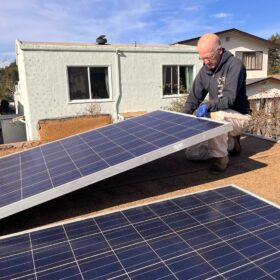
U.S. government sets preliminary countervailing duties on solar imports from India, Indonesia and Laos
The U.S. Department of Commerce has issued preliminary findings that solar manufacturers in India, Indonesia and Laos benefited from government subsidies, paving the way for countervailing duties of up to 143.30%.
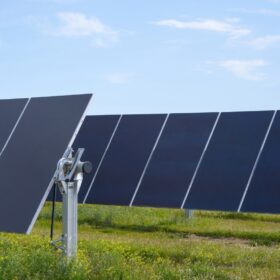
First Solar reports 2025 earnings, announces Oxford PV licensing agreement, alleges patent infringement in new ITC action
The company’s stock price fell more than 12% in extended trading following the earnings announcement, partly due to lower-than-expected guidance for 2026 sales and revenue.
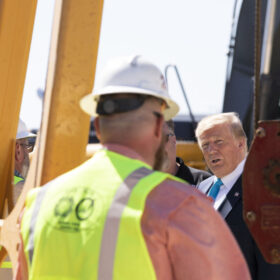
Republicans pushing for clean energy tax credit: “We think [Trump] is getting bad advice”
U.S. Rep. Brian Fitzpatrick is publicly pushing to reinstate wind and solar tax credits eliminated under the OBBB, as Republicans face potential challenges in upcoming midterm elections.

VDE Americas releases “Physical Work Test” playbook to clear OBBBA regulatory hurdles
With the July 4 “start of construction” deadline looming, a new technical memorandum provides a roadmap for developers to navigate the end of the 5% safe harbor and secure tax credit eligibility.

Navigating the OBBBA cliff for solar tax credits
The passing of the One Big Beautiful Bill Act (OBBBA) in July 2025 brought forward deadlines for PV projects to receive U.S. tax credits introduced by previous legislation, and set new requirements to demonstrate start of construction and other eligibility criteria. Project developers must move quickly to adapt to this new regulatory landscape.
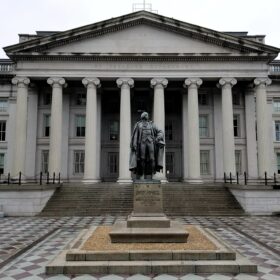
Treasury, IRS release interim guidance on ‘prohibited foreign entity’ restrictions for solar tax credits
The guidance covers requirements in the One, Big, Beautiful Bill Act to establish methods to determine whether a clean energy facility or manufactured component was produced using material assistance from a prohibited foreign entity.
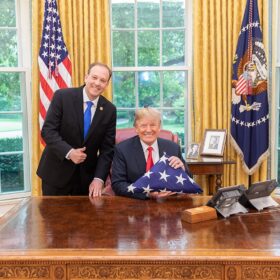
Trump EPA repeals Endangerment Finding, stripping legal bedrock for solar and clean energy
In a move described as the “single largest deregulatory action in U.S. history,” the EPA has rescinded the 2009 finding that greenhouse gases threaten public health, a decision that could dismantle the legal justification for federal solar incentives and emissions standards.
DOJ drops defense of tariff moratorium, leaving industry exposed to $70 billion in retroactive duties
The Department of Justice has withdrawn from the legal defense of a two-year tariff pause on solar modules, leaving private developers and trade groups to face the threat of billions in retroactive duties alone.
Missouri declares war on solar
A Missouri State Senator, with vocal support from the Governor, has submitted a bill stopping all solar construction immediately, and placing a moratorium on all new solar construction starts until December 31, 2027 – or when new rules are developed by the state.
State legislatures consider bills to speed solar project deployment
Bills have been introduced in several states to address barriers to renewable energy deployment ahead of upcoming deadlines to qualify for federal tax credits.