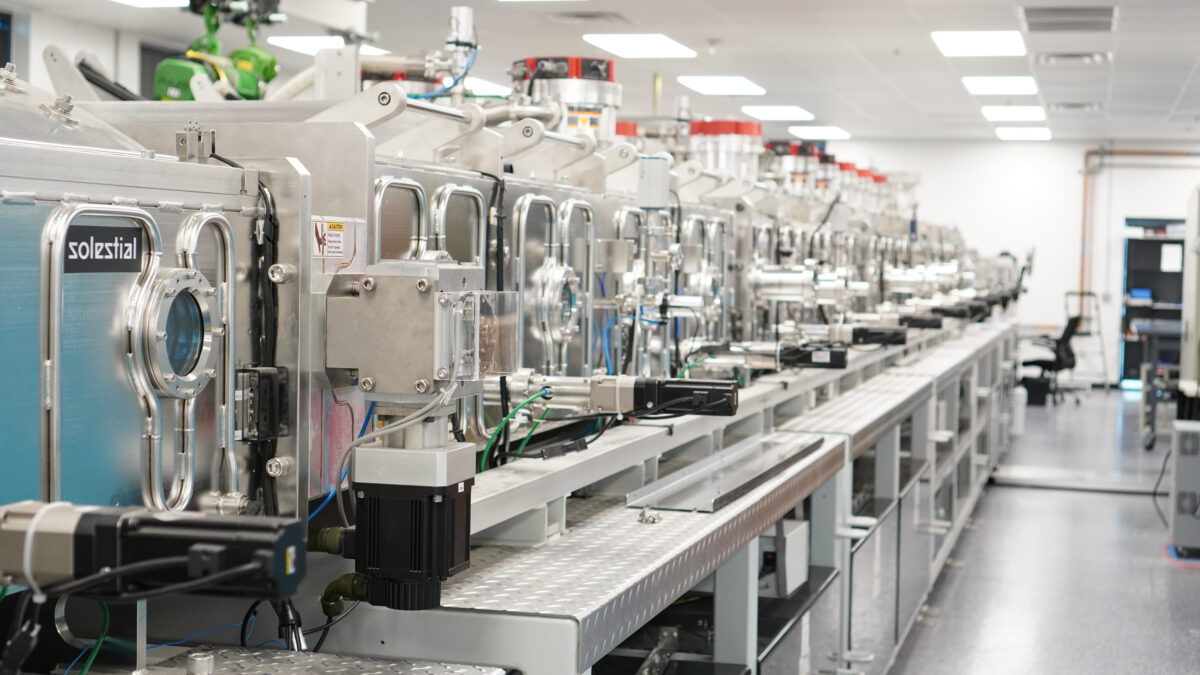





York Space Systems (NYSE: YSS) signed a definitive agreement to acquire Solestial, an Arizona-based manufacturer specializing in next-generation silicon solar technology optimized for orbital environments.
Solestial will operate as a wholly owned subsidiary from its current facility in Tempe, Arizona, following the anticipated close of the transaction in the second quarter of 2026. Production operations will continue uninterrupted, with the developer maintaining its commercial pipeline to supply ultra-thin silicon modules to the broader civil, commercial, and national security solar markets.
Financial details submitted in regulatory filings show that York expects to issue up to 2.35 million shares of common stock at closing, with the remaining balance of the purchase price funded using cash.
York Space Systems is a U.S.-based national defense and commercial contractor providing a comprehensive suite of mission-critical solutions for national security, government, and commercial customers.
The corporate consolidation highlights a growing push to scale advanced photovoltaic alternatives as global deployment demands outpace manufacturing capacity. High production costs and prolonged component lead times have long impacted the specialized space power market. Traditional III-V gallium arsenide solar cells require highly complex, resource-intensive processing, frequently pushing equipment lead times past two years.
Terrestrial silicon cells offer a readily available, mass-produced alternative but fail rapidly when subjected to intense cosmic radiation without massive shielding. Solestial bridges this market gap by applying advanced manufacturing techniques to ultra-thin, low-mass silicon. The resulting flexible solar cells and modules deliver a highly scalable, cost-effective alternative capable of matching or exceeding the performance metrics of heritage space-grade cells.
“Solestial has proven a scalable, space-optimized solar technology that is designed to perform in ways legacy and terrestrial solutions cannot,” said Mike Lajczok, CTO of York. “That will give us the ability to build more capable platforms with better performance, lower cost, and greater design flexibility.”
Domestic wafer-to-module
As government and commercial sectors accelerate the deployment of massive satellite constellations, establishing a reliable, high-volume solar manufacturing base has become a leading objective for major defense contractors.
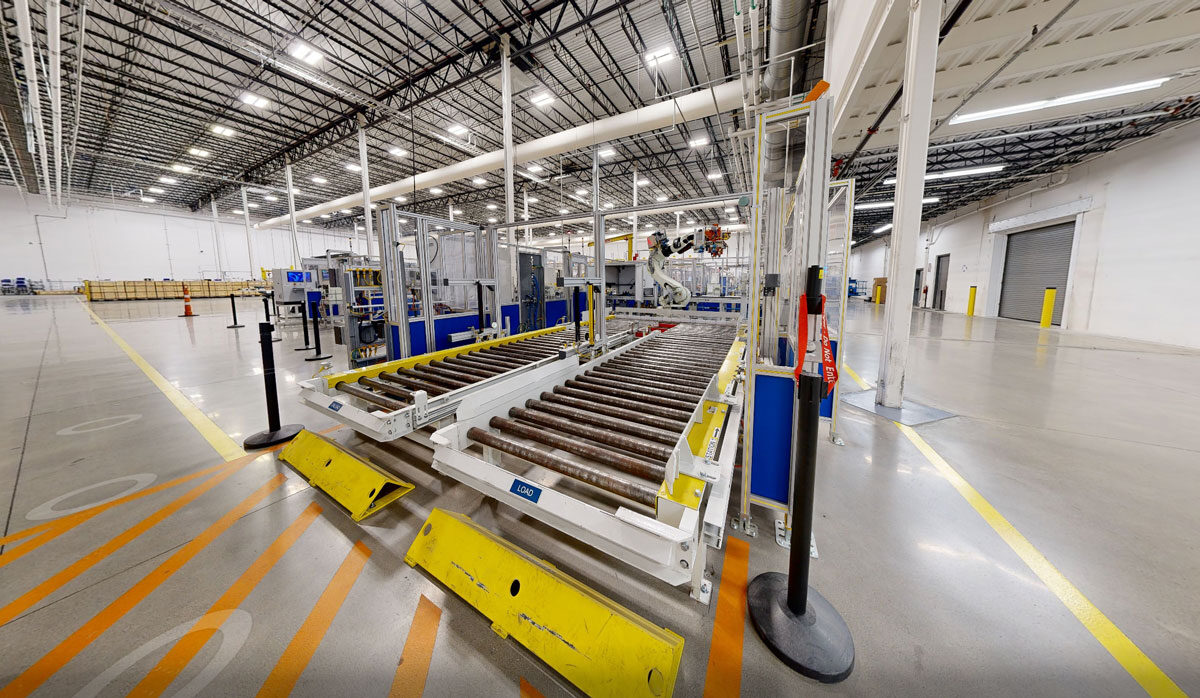
Unlike traditional space solar options that depend heavily on international manufacturing pipelines, approximately 95% of Solestial’s supply chain remains anchored within the United States, said the company. The manufacturer recently expanded its Tempe production footprint by purchasing advanced, high-volume automated solar factory equipment. The industrial hardware enables complete wafer-to-module assembly on domestic soil, reducing industrial reliance on foreign-controlled processing and materials.
“York has consistently invested in U.S.-based manufacturing as a core part of how we deliver for our customers,” said Dirk Wallinger, CEO of York Space Systems. “The acquisition builds on that approach, strengthening our supply chain by investing in a proven U.S. company, supporting the domestic industrial base, and reducing reliance on foreign sources for critical materials and manufacturing.”
Radiation-hardened silicon architecture
Solestial’s technology relies on a proprietary self-curing cell structure engineered to survive severe environmental degradation. Under natural sunlight at operating temperatures as low as 65°C, the ultra-thin silicon cells use controlled internal thermal dynamics to automatically repair microscopic structural defects caused by radiation. This integrated thermal annealing process allows modules to sustain high power-conversion efficiencies over a 10-year operational lifespan without requiring heavy, parasitic shielding materials.
The solar developer expanded its commercial footprint prior to the acquisition by signing a contract to supply solar modules to EnduroSat and working with partners to design standardized, short-lead-time solar arrays. Earlier academic research has demonstrated that ultra-thin silicon cells can successfully minimize radiation degradation through this thermal healing process.
“Solestial was founded to solve the space power bottleneck,” said Margo de Naray, CEO of Solestial. “Our customers need a solution that can scale, perform in space, and be manufactured reliably. Partnering with York allows us to accelerate all three; expanding production, deepening technical integration, and delivering a resilient, American-made capability to a broader set of missions.”
This content is protected by copyright and may not be reused. If you want to cooperate with us and would like to reuse some of our content, please contact: editors@pv-magazine.com.



By submitting this form you agree to pv magazine using your data for the purposes of publishing your comment.
Your personal data will only be disclosed or otherwise transmitted to third parties for the purposes of spam filtering or if this is necessary for technical maintenance of the website. Any other transfer to third parties will not take place unless this is justified on the basis of applicable data protection regulations or if pv magazine is legally obliged to do so.
You may revoke this consent at any time with effect for the future, in which case your personal data will be deleted immediately. Otherwise, your data will be deleted if pv magazine has processed your request or the purpose of data storage is fulfilled.
Further information on data privacy can be found in our Data Protection Policy.