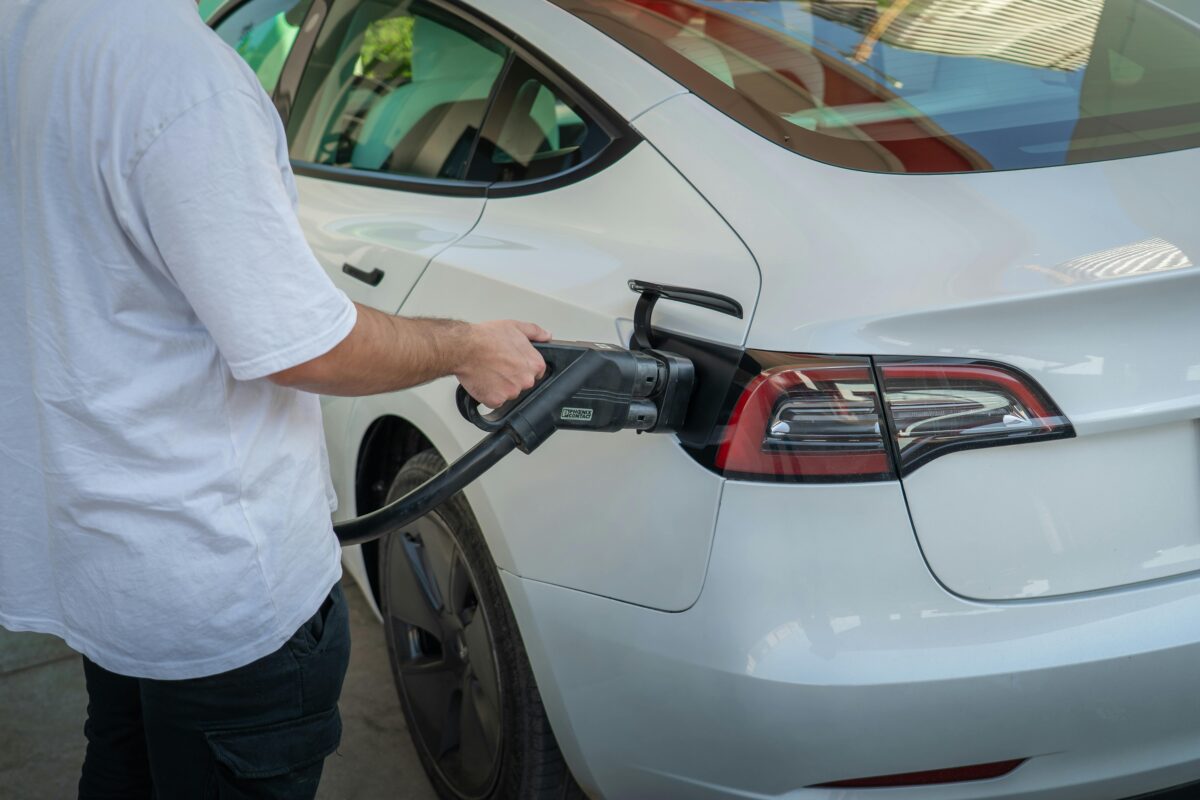





The U.S. House of Representatives is considering a $130 annual fee on electric vehicles (EVs), $35 on plug-in hybrids, and nothing on internal combustion (ICE) vehicles. Starting in 2029, the fee would rise $5 every two years, capping at $150 for EVs and $50 for hybrids. The fee would take effect Oct. 1, 2026, and expire in 2036.
The language sits in Sec. 1129, “Registration Fee on Motor Vehicles,” on page 174 of the BUILD America 250 Act: Building Unrivaled Infrastructure and Long-term Development for America’s 250th Act. The EV provision runs about five pages of the 1,000-plus page bill (the section-by-section summary alone is 64 pages).
Transportation and Infrastructure Committee Chairman Sam Graves (R-MO) and Ranking Member Rick Larsen (D-WA) released the text on May 17, 2026, framing it as bipartisan compromise. The bill must clear Congress before the current authorization expires Sept. 30, 2026.
There are about six million EVs registered in the U.S. In year one, the fee would raise roughly $780 million — just over 1% of the $72.27 billion authorized for federal-aid highway and highway safety construction in fiscal 2027.
The Federal Highway Administration has taxed gasoline at $0.184/gallon and diesel at $0.244/gallon since 1993, with a tenth of a penny per gallon going to the Leaking Underground Storage Tank Trust Fund.
At $130 per year, a vehicle driving 13,000 miles annually pays exactly one cent per mile. An ICE vehicle getting 18.3 MPG pays the same penny per mile in federal gas tax; a vehicle getting 36.6 MPG pays half that.
FuelEconomy.gov rates the Hyundai Ioniq 6 at 151 MPGe city, 120 MPGe highway.
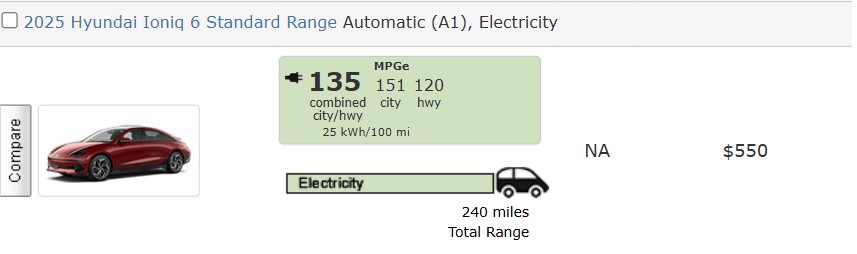
The mileage logic doesn’t fully hold anymore. Part of the original rationale for a gas tax was that heavier vehicles – which cause more road damage – get worse fuel economy, so the tax tracked road wear. With efficient EVs using roughly a quarter of the energy to move a comparable car, that proxy has broken down.
The Trump administration is currently suggesting suspending the gas tax to relieve consumer pressure as inflation and gas prices climb, driven by war in the Middle East.
This content is protected by copyright and may not be reused. If you want to cooperate with us and would like to reuse some of our content, please contact: editors@pv-magazine.com.




By submitting this form you agree to pv magazine using your data for the purposes of publishing your comment.
Your personal data will only be disclosed or otherwise transmitted to third parties for the purposes of spam filtering or if this is necessary for technical maintenance of the website. Any other transfer to third parties will not take place unless this is justified on the basis of applicable data protection regulations or if pv magazine is legally obliged to do so.
You may revoke this consent at any time with effect for the future, in which case your personal data will be deleted immediately. Otherwise, your data will be deleted if pv magazine has processed your request or the purpose of data storage is fulfilled.
Further information on data privacy can be found in our Data Protection Policy.