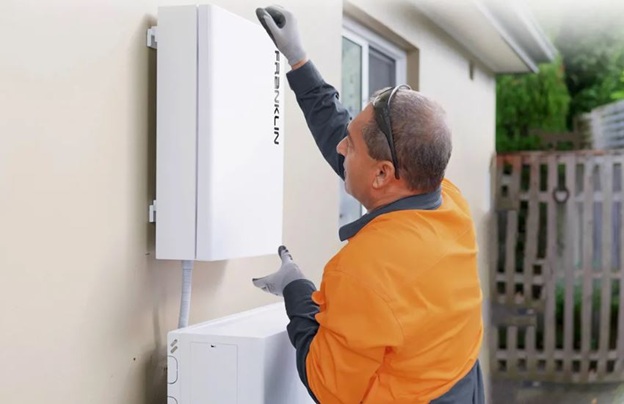





The city of Ann Arbor has begun installing residential solar-plus-storage systems in its Bryant neighborhood, marking the first time a U.S. city-owned utility has directly purchased and deployed such hardware for its residents.
The program is managed by the Ann Arbor Sustainable Energy Utility (A2SEU), a supplemental, community-owned provider established by voters in 2024. Unlike traditional virtual power plant (VPP) programs that rely on homeowner-purchased equipment, this model involves direct municipal procurement of the technology.
The initial phase utilizes FranklinWH’s aPower S batteries, which use lithium iron phosphate (LFP) chemistry and are rated for over 10,000 cycles. These systems provide a 15 kWh usable capacity and a continuous power output of 11.5 kW, with a 15 kW peak surge capacity for 10 seconds—sufficient to start heavy loads like 5-ton air conditioning units during an outage. The “S” model also features an integrated solar inverter with four independent MPPTs, supporting up to 20 kW of direct DC solar input.
The hardware is paired with rooftop solar from local installers including Michigan Solar Solutions, Homeland Solar, and Oak Electric Service. Texture’s software aggregates these distributed units into a coordinated grid resource, while the aGate controller enables “black start” capability, allowing home systems to reboot and recover independently during grid failures.
A goal of the pilot is to reduce the energy burden in the Bryant neighborhood, where some households spend over 33% of their income on utilities. The pilot includes 150 homes for the 2026 rollout, with the city aiming to scale to 1,000 installations in 2027 and several thousand annually thereafter. This municipal-ownership approach offers a potential alternative to the traditional investor-owned utility model for scaling distributed renewable energy.
This content is protected by copyright and may not be reused. If you want to cooperate with us and would like to reuse some of our content, please contact: editors@pv-magazine.com.




By submitting this form you agree to pv magazine using your data for the purposes of publishing your comment.
Your personal data will only be disclosed or otherwise transmitted to third parties for the purposes of spam filtering or if this is necessary for technical maintenance of the website. Any other transfer to third parties will not take place unless this is justified on the basis of applicable data protection regulations or if pv magazine is legally obliged to do so.
You may revoke this consent at any time with effect for the future, in which case your personal data will be deleted immediately. Otherwise, your data will be deleted if pv magazine has processed your request or the purpose of data storage is fulfilled.
Further information on data privacy can be found in our Data Protection Policy.