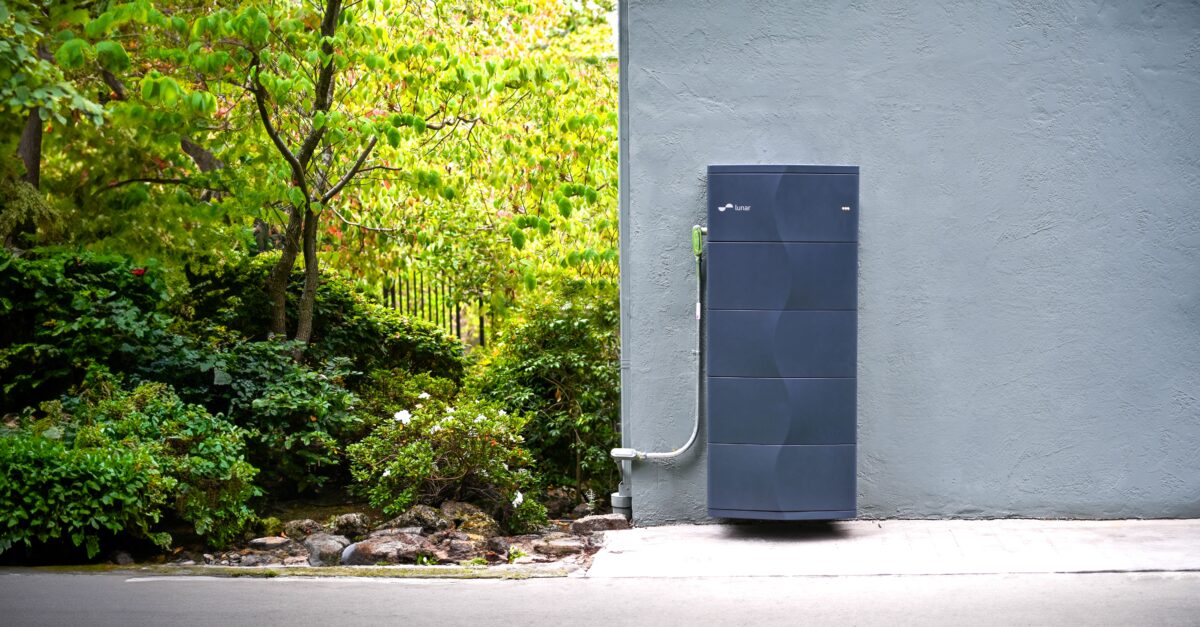





Lunar Energy announced on Wednesday it has raised $232 million in new capital to expand its domestic manufacturing capacity and scale its virtual power plant (VPP) software platform.
The funding consists of $102 million from a Series D round led by B Capital and Prelude Ventures, alongside a previously unannounced $130 million Series C led by Activate Capital.
The company says the investment will be used to accelerate the deployment of the Lunar System, an integrated home battery solution, and Lunar Gridshare, an AI-driven software platform designed to manage distributed energy resources (DERs).
The funding announcement categorized the Series D round as “oversubscribed,” a description that applies to funding rounds during which investors offer more money than the company originally aimed to raise.
According to founder and CEO Kunal Girotra, investor interest was driven by “clear proof” of Lunar Energy’s market traction, as demonstrated by the company’s successful deployment of over 2,000 home storage systems and operation of large-scale VPP programs.
In comments to pv magazine USA, Girotra said the extra funding will allow the company to aggressively scale its U.S. manufacturing base, expand into new states and innovate on new products.
Lunar currently designs its products in California and assembles them in Georgia and Washington.
Delivering financial incentives to owners
Lunar Energy says its technology provides tangible financial benefits to homeowners through both direct bill savings and VPP participation by intelligently managing consumption and exports.
The company says Lunar System customers earned an average of $464 last year by participating in VPP programs, a figure it claims is $338 more than for those who own systems with “standard home battery operating mode(s).”
In most cases, the systems are now being deployed through residential leases, meaning they are installed at no upfront cost to homeowners. To support the economics of this arrangement, leasing companies look for products that remain eligible for the Section 48E investment tax credit (ITC) and domestic content bonus, which require that eligible products were not manufactured using material assistance from so-called “foreign entities of concern” (FEOC).
In a recent interview with pv magazine USA about the changing value proposition of residential solar, Lunar Vice President of Revenue Ed Gunn noted that the company is “proudly domestic content.” Girotra says this means the company’s products qualify as non-FEOC and can secure the ITC and domestic content incentives for third-party owners.
How Lunar addresses the needs of the modern grid
As the U.S. electric grid faces increasing pressure from rising demand and aging infrastructure, VPPs are viewed by many in the industry as a vital tool for maintaining reliability.
By aggregating thousands of residential batteries, software platforms like Lunar Gridshare can provide capacity and fast frequency response to utilities, reducing the need for costly grid infrastructure upgrades that can take years to come online.
Girotra says this is a key reason why investors have been interested in backing the company during its latest funding rounds. “From our point of view, there’s a mismatch between rapidly rising electricity demand and the speed at which new grid infrastructure can be built,” he said, adding “Lunar’s ability to quickly aggregate behind-the-meter assets into dispatchable capacity makes it relevant across utilities, energy retailers, and grid operators facing reliability and peak demand challenges.”
After this latest round of funding, Lunar Energy has now raised more than $530 million since its founding in 2020.
In addition to Activate Capital (which participated in both of the recent funding rounds) investors include Sunrun, South Korea’s SK Group, DCVC, Piva Capital, Leitmotif, Sunrun, Itochu Corporation and Q Capital Partners.
This content is protected by copyright and may not be reused. If you want to cooperate with us and would like to reuse some of our content, please contact: editors@pv-magazine.com.




Batteries: I found that maintaining and battery replacements pro-rated is $2,000.00 per year when battery and labor is added to solar. if constant power outages are a problem, then having them instead of a whole house backup generator could be worth it. i had an Off-grid system that had to have batteries to run the inverters 24/7 but if connected to the grid, and one has a NEM program with the utilities, even with NEM3.0, the 150% of usage solar wattage limits would make just using the full limit of 159% and using he grid as ones battery. Solar Panels have 25-year warrantees, but batteries are 10 to 14 years then a full replacement is necessary. Rooftop Solar is Great and will meet most daytime usage needs and utilities have an excess of electrical generation with legacy power plants for nighttime power needs.