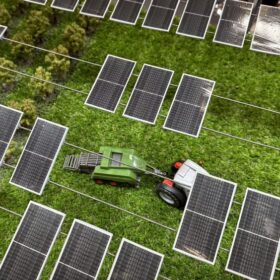
Plug-and-play control framework for adjusting panel tilt in agrivoltaics
A Cornell University research team developed a control framework that simultaneously considers past and future conditions when determining solar panel tilt angle. The researchers told pv magazine it is designed to be plug-and-play, allowing for software developers and solar operators to incorporate their optimization algorithms directly into the framework.
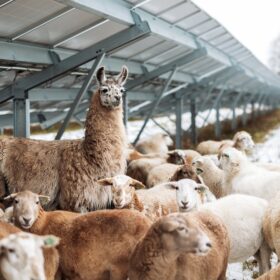
SEIA: Local solar bans threaten the economic survival of family farms
Solar development occupies a tiny fraction of U.S. farmland. Farmers shouldn’t be blocked by restrictive local zoning boards to install onsite solar, said the Solar Energy Industries Association.
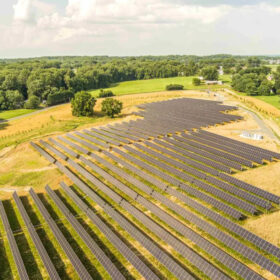
RFP Alert: Chaberton Energy seeks farming partners for Maryland agrivoltaics projects
Maryland-based developer Chaberton Energy has issued two requests for proposals (RFPs) seeking agricultural partners to co-locate farming operations with two new community solar projects in Montgomery County.
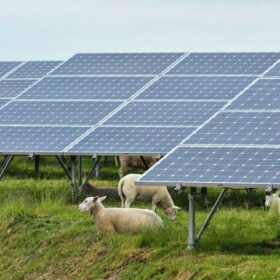
Agrivoltaics maintain or enhance forage quality, study finds
Researchers have analyzed the biomass and nutritional value of grasses and legumes for grazing dairy cattle, growing in agrivoltaics fields. The results showed that forage quality may be maintained or even enhanced in agrivoltaic environments.
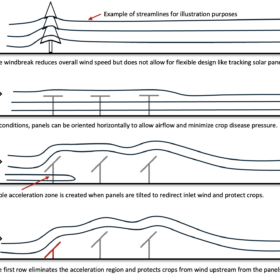
Tracker-based agrivoltaics turn fields into wind-safe zones
Cornell University researchers demonstrated that tracking solar panels in agrivoltaic systems can protect crops from wind damage while allowing airflow, outperforming traditional single-row tree windbreaks. They also proposed a new lowered-first-row panel design that improves wind protection, achieving up to 86% reduction in shelter-zone wind speeds under extreme conditions.
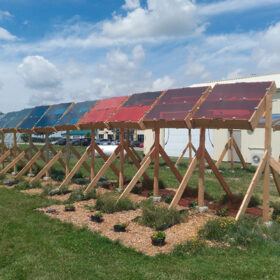
Agrivoltaics for turnips
Researchers in Canada found that semi-transparent cadmium telluride and low-transparency crystalline silicon solar panels can boost turnip root and leaf yields in agrivoltaic systems by optimizing light quality, distribution, and heat stress. Their study highlights that PV module type, transparency, and spectral transmission must be carefully matched to plant physiology to maximize both crop productivity and renewable energy generation.
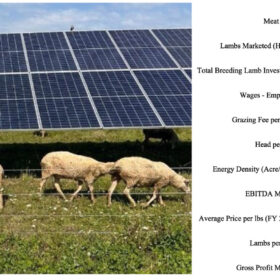
Study finds solar sheep grazing business models outperform agricultural benchmarks
A financial analysis of Ontario-based sheep farming integrated with utility-scale solar reveals EBITDA margins as high as 40%, far exceeding traditional farming returns.
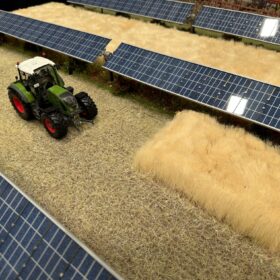
Increased spacing between solar module rows boosts agrivoltaics viability
U.S. researchers developed a framework showing that wider spacing between solar PV rows can make agrivoltaic systems economically viable for large-scale mechanized farming. Their simulations in Colorado demonstrated that optimized row spacing maintains crop production while improving combined agricultural and energy revenues.
Agrivoltaics can help lettuce survive extreme heat
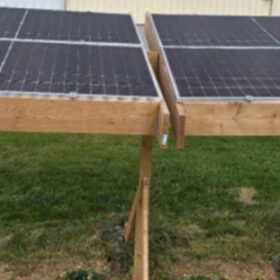
Scientists have grown organic romaine lettuce under 13 different types of PV modules, in an unusual hot Canadian summer. Their analysis showed lettuce yields increased by over 400% compared to unshaded control plants.
The ‘Farm of Tomorrow’ goes beyond traditional agrivoltaics
Norbut Solar Farms flipped the script on real estate development to long-term stewardship of land, generating renewable energy as well as crops and livestock.