U.S. consortium to unify grid-forming inverter research
A Department of Energy (DOE) $25 million investment has formed a consortium, led by the National Renewable Energy Laboratory (NREL) that will streamline research of grid-forming inverters.
Clean energy catalyst program announces funding awards
The program supports clean energy innovation and technology development across Massachusetts. Here are some of the recent cash awardees in solar and energy storage.
Grid-forming inverters enter prime time with DOE funding
As fossil generators are phased out, grid-forming inverters will need to be phased in so that the grid can be restarted after any blackout.

DOE grants aim to drive down inverter costs, advance PV fire prevention tech
Several of the projects also aim for lower costs for PV module materials or PV racking, as well as for lower defect rates on module assembly lines.

Sunrise brief: Want solar with that? McDonald’s signs up for a Louisiana project
Also on the rise: Illinois’ solar residential market fell off the roof in Q2, Arizona approves incentives for residential energy storage, and green roofs can improve panel efficiency.

Green roofs can boost solar panel efficiency, study finds
The improvements are believed to stem from lower temperatures on the green roof.
Trina Solar improves efficiency of 210 mm PERC solar module
The panel achieved a power conversion efficiency of 23.5%.
Partners turn to blockchain to expand solar module recycling
The technology is being developed in Japan and should be able to inspect solar modules to provide data on traceability and components used.
Perovskite-silicon tandems could rapidly scale solar
Halide perovskites combined with conventional silicon could help solar break the 26% efficiency barrier, disrupting the technology without disrupting business systems.
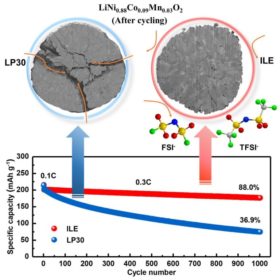
Lithium-metal battery with capacity retention of 88% over 1,000 cycles
German scientists have applied a new combination of cathodes and electrolytes to improve the stability of lithium-metal batteries. They fabricated a device with an energy density of 560 watt-hours per kilogram and a Coulombic efficiency of 99.94%.