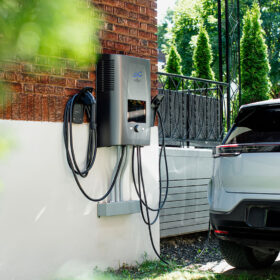
Bi-directional EV charging company dcbel nears 200 installations in California, plans for thousands more
The Montreal-based company is working through phase 1 of a project partially funded by the California Energy Commission, and has just began serving the Quebec market. As it works to prove its technology can support the California grid and its homeowner customers, the company is planning for phase 2.
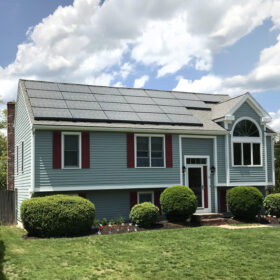
Massachusetts distributed solar potential reaches 92 GW as electrification demand rises
A report from the Applied Economics Clinic reveals that Massachusetts possesses 92 GW of technical potential for distributed solar, a capacity nearly four times higher than the state projected peak electricity demand for 2050. The report explores program design for more equitable access to the benefits of distributed solar and storage.
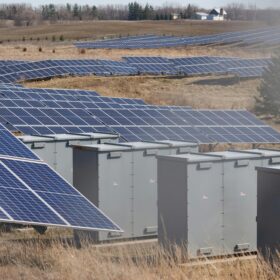
Sunraycer Renewables closes $901 million financing for 473 MWh BESS portfolio in Texas
Major lenders back $901 million financing for Texas solar‑plus‑storage portfolio with PPAs already signed with Google, spanning three hybrid projects.
Inox Clean buys U.S. PV manufacturing assets of Boviet Solar for $750 million
Through this million asset purchase, Inox Clean acquires 3 GW of operational TOPCon solar module manufacturing capacity in the United States, aligning with the “Make in America, For America” initiative.
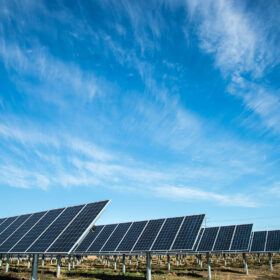
Arava Power agrees to acquire half of 670 MW OCI Energy Texas solar project
The La Salle Solar facility, which represents the largest single-site solar project for either of the two companies, is scheduled to begin commercial operation in 2028.
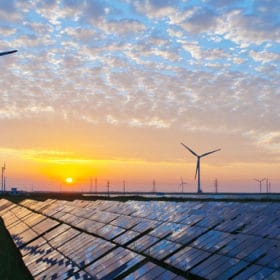
Clean energy shifts from fossil fuel replacement to critical load-serving resource
States are now balancing three priorities simultaneously: emissions reductions, grid reliability, and explosive demand growth, explores a report from the North Carolina Clean Energy Technology Center.

U.S. solar makers accuse Toyo and Origin Solar of duty evasion in Ethiopia
Eight US solar manufacturers have filed an anti-circumvention complaint with the US Department of Commerce, alleging that solar cells and modules assembled in Ethiopia using Chinese-origin components are evading existing antidumping and countervailing duty orders on Chinese solar products.
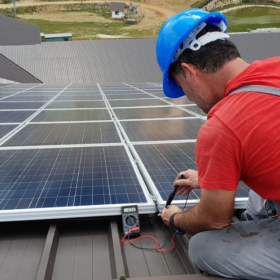
Solar risks: Internal fire, regulatory fines, and battery inaccuracies
The 8th annual Solar Risk Assessment from kWh Analytics identifies equipment-driven fires, regulator fines, and battery inaccuracies as the latest threats to renewable asset returns.
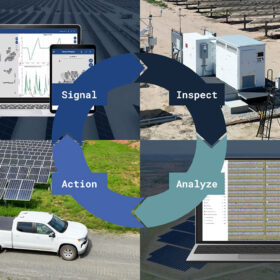
GameChange Solar and Raptor Maps bring together software monitoring and robotic inspections to augment O&M workflows
The companies say their solutions combine to provide asset owners with both rapid insights into emergent issues and long-term benefits from scheduled inspections, delivering a “continuous feedback loop” in which data gathered by autonomous drone inspections helps to optimize operational algorithms in the tracker software.
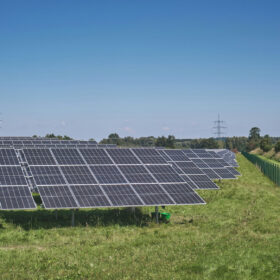
Integrated policy tools to solve the renewable energy siting crisis
A white paper explores how forward-thinking state policymakers and solar developers are moving beyond traditional property tax structures to embrace contractual legal tools that provide both long term regulatory certainty and tangible infrastructure improvements for host communities.