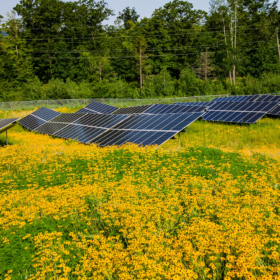
Virginia expands access to community solar
A change to a utility’s proposed approach to minimum billing opens community solar to more Virginia customers, while a potential 150 MW increase in the amount of community solar capacity is within reach.
Distributed PV employment globally outpaces utility-scale solar, says IEA
The latest edition of the International Energy Agency’s (IEA) World Energy Employment report found employment in the PV sector surpassed 5 million in 2024, with distributed solar accounting for two-thirds of all solar employment globally, despite representing only 43% of installed capacity.
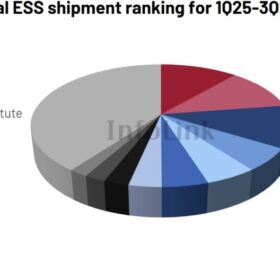
Global ESS shipments hit 286 GWh as Tesla and Chinese heavyweights out front
Global energy storage shipments jumped 84.7% in the first three quarters of 2025, with Tesla and Chinese manufacturers leading the charge, says InfoLink.

In case you missed it: This week’s top five solar news stories
pv magazine USA spotlights news of the past week including market trends, project updates, policy changes and more.
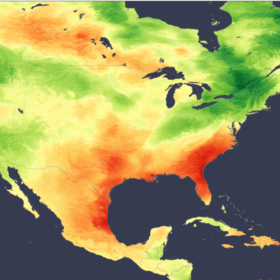
Atmospheric river cuts irradiance across Western North America
In a new weekly update for pv magazine, Solcast, a DNV company, reports that solar irradiance levels were well below average in western and northern United States in November, while southern parts of the country and Mexico enjoyed strong positive anomalies.
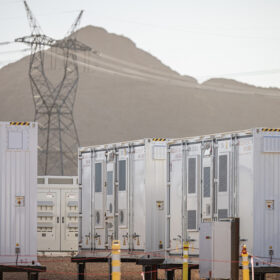
Demand diligence from U.S. battery integration
Tariffs continue to reshape the U.S. storage market. Rising costs for overseas systems have created new incentives to integrate equipment domestically, and many developers are turning to US firms to assemble battery systems. Integration capacity can scale faster than battery cell manufacturing, but not without risk. Unlike cell plants, where automated processes keep variations in check, battery assembly and integration depends on people, as Jeff Zwijack from Intertek CEA explains.

People on the move: Silfab Solar, SEIA, Logical Buildings
Job moves in solar, storage, cleantech, utilities and energy transition finance.

Congress urged to reform “nearly complete moratorium” on U.S. solar projects
A coalition of 143 solar companies signed a letter requesting reforms to solar project permitting, as Trump administration executive orders have led to an effective shutdown of all projects under Department of Interior purview.

DOE removes “renewable” from National Renewable Energy Laboratory
The US Department of Energy (DoE) has renamed the National Renewable Energy Laboratory (NREL) in Colorado as the National Laboratory of the Rockies, a change it says aligns the institute’s mandate with the Trump administration’s applied energy priorities.

Study finds Terrasmart solar trackers demonstrate labor efficiency
Third-party consulting company Eclipse-M found the company’s racking solutions require less labor hours than the average tracker solar racking solution.