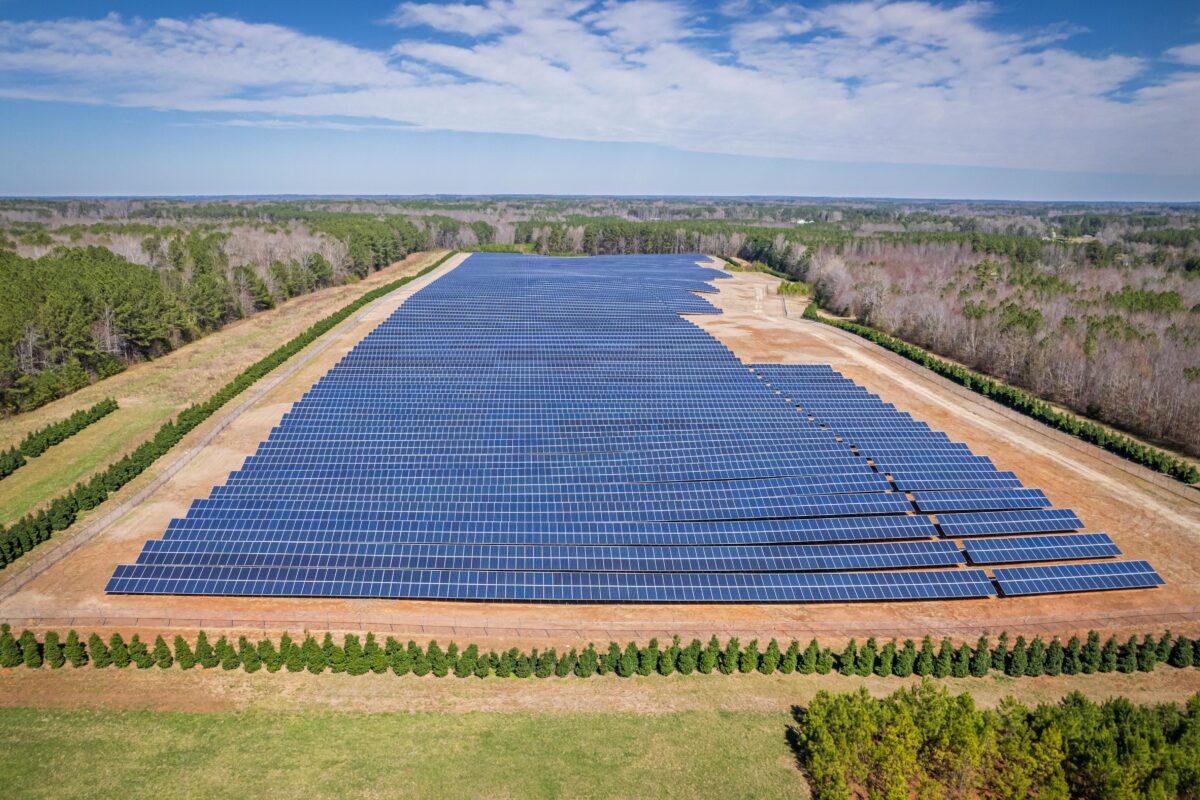





Land-use conflicts between renewable energy developers and agricultural communities have fueled intense local debates over food security and energy independence.
Peer-reviewed research authored by Jerome Dumortier and Rafael M. Almeida quantifies the actual market implications of converting agricultural fields into utility-scale solar installations. The findings indicate that public fears regarding national food affordability are largely unsubstantiated by underlying economic fundamentals.
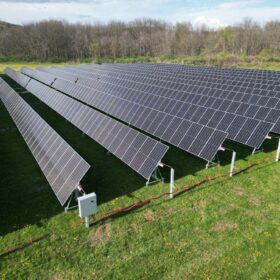
Under a baseline expansion scenario where 40% of future solar projects sit on cropland, prices for maize, soybeans, and wheat increase by less than 5.6%. Such an increase represents just one-third of the long-term price pressures associated with historical U.S. biofuel production mandates.
Aggressive modeling shows that even if a highly unlikely 80% of new solar deployment occurs on cropland, commodity price spikes remain capped below 18.4%. Wheat experiences slightly higher relative price pressures than corn or soybeans due to a greater geographic overlap between solar potential and traditional wheat-growing regions.
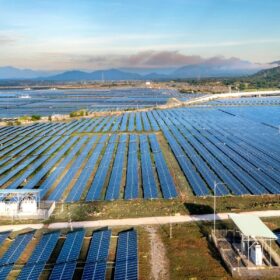
Total land required for projected U.S. solar infrastructure through 2050 ranges between 3.8 million and 6.1 million hectares. Outpacing this entire projected footprint, the normal interannual variation for U.S. field crop area alone fluctuated by 10 million hectares between 2014 and 2023. Continuous improvements in crop yields also mean that agricultural output rises even as total farmed acreage contracts.
Localized policy restrictions often emerge because solar developers outbid traditional farmers in local rental markets, but the researchers note that microeconomic land competition does not impact macroeconomic food prices. Landowner returns actually benefit significantly from clean energy diversification, especially since 57.1% of the nation’s 1.9 million farms report net financial losses.
National survey data reveals that solar lease offers regularly exceed $2,470 per hectare, heavily outperforming peak non-irrigated farmland cash rents of $813 per hectare. Photovoltaic systems deliver substantially higher energy output per unit of land than liquid transportation fuels like corn ethanol, positioning solar as a highly efficient tool for long-term energy security.
This content is protected by copyright and may not be reused. If you want to cooperate with us and would like to reuse some of our content, please contact: editors@pv-magazine.com.


By submitting this form you agree to pv magazine using your data for the purposes of publishing your comment.
Your personal data will only be disclosed or otherwise transmitted to third parties for the purposes of spam filtering or if this is necessary for technical maintenance of the website. Any other transfer to third parties will not take place unless this is justified on the basis of applicable data protection regulations or if pv magazine is legally obliged to do so.
You may revoke this consent at any time with effect for the future, in which case your personal data will be deleted immediately. Otherwise, your data will be deleted if pv magazine has processed your request or the purpose of data storage is fulfilled.
Further information on data privacy can be found in our Data Protection Policy.