




From ESS News
What was first announced in December 2025 has now been formally unveiled. Ford Motor Company has officially launched Ford Energy, a wholly owned subsidiary focused on supplying US-assembled battery energy storage systems (BESS) for utilities, data centers, and large industrial and commercial customers across the United States.
The move reflects Ford’s strategy to repurpose underutilized electric vehicle battery manufacturing capacity and pivot toward “higher-return opportunities” in the energy storage sector. The company plans to invest approximately $2 billion over the next two years to scale the business, targeting annual deployments of at least 20 GWh, with first customer deliveries expected in late 2027.
Ford Energy’s operations will span the full battery manufacturing value chain, from battery cell production – including electrode coil manufacturing, module and container assembly, to sales and after-sales service support.
The company’s flagship product will be the Ford Energy DC Block, a standardized 20-foot containerized battery energy storage system built around 512 Ah lithium iron phosphate (LFP) prismatic cells. As announced on Monday, the system will be offered in two configurations: the FE-250, a two-hour system, and the FE-450, a four-hour system. Both integrate liquid-cooled thermal management and an advanced battery management system (BMS), and are designed for a 20-year operating life.
While no detailed product specifications or datasheets have yet been released, Ford Energy stated in its initial December announcement that it intends to manufacture “advanced battery energy storage systems of 5 MWh or larger.”
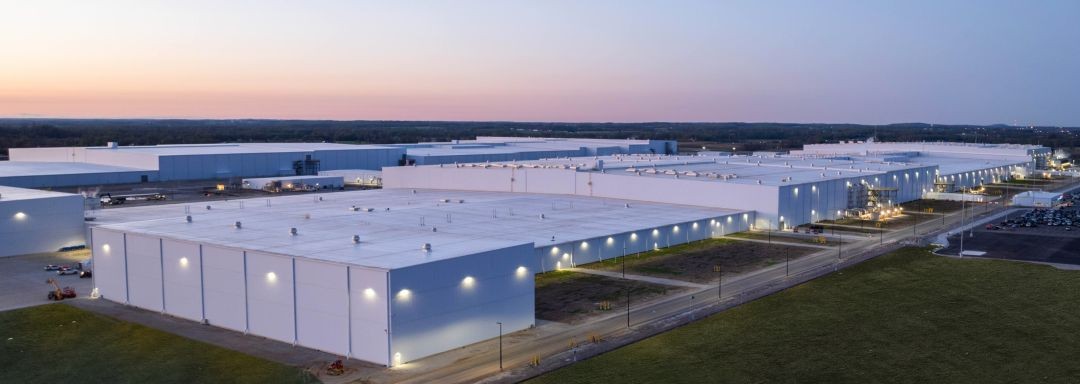
To this end, the automotive giant is repurposing existing, underutilized electric vehicle (EV) battery manufacturing capacity in Glendale, Kentucky. Last year, Ford Motor Company, SK On, SK Battery America, and BlueOval SK agreed to restructure ownership of their jointly developed US battery manufacturing projects enablingFord to independently own and operate the Kentucky battery plants.
Separately, Ford plans to use its BlueOval Battery Park Michigan facility in Marshall, Michigan, to manufacture smaller-amp-hour cells for residential energy storage applications.
“Our manufacturing and supply chain strategy is designed to support a changing regulatory environment for battery energy storage. It aligns with Investment Tax Credit requirements. It also meets material assistance and domestic content standards relevant to grid-scale storage,” the company said on Monday.
The launch of Ford’s energy storage business forms part of “a broader strategy to redeploy capital toward areas of stronger customer demand and sustainable profitability”. In doing so, Ford joins a growing list of automakers – including Tesla, Mercedes-Benz, and General Motors – expanding into the stationary energy storage market.
This content is protected by copyright and may not be reused. If you want to cooperate with us and would like to reuse some of our content, please contact: editors@pv-magazine.com.


By submitting this form you agree to pv magazine using your data for the purposes of publishing your comment.
Your personal data will only be disclosed or otherwise transmitted to third parties for the purposes of spam filtering or if this is necessary for technical maintenance of the website. Any other transfer to third parties will not take place unless this is justified on the basis of applicable data protection regulations or if pv magazine is legally obliged to do so.
You may revoke this consent at any time with effect for the future, in which case your personal data will be deleted immediately. Otherwise, your data will be deleted if pv magazine has processed your request or the purpose of data storage is fulfilled.
Further information on data privacy can be found in our Data Protection Policy.