





Virtual power plants (VPPs) ae advantageous to all ratepayers, but especially to low- to middle-income households who stand to benefit from dependable energy, lower electric bills and a healthier environment.
VPPs are aggregations of small-scale distributed energy resources including solar energy systems, electric vehicles (EVs), EV chargers and demand response devices such as water heaters, thermostats, appliances and more. A recent webinar moderated by Clean Energy States Alliance (CESA). The Clean Energy States Alliance (CESA) VPP Acceleration Initiative conducted a webinar that explored the reciprocal relationship between VPPs and energy justice .
Participating in VPPs may be out of reach of lower-income ratepayers because of the costs of purchasing energy-saving components. However, many states such as Vermont, have programs that offer batteries at low or no cost
Lisa Morris, energy services planner at Vermont Electric Cooperative (VEC), described the utility’s recent Vermont Income Qualified Residential Battery Storage Program, which aims to help low-income customers as part of a VPP program.
The Vermont program has funded the installation of 45 Tesla Powerwalls for low- to moderate-income members, and those members agree to allow VEC to use their home battery as part of its VPP program. VEC basically accesses the storage in the batteries a limited number of times a year when it is anticipating peak demand.
Morris emphasized that both parties benefit: the members receive battery backup when they need it and VEC gets about 450 kW of peak shaving capacity. She said key to the energy justice aspect of the program is the targeted outreach to lower income members as well as those on a medical alert list or those in areas with less reliable service.
Adam Warren, former Director of the Accelerated Deployment and Decision Support Center at the National Renewable Energy Laboratory, said in the webinar that it’s important that VPPs not create “a new energy elite,” and the importance of informed consent. He noted that “energy poor” households often have less ability to absorb bill volatility, so it’s important that VPPs are designed with transparency.
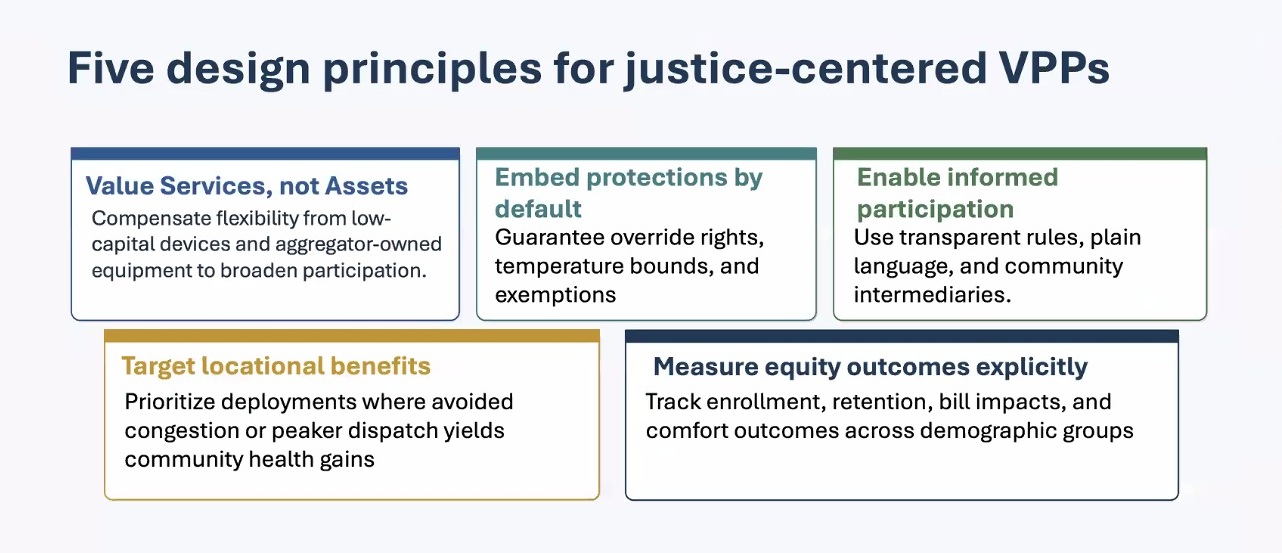
Warren presented five design principles that ensure that VPPs help accelerate the energy transition while addressing energy justice.
Another reciprocal benefit to VPPs is that, not only do they offer battery backup to ratepayers and help utilities and electric co-ops manage peak energy use periods, but they can also reduce use of peaker plants; thus, improving the health of the communities they serve.
Once programs are implemented that serve lower income populations, equity outcomes must be measured, Warren said. Enrollment and retention must be tracked, along with bill impacts and “comfort outcomes” across demographic groups. Comfort outcomes can include keeping the heat on during ice storms, the power on for needed medical devices, water pumps operating for cooking and sanitization and air conditioning during hot spells.
Read more about the 50 states report here.
In the CESA webinar, Warren mentioned other states with successful programs with energy justice components. Puerto Rico’s battery energy demand response, for example, is meeting the needs of lower-income residents by keeping the lights on during storms.
According to 50 States of Virtual Power Plants and Supporting Distributed Energy Resources: 2025 State Policy Snapshot,35 states and the District of Columbia advanced VPP and distributed energy resource (DER) aggregation policies in 2025. The report cites regulatory and utility actions taken over the last year that established formal VPP programs, demand response initiatives and active managed charging for EVs.
The U.S. Department of Energy (DOE) 2023 “liftoff” study found that scaling VPPs three to five times by 2030 to reach 80 to 100 GW of enrolled capacity could serve 10% to 20% of peak load and save power systems $10 billion per year. Jigar Shah, former director of the DOE’s Loan Programs office, said in a recent report that scaling VPPs is the quickest way for state leaders to stabilize electric rates.
This content is protected by copyright and may not be reused. If you want to cooperate with us and would like to reuse some of our content, please contact: editors@pv-magazine.com.


By submitting this form you agree to pv magazine using your data for the purposes of publishing your comment.
Your personal data will only be disclosed or otherwise transmitted to third parties for the purposes of spam filtering or if this is necessary for technical maintenance of the website. Any other transfer to third parties will not take place unless this is justified on the basis of applicable data protection regulations or if pv magazine is legally obliged to do so.
You may revoke this consent at any time with effect for the future, in which case your personal data will be deleted immediately. Otherwise, your data will be deleted if pv magazine has processed your request or the purpose of data storage is fulfilled.
Further information on data privacy can be found in our Data Protection Policy.