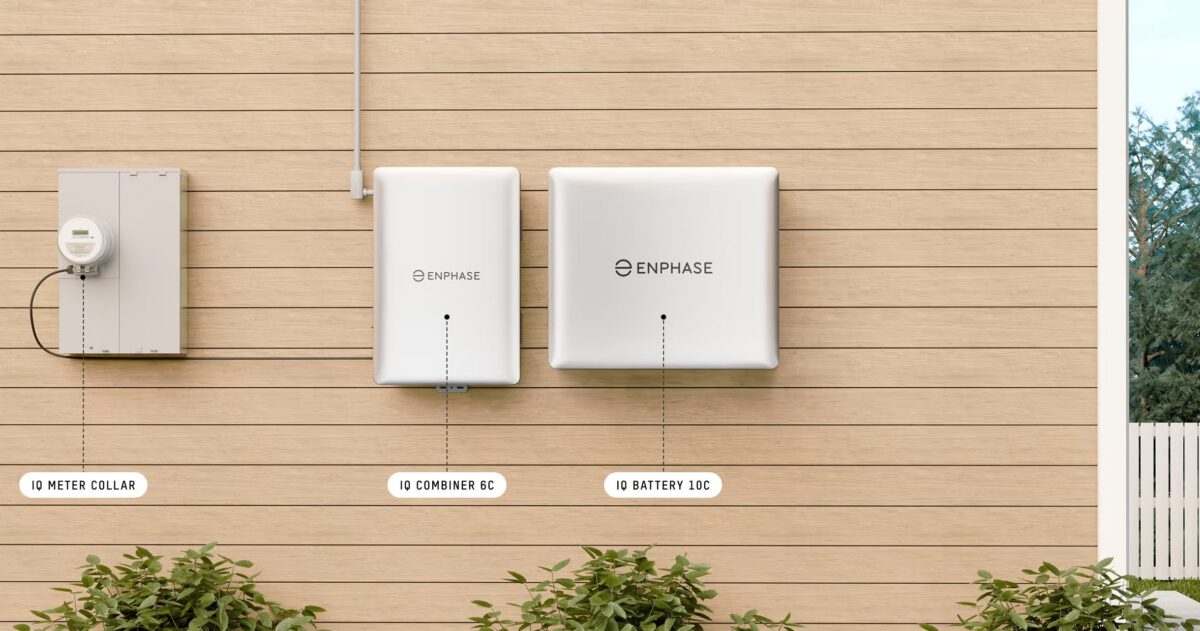





The number of batteries installed (and how quick that install is happening) may no longer be the most important metric for investors evaluating residential storage projects. Instead, for some investors, long-term revenue streams provided by market participation, virtual power plants (VPP) and aggregation are taking center stage.
It’s in with the software and out with the hardware.
“A pure-play hardware vendor’s value is limited to the value of the box, while a platform’s value compounds with every connected device,” explained Mark Gudiksen, a managing partner at Piva Capital, which backs companies including Lunar Energy, Planted Solar and Malta, Inc, a steam-based long-duration storage startup. He told ESS News that the differences between a hardware-only battery company and one that also works with intelligent software grow more pronounced as interactions with the grid become more frequent and complex.
From an investment standpoint, Gudiksen said, whoever owns the software layer and can consistently and effectively dispatch thousands of assets on demand in one fell swoop is “in a fundamentally different competitive position” than those who are only selling discrete units of hardware. Companies who’ve locked down the physical and digital layers may be more intriguing to investors. He expects this trend to continue as advanced control over dispatchable assets deepens its hold as a key value add for residential batteries. The network effect of a platform like a VPP will only “further expand the moat.”
Still, though Gudiksen sees software-forward companies as safer investment choices compared to hardware-focused ones, he cautioned against stacking all bets on one approach, particularly when it relies on third parties or outside groups to succeed.
“Vertical integration of hardware and software creates defensibility at multiple layers,” he explained, as it gives utilities and load-serving entities one sole counterparty, contract, integration and point of accountability. In a market where complex procurement processes can impede deployment, the simplicity of a one-and-done, vertically integrated model has “real value.”
What’s more is that the proof of concept already exists: U.S.-based investors need but look abroad to battery markets in the United Kingdom, Japan or Australia to see that allowing residential batteries to participate in wholesale markets and provide grid services comes with compelling returns. Gudiksen noted that “the U.S. is catching up fast,” as the nation’s market structure is already evolving in a way that he expects to accelerate aggregation.
The residential market is shifting towards a third-party ownership model, he explained, which lets a single company own and dispatch tens of thousands of assets across multiple grid service markets while sharing revenues with homeowners. Base Power in Texas is one example where it raised $1 billion not just for hardware but for the software play for a coordinated battery fleet.
“At that scale, a battery fleet starts to look a lot more like a dispatchable and clean generation asset rather than a collection of consumer electronics,” Gudiksen added, as they can serve multiple purposes. “The assets don’t need to be valued as either individual consumer electronics or as a monolithic power plant. They can be both simultaneously, which makes the model compelling.”
Still, at the heart of the appeal lies one key factor: a durable revenue stream.
“I have confidence in the durability of the underlying value because the fundamental supply-demand tension in the market is structural, not cyclical,” Gudiksen said. “The grid needs flexible, dispatchable capacity at the distribution edge.”
“Solar combined with residential batteries, when properly aggregated and controlled, provides exactly that solution.”
This content is protected by copyright and may not be reused. If you want to cooperate with us and would like to reuse some of our content, please contact: editors@pv-magazine.com.






The focus on control over capacity is an interesting shift. I wonder how this will affect future investments in residential storage.
Really, the dispatchable grid demand component should be monetized by large multi-family residential solar parking lots equipped with V2G chargers +non-flammable BESS. But the charging component should be happening during peak solar supply hours, 10am to 3pm, at large workplace & shopping center solar parking that is equipped with Level 2 charging +non-flammable BESS. This strategy can be expedited by cities adopting fast-track permitting fo multiple pre-approved modular solar canopy systems, batched for quicker utility interconnections. And air-space leases that return new income to parking lot owners, who otherwise never consider their tenants or customers utility and transportation costs.