




Technical advisory firm Intertek CEA has released its Q4 2025 market intelligence reports, outlining its expectations for a prolonged period of higher solar module prices in the U.S. — a trend that will likely be exacerbated by tariffs levied under the U.S. Department of Commerce’s Section 232 polysilicon imports investigation, among other factors.
The analysis, found in the firm’s latest PV Supply, Technology, and Policy Report and PV Price Forecasting Report, provides information about the four tariffs and duties likely to be enforced on imports of solar materials to the U.S. throughout 2026, including the Solar 4 AD/CVD duties, Section 232 tariffs, and the recently-rescinded IEEPA “reciprocal” tariffs, which were replaced on February 20, 2026 with a 10% import duty under Section 122 after being declared unconstitutional by the U.S. Supreme Court.
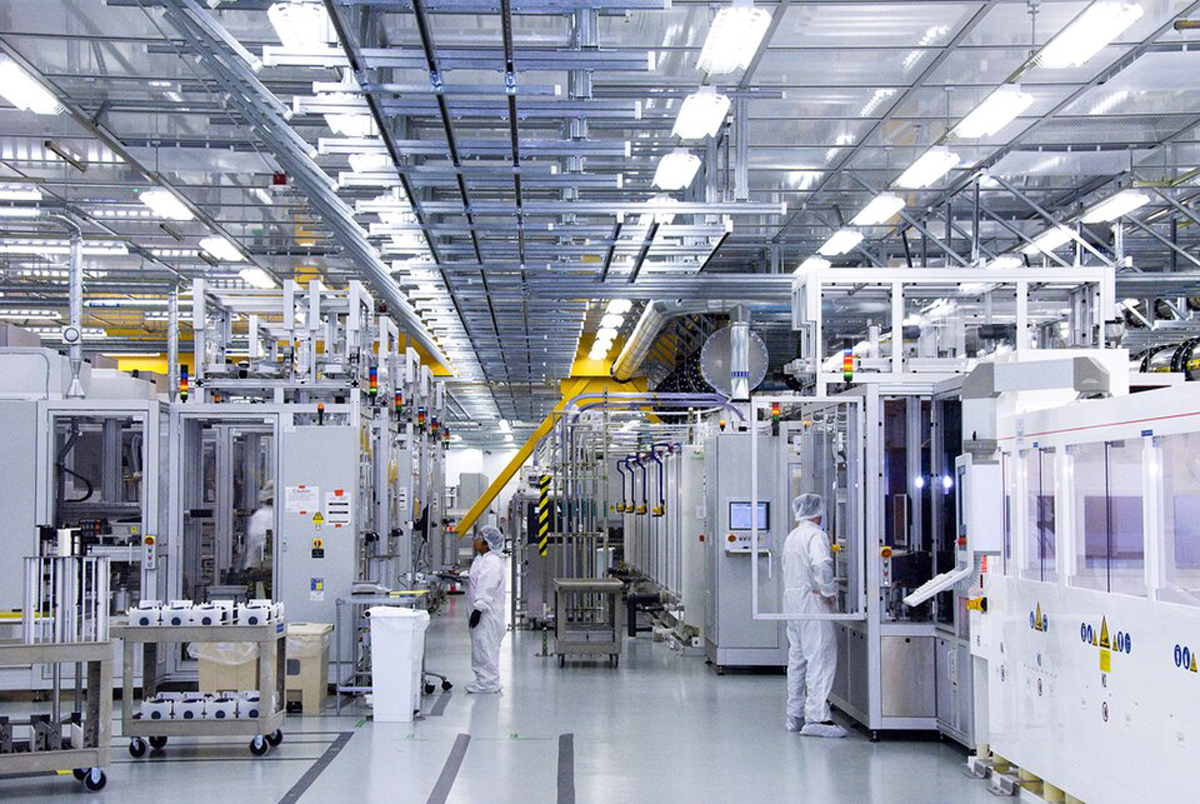
But the reports contain some hopeful news for U.S. buyers. While the Price Forecasting Report indicates the Section 232 tariffs will render imported modules uneconomical for the majority of U.S. buyers, the Supply, Technology, and Policy Report estimates that U.S. module manufacturers ramped to 45 GW of annual production capacity by the end of 2025; enough to supply all of the estimated 43 GW in capacity installed in the U.S. last year.
The firm’s analysis indicates the domestic module supply chain is moving toward 60 GW of capacity in 2026, with an additional 16 to 20 GW likely as of early 2027. However, the reports indicate that domestic solar cell supply is constrained, as many planned cell factories are delayed or not expected to meaningfully ramp until late 2026.
Intertek’s Section 232 base case
The Price Forecasting Report outlines a base case for potential Section 232 tariffs, estimating tariffs of $10/kg on polysilicon, 7 cents per watt for ingots and wafers and 10 cents per watt for cells.
Crucially, the group forecasts finished modules will face a tariff of 20 cents per watt, with no exclusions. These tariffs are expected to drive most procurement to domestic modules, a move that could contribute to substantial price increases for U.S. buyers.
As of Q1 2026, the Price Forecasting Report shows U.S. TOPCon modules from suppliers that qualify for the Advanced Manufacturing Production Credit under Section 45X are price-competitive with current imports, but Intertek says that price is likely to increase if crystalline silicon module imports are effectively shut out of the U.S. due to the Section 232 tariffs.
Details regarding the Section 232 tariffs are expected to be revealed by the Department of Commerce this spring. Intertek’s analysis of non-FEOC, duty-free TOPCon modules imported from Southeast Asia made with Chinese polysilicon and wafers shows the tariffs are expected to all but erase the profit margin suppliers earn on these products for the foreseeable future.
Full reports available from Intertek
Intertek CEA’s Market Intelligence reports contain insights into global PV and ESS supply chain and pricing. Samples of the latest reports that contain limited information about the firm’s findings can be downloaded from the company’s website. Full access to the reports is available for purchase from Intertek.
This content is protected by copyright and may not be reused. If you want to cooperate with us and would like to reuse some of our content, please contact: editors@pv-magazine.com.





By submitting this form you agree to pv magazine using your data for the purposes of publishing your comment.
Your personal data will only be disclosed or otherwise transmitted to third parties for the purposes of spam filtering or if this is necessary for technical maintenance of the website. Any other transfer to third parties will not take place unless this is justified on the basis of applicable data protection regulations or if pv magazine is legally obliged to do so.
You may revoke this consent at any time with effect for the future, in which case your personal data will be deleted immediately. Otherwise, your data will be deleted if pv magazine has processed your request or the purpose of data storage is fulfilled.
Further information on data privacy can be found in our Data Protection Policy.