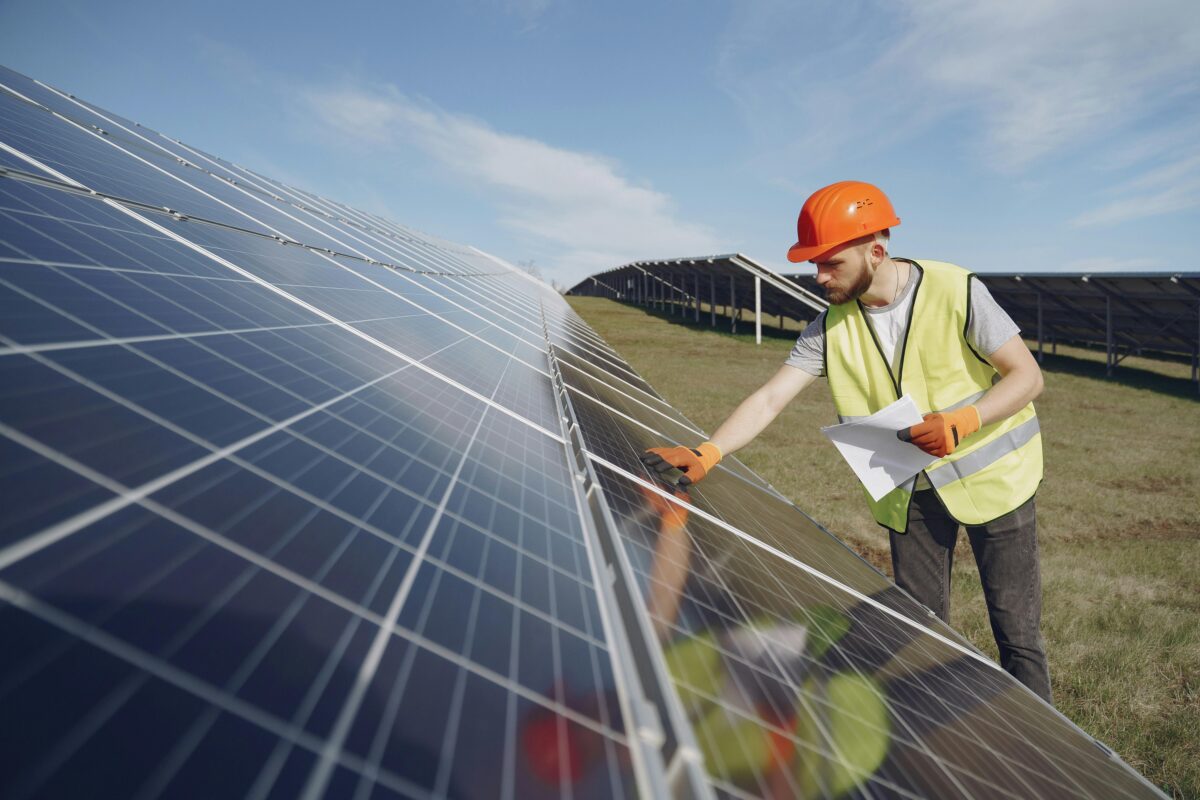





Sabanci Renewables, a U.S. subsidiary of Turkish conglomerate Sabanci Climate Technologies, has entered into a long-term agreement with Empact Technologies to manage tax credit compliance for a 286 MW utility-scale solar portfolio in Texas. The partnership centers on navigating the rigorous labor and apprenticeship requirements mandated by the Inflation Reduction Act (IRA) to secure the full 30% Investment Tax Credit (ITC).
The agreement covers two large projects in the ERCOT market: the 156 MW Pepper Solar project in McLennan County and the 130 MW Lucky 7 project in Hopkins County. Signal Energy is serving as the lead EPC for both assets.
Under the IRA’s Prevailing Wage and Apprenticeship (PWA) standards, utility-scale developers must document that all laborers and mechanics were paid local prevailing wages and that a specific percentage of total labor hours—currently set at 15% for projects starting construction in 2024 or later—were performed by qualified apprentices.
Failure to meet these compliance markers lowers the base 30% credit to just 6%. For a 286 MW portfolio, this represents a potential swing of over $75 million in tax equity value.
Empact will utilize its NexusIQ platform to track labor data across the primary EPC and various subcontractors. The service scope extends from pre-construction through the full five-year ITC recapture period. Notably, the deal includes a financial guarantee from Empact to cover potential IRS penalties should an audit reveal errors in the managed compliance data.
“As we expand our presence in the U.S. renewable energy sector, prioritizing compliance and governance across our projects is essential,” said Tolga Kaan Doğancıoğlu, chief executive officer of Sabanci Climate Technologies.
The move highlights an industry-wide shift toward professionalized compliance management as tax equity investors demand “audit-ready” documentation. Sabanci, which operates over 4 GW of generation globally, has stated a goal of reaching 3 GW of U.S. renewable capacity by 2030.
According to recent EIA data, solar and storage are projected to account for 79% of the 86 GW of new utility-scale capacity planned for the U.S. grid in 2026. As the project queue grows, the ability to de-risk these assets through third-party compliance verification is becoming a standard requirement for institutional capital.
This content is protected by copyright and may not be reused. If you want to cooperate with us and would like to reuse some of our content, please contact: editors@pv-magazine.com.




By submitting this form you agree to pv magazine using your data for the purposes of publishing your comment.
Your personal data will only be disclosed or otherwise transmitted to third parties for the purposes of spam filtering or if this is necessary for technical maintenance of the website. Any other transfer to third parties will not take place unless this is justified on the basis of applicable data protection regulations or if pv magazine is legally obliged to do so.
You may revoke this consent at any time with effect for the future, in which case your personal data will be deleted immediately. Otherwise, your data will be deleted if pv magazine has processed your request or the purpose of data storage is fulfilled.
Further information on data privacy can be found in our Data Protection Policy.