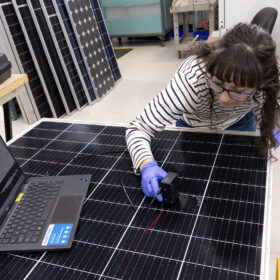
Trump: “We will not approve wind or farmer destroying solar”
U.S. President Donald Trump took to social media to express an anti-solar and wind energy stance. The President has made a series of actions to slow the growth of renewable energy in the United States, but it is expected to remain the dominant source of new-build electric generation capacity.
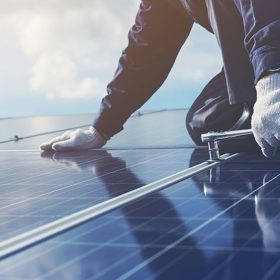
The behavior of solar project resilience
Technology is only one part of the resilience equation; how a renewable energy site actually operates and maintains its assets can be just as important as the equipment itself.
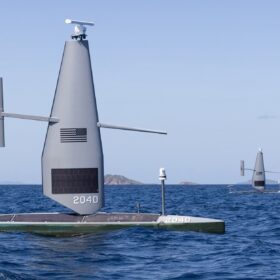
Ocean-going saildrones tap solar, wind for long-duration monitoring
The U.S.-based ocean technology company has developed a range of data-collecting uncrewed surface vehicles (USV) powered by solar and wind. They are designed to operate in harsh maritime conditions, above and below the sea surface, to carry out science, commercial, and defense missions.
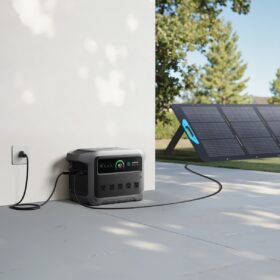
Anker Solix launches C1000 Gen 2, billed as the world’s fastest charging power station
The new portable power station can output a max of 2000 W with a 1024Wh capacity, and charge to full in 49 minutes.
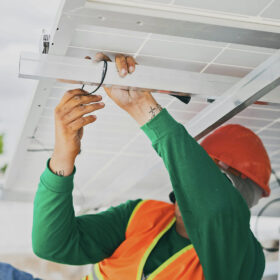
Solar tax credit cliff tightens project deadlines
U.S. project developers face a shrinking timeline as federal investment and production tax credits are set to end early, and new import restrictions target Chinese components.
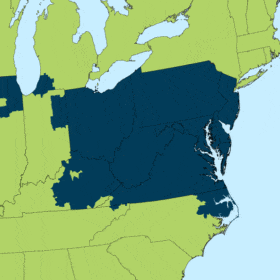
New Jersey utilities must explain their votes on matters decided by grid operator PJM
When members of the nation’s largest grid operator PJM vote on matters affecting the speed of PJM’s interconnection studies and other issues, utilities in New Jersey and Maryland must now report on how they voted.
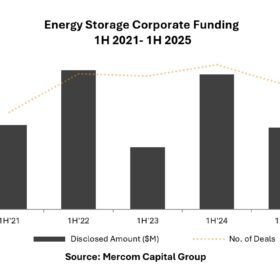
Energy storage finance fell 41%, year-to-June, despite rebound in project deals
Political uncertainty and new trade tariffs have been cited by Mercom Capital Group as dampening activity.

What can be learned from grid-scale battery fires?
Battery fires, while a rare occurrence given the number of lithium-ion batteries manufactured and deployed each year, are common enough to worry insurers and others in the industry. Following high-profile battery fires in 2024 and 2025, the industry is busy implementing solutions not only to reduce the risk of fire breaking out in the first place, but to contain and mitigate the risk of injury or damage should it happen. Conclusions from large-scale fire testing will be key.
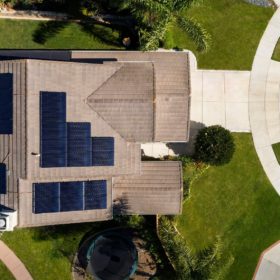
How one Texas solar company cut engineering and permitting time from 40 days to four
New tools in the residential solar space help reduce the time it takes for engineering and permitting, providing streamlined processes and lowering costs as the industry faces the end of the solar tax credit.

Dirty data can break a clean energy portfolio’s return on investment
While AI can help renewable companies get ahead, it will only take them so far without quality, clean data.