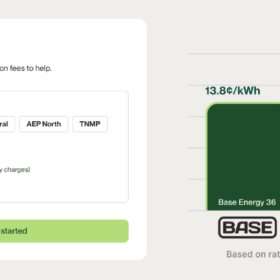
Base Power announces battery-free Texas retail energy plan across major utility territories
The company says it can save the majority of Texans money by leveraging its fleet of home batteries to offer “all-in” rates between 13.2 and 15.7 cents per kWh.
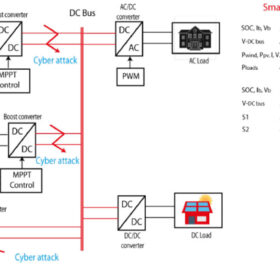
All emerging cyber threats targeting power infrastructure at a glance
Researchers in Morocco analyzed cybersecurity challenges in smart grids, highlighting AI-driven detection and defense strategies against threats like distributed denial-of-service, false data injection replay, and IoT-based attacks. They recommend multi-layered protections, real-time anomaly detection, secure IoT devices, and staff training to enhance resilience and safeguard power system operations.
Electrification may not be enough to protect against gas-driven price shocks
With power prices still tied to gas, storage is emerging as a hedge against unseen risk.
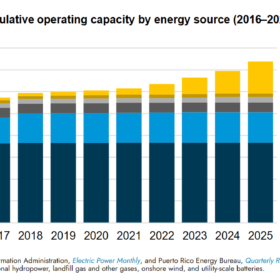
Rooftop solar now accounts for one fifth of Puerto Rico’s generation capacity
Distributed solar additions have vastly outpaced all other forms of generation as the territory’s overall power generation capacity continues to grow.

U.S. solar and storage market report: 2026 state rankings and forecasts
Reviewing the top ten states for solar generation and capacity, energy storage buildout, and more.
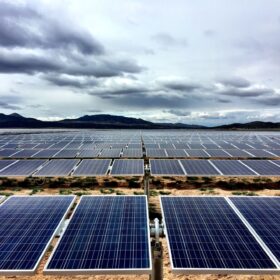
Rhythm Energy expands renewable electricity plans to commercial customers in Texas
The Houston, Texas-based retail energy provider’s PowerShift Business plan aligns lower prices with common operating hours, while the All-Business plan offers a standard flat rate.

Perch Energy and Solstice merger scales to 3 GW amid global energy volatility
The combined community solar platform aims to insulate 16 states from rising retail electricity rates and fossil fuel price spikes through automated subscriber management and expanded project pipelines.

Aurora Solar releases 2026 Solar Snapshot report detailing shift toward third-party ownership
The company’s fourth annual snapshot report highlights an industry transitioning from incentive-driven growth to a focus on affordability and resilience. Third-party ownership is becoming the preferred financing method as consumer concerns over upfront costs and policy changes reshape the residential market.

Residential solar to decline 33% year-over-year, said Roth Capital Partners
The U.S. residential solar market faces immediate pressure as tax credits expire and FEOC challenges mount.
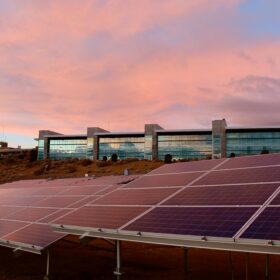
Seeing shortage, California seeks 6 GW clean power capacity
The CPUC has put out a call for 6 GW of non-emitting resources to be deployed 2 GW per year from 2030 to 2032 – with 750 MW explicitly excluding solar, and another 750 MW requiring long-duration energy storage.