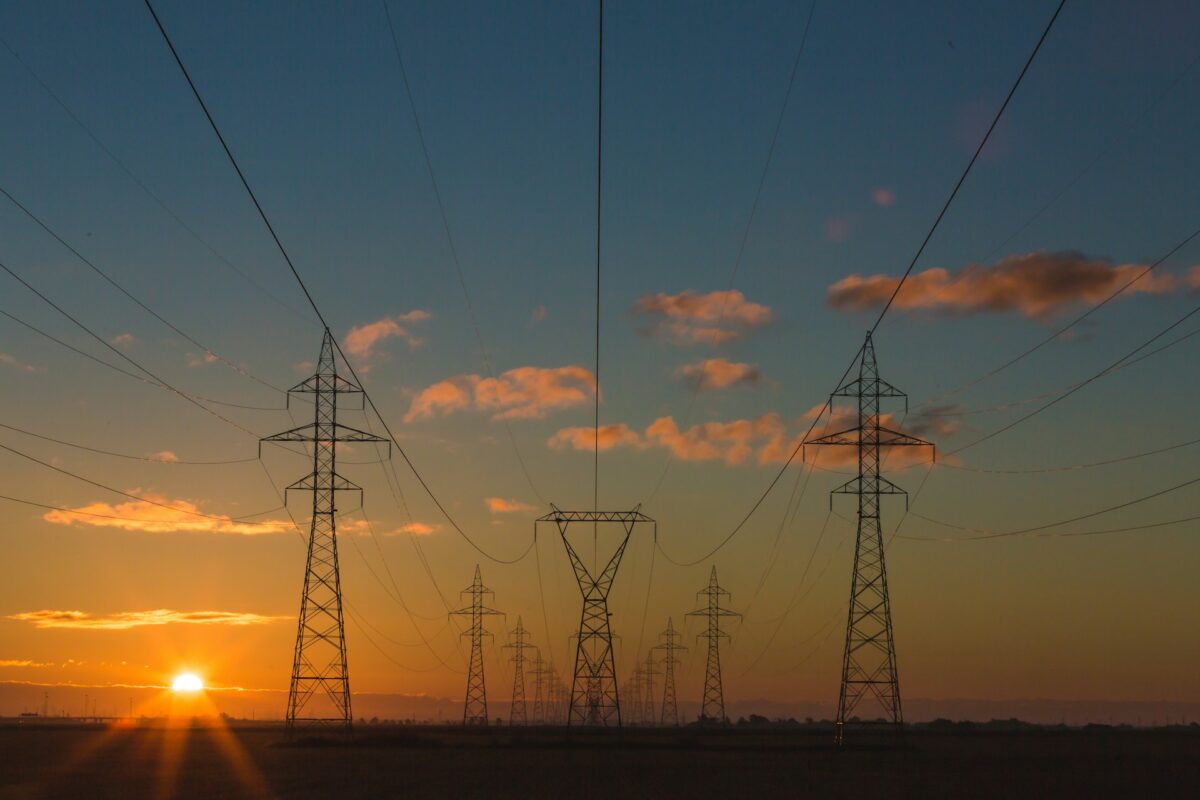





Electrification must account for 35% of global total final electricity consumption by 2035 to remain on a 1.5 C-compatible pathway, according to a new report from the International Renewable Energy Agency (IRENA).
The agency’s latest report, “Transitioning away from fossil fuels: A roadmap based on renewables, electrification and grid enhancement,” says electrification must lead the next phase of the energy transition.
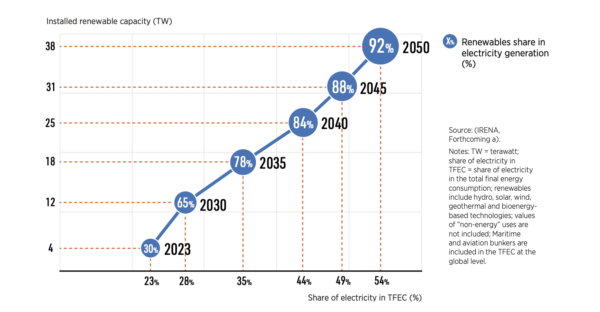
A revised 1.5 C scenario calls for a significant increase in the role of electricity in the global energy system, rising from around 23% today to the 35% target by 2035, then to above 50% by 2050 at which point electricity would be the dominant energy carrier in the global energy system.
IRENA’s report says this rising demand for electricity will be met mostly by renewables. It sets a target of 18.4 TW of global installed renewable capacity by 2035, increasing to 38.2 TW by 2050, to meet targeted electrification. Global renewables capacity reached 5.14 TW by the end of 2025, according to a recent IRENA report.
This growth trajectory would see the share of renewables in electricity generation increase, from 30% in 2023 to 78% in 2035 and up to 92% in 2050, the report adds.
IRENA Director-General Francesco La Camera said the agency’s revised roadmap shows that electrification with renewables serves multiple policy goals.
“It contributes to climate mitigation, enhances energy security by boosting independence from imported fossil fuels and bolsters economic competitiveness through the creation of new industrial value chains and innovation,” La Camera explained. “Furthermore, cost-competitive renewables support affordable electricity prices for households and industry.”
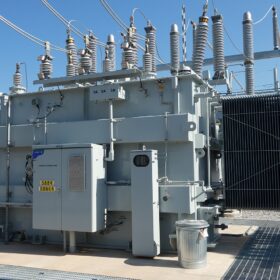
Grid infrastructure and flexibility are highlighted as critical bottlenecks to achieving IRENA’s increased electrification targets.
There are around 2,500 GW of projects stuck in grid connection queues worldwide, according to figures available in the report, the majority of which are solar, storage or wind. IRENA estimates grid investment needs at an average $1.2 trillion annually through to 2050, more than double the $0.5 trillion invested in 2025. To remain on a 1.5 C pathway, IRENA says a total of $5.5 trillion in investments on power grids and energy flexibility is required before 2030.
IRENA’s report warns that without proportional grid investment, electrification risks increased curtailment, network congestion and higher costs. It calls for both grid infrastructure expansion and the optimization of existing grids through methods including grid-forming solutions and grid enhancing technologies in order to unlock untapped grid capacity and reliability.
“Grid expansion and reinforcement is therefore an essential prerequisite and must keep pace with renewables growth,” the report says.
This content is protected by copyright and may not be reused. If you want to cooperate with us and would like to reuse some of our content, please contact: editors@pv-magazine.com.



By submitting this form you agree to pv magazine using your data for the purposes of publishing your comment.
Your personal data will only be disclosed or otherwise transmitted to third parties for the purposes of spam filtering or if this is necessary for technical maintenance of the website. Any other transfer to third parties will not take place unless this is justified on the basis of applicable data protection regulations or if pv magazine is legally obliged to do so.
You may revoke this consent at any time with effect for the future, in which case your personal data will be deleted immediately. Otherwise, your data will be deleted if pv magazine has processed your request or the purpose of data storage is fulfilled.
Further information on data privacy can be found in our Data Protection Policy.