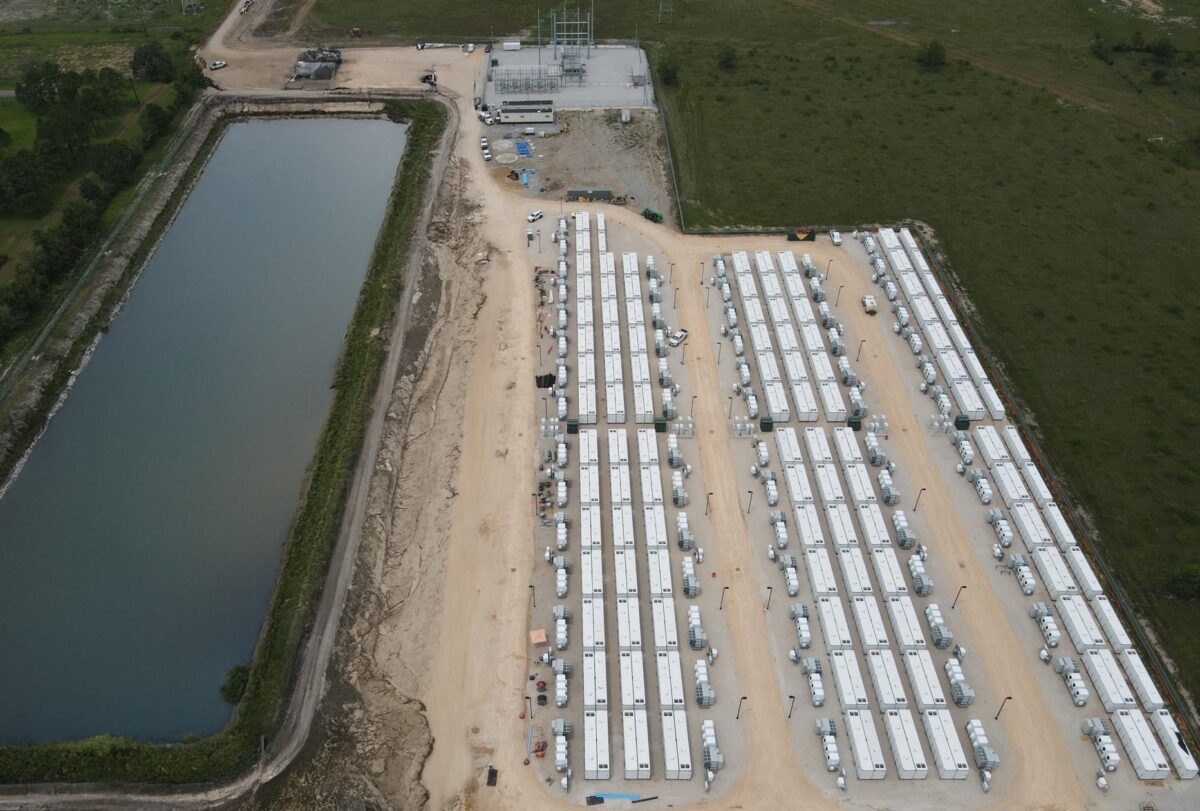





In April, Oregon-based storage developer and power producer GridStor and Axpo, a Switzerland-based energy company, signed an energy storage agreement for the Hidden Lakes Reliability Project, a 220 MW, 440 MWh battery energy storage system (BESS) in Galveston County, Texas. GridStor says the partnership supports energy pricing stability for the Houston-area grid.
According to GridStor, the company pursued a “self-integrated” model for the Hidden Lakes project. The company essentially performed the design and procurement duties. However, key personnel changes and technical issues with hardware integration threatened the November 2025 deadline for project completion. GridStor brought in California-based engineering, procurement and consulting (EPC) firm Anza to help manage systems integration and commissioning work at a critical time.
“In a self-integrated model, the technical risk falls entirely on the owner,” said Tony Song, senior vice president of engineering, procurement and construction at GridStor. “Anza mitigated that risk by acting as the technical glue between our vendors, catching specific defects during factory acceptance testing to engineering workarounds for ERCOT compliance.”
Ravi Manghani, senior director of strategic sourcing at Anza, told pv magazine USA that the partnership with GridStor on the 220 MW BESS facility was a bit of a departure from its usual EPC work in that project was already at an advanced stage.
“Normally, we help our customers from initial design to supplier selection, procurement, contracting, and then commissioning support and other post deployment activities,” Manghani said. “For this project, we came in for commissioning. We had to make sure all of the vendors and service providers were aligned in terms of what they were going to do and make sure that there were no gaps and risks that ultimately would have to be borne by the owner.”
One of Anza’s priorities was to implement what it called a “forensic-level quality assurance” to address problems with vendors’ factory acceptance testing documentation. Anza flagged specific units showing marginal insulation resistance and high continuity resistance on grounding cables. In addition, differing requirements and approaches of the battery, inverter, and energy management system vendors needed to be brought into alignment.
To prevent repetitive installation errors across the project’s 204 battery containers and 68 inverter skids, Anza recommended a rigorous inspection of a pilot initial installation. The team paused to verify that the mechanical and electrical installation of the first unit met strict quality standards before allowing installation of the remaining units.
“Some of these integration gaps manifest themselves during the commissioning process because that’s when all the cooks are in the room,” Manghani said. “You start to see these scope gaps emerge.”
While sorting out technical integration issues, Anzar mapped out a commissioning plan with the Electric Reliability Council of Texas. Anza established daily progress tracking and workarounds to overcome obstacles and maintain the schedule while troubleshooting vendor equipment and integration problems as they arose.
According to Manghani, the size of utility scale BESS projects and the tempo of their deployment will only increase as load demand continues to rise from electrification, data centers and EV charging. Moreover, owners and developers are choosing to implement large projects in phases in order to provide reliability and other services as rapidly and cost-effectively as possible.
“With these larger, multi-phase projects, product deliveries happen over a longer period of time,” he said. “You have to think about quality assurance over the entire arc of the delivery process. Often, these products are not even being manufactured in the same batch because the delivery times are much spread out. This also complicates quality assurance. So, certainly we see a growing need for integration support services.”
This content is protected by copyright and may not be reused. If you want to cooperate with us and would like to reuse some of our content, please contact: editors@pv-magazine.com.




By submitting this form you agree to pv magazine using your data for the purposes of publishing your comment.
Your personal data will only be disclosed or otherwise transmitted to third parties for the purposes of spam filtering or if this is necessary for technical maintenance of the website. Any other transfer to third parties will not take place unless this is justified on the basis of applicable data protection regulations or if pv magazine is legally obliged to do so.
You may revoke this consent at any time with effect for the future, in which case your personal data will be deleted immediately. Otherwise, your data will be deleted if pv magazine has processed your request or the purpose of data storage is fulfilled.
Further information on data privacy can be found in our Data Protection Policy.