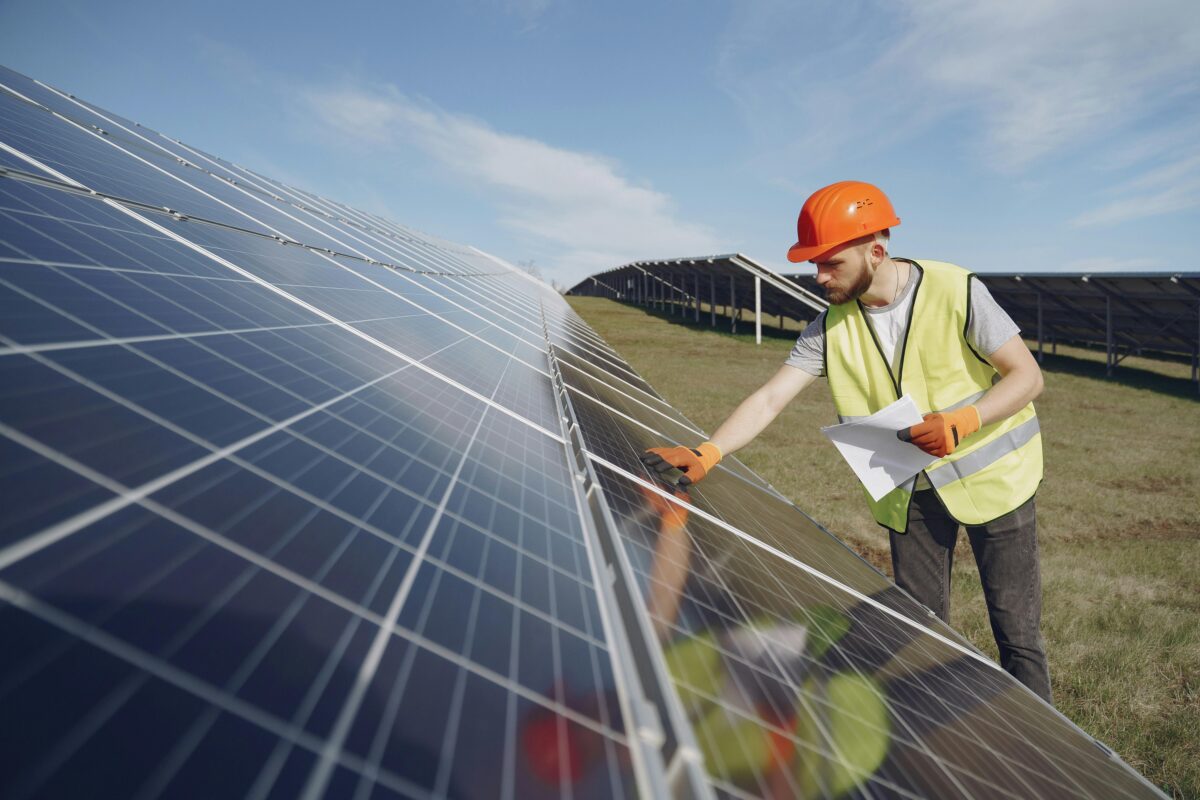





Recent disruptions in oil and liquefied petroleum markets highlight the fragility of the global energy system. Focusing too much on oil shocks risks missing the bigger shift underway. The key challenge for solar this decade is no longer demand or technology, but whether the industry can build and deliver quickly enough.
Solar energy is expanding rapidly. In 2025, global installations are expected to approach 600 GW, marking another record year, according to recent industry reporting. While growth may moderate slightly, annual additions should remain near record levels through 2026.
Solar PV, according to the International Energy Agency’s Renewables 2024 report, accounts for the majority of new power capacity growth and about 80% of renewable capacity increases.
At the same time, technology continues to evolve. A recent article in PV Magazine, “Solar keeps slimming down while power rises,” highlights how advances in crystalline silicon photovoltaics are increasing module output while reducing material intensity. This combination is helping drive deployment, but it is also reshaping supply requirements across the value chain.
Industrial capacity constraint
The question is no longer whether solar power or policies support it. The constraint has shifted to execution.
Every solar project relies on a tightly linked industrial system: polysilicon refining, wafer production, cell and module manufacturing, structural components, and power electronics. Growth across these segments is uneven and often concentrated in specific region.
The IEA notes in its Solar PV Global Supply Chains report that China accounts for over 80% of global manufacturing capacity across the solar value chain, creating exposure to trade, logistics, and geopolitical risks stemming from this geographic concentration.
Solar now competes with other fast-growing sectors, including electric vehicles and grid infrastructure, for key inputs like steel and aluminum, resulting in longer lead times, tighter supply, and cost pressures.
Structural systems bottleneck
One of the clearest pressure points lies in structural systems, particularly trackers and mounting infrastructure. These components are a key bottleneck; supply delays can slow project progress by limiting the availability of piles, torque tubes, and other essential parts.
Utility-scale solar projects require large volumes of steel for support structures. Rising global demand for infrastructure and electrification challenges steel availability. Fabrication, galvanizing, and logistics increasingly affect project timelines.
As highlighted in a recent PV Magazine article, “The steel supply crunch threatening U.S. solar ambitions,” tight domestic supply and trade constraints are already delaying project timelines. Additional analysis has also emphasized the engineering and structural complexity underlying solar systems, reinforcing the importance of balance-of-system components in overall execution.
This shift reflects a structural change in how solar projects are delivered. It shows that solar deployment is no longer limited by a single component, but by the ability of the entire supply chain to move in sync.
Industrial policy
Governments are starting to respond by expanding the scope of energy policy.
In the United States, recent legislation has introduced incentives to build domestic capacity across modules, batteries, and upstream materials. Europe is focusing on supply chain resilience and diversification, while India is investing in integrated manufacturing from raw materials through finished modules.
These efforts seek to reduce import dependence, diversify supply, and improve execution speed through standardization and scale.
Building manufacturing capacity takes time and capital, and gaps between policy and output drive many current constraints.
Nonlinear growth
As these constraints become more visible, solar growth is unlikely to follow a smooth trajectory. Forecasting is now more critical. Developers, manufacturers, and EPC firms must align project pipelines with real expectations for material supply, production capacity, and infrastructure.
Without that alignment, there is a risk of overcommitment, where projects are approved and scheduled faster than they can be delivered.
Industry implications
This shift from demand-driven growth to supply-constrained execution brings real consequences across the value chain.
Developers must factor supply-chain variation into timelines and models. EPC contractors must diversify sourcing. Manufacturers must expand efficiently and regionally. Policymakers must align incentives with scalability.
For much of the past, energy transitions were shaped by access to resources and advances in technology. Today, the situation is different.
Solar is no longer limited by how efficiently power can be generated. It is limited by how quickly the industry can scale to support that generation.
Supply chains are now central to the speed of solar deployment.
Success in this decade will require companies and countries to prioritize and invest in supply chain resilience. Those who deliver at pace, not just those who plan, will define the solar future.
Venkata Ravi Kumar Jonnalagadda is an engineering, operations, and quality leader with 15+ years of experience driving innovation and operational excellence in advanced manufacturing and renewable energy.
The views and opinions expressed in this article are the author’s own, and do not necessarily reflect those held by pv magazine.
This content is protected by copyright and may not be reused. If you want to cooperate with us and would like to reuse some of our content, please contact: editors@pv-magazine.com.


It occurs to me that by attempting to pry his way into renewables the way he pried his way into crypto currency; Trump has been constraining US steel manufacturing.