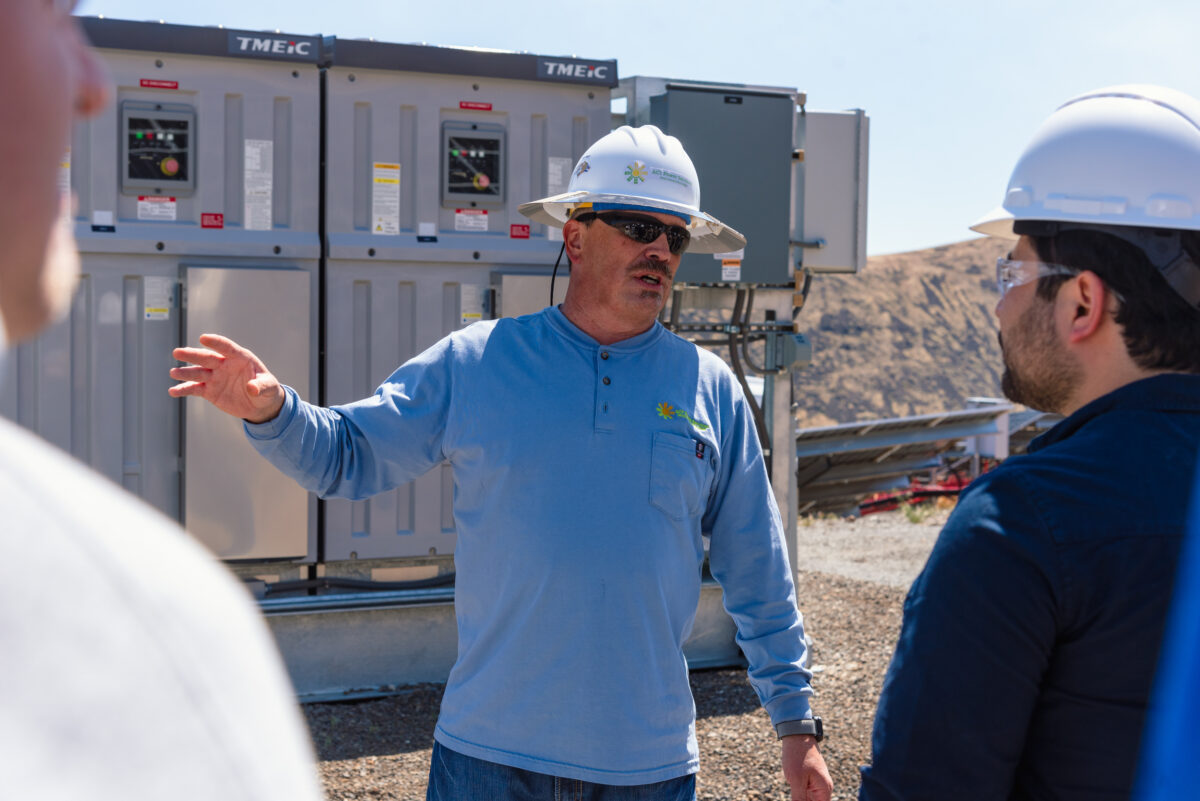





The IBR Registration Initiative represents one of the most significant expansions of NERC’s compliance framework in years. Inverter-based resource (IBR) owners and operators who were previously outside the registration requirement are now being brought into the bulk power system (BPS) compliance structure. As inverter-based resources become an increasingly significant portion of generation capacity, their reliable operation becomes more critical to grid stability. NERC Cat 2 is designed to improve grid reliability, which is important as electricity demand continues to rise.
Joel Firestone, a compliance expert with Radian Generation, answers questions that many organizations are asking as they work toward the May 15, 2026 registration date.
The Regulatory Framework
Q: What sections of the NERC Rules of Procedure govern the registration process?
The Organization Registration Program is addressed across several key FERC-approved NERC Rules of Procedure (ROP) documents. The primary section is ROP Section 500, which covers Organization Registration and Certification. From there, the relevant appendices are:
- Appendix 2 – Definitions Used in the ROP
- Appendix 5A – Organization Registration and Certification Manual
- Appendix 5B – Statement of Compliance Criteria
- Appendix 5C – Procedure for Requesting and Receiving an Exception from the Application of the NERC Definition of BES
Appendices 2 and 5B have also been updated to include definitions for both Category 1 and Category 2 Generator Owner (GO) and Generator Operator (GOP), so those are the places to look for clarity on how the categories are defined.
Q: How do the regional entities fit into this structure?
FERC (Federal Energy Regulatory Commission) certified NERC (North American Electric Reliability Corporation) as the designated Electric Reliability Organization in 2006, giving it responsibility for developing and enforcing Reliability Standards and analyzing grid reliability trends. NERC, in turn, delegates certain statutory functions to its six Regional Entities under FERC-approved Regional Delegation Agreements.
In practical terms, the regional entity is the organization NERC registered GO and GOP’s interact with most directly. The regional entity conducts registration reviews, requests documentation, and manages an organization’s specific registration timeline. NERC sets the framework; the regional entity executes it.
Q: How do organizations know which regional entity applies to them?
Jurisdiction follows physical location, specifically, where the IBR connects to the BPS. NERC maintains a map of regional entity boundaries on its “Key Players” page, along with links to each entity’s website. A facility’s BPS interconnection provider can also help identify the right regional entity.
If a portfolio spans multiple regional entity footprints, they may need to coordinate with more than one. NERC and the regional entities are actively working with candidates to help sort out applicability and identify the appropriate entity.
Timelines and Process
Q: When were registrations supposed to begin, and what’s the deadline?
NERC and the regional entities began processing Category 2 registrations in batches in August 2025, with the process continuing through to May 2026. Each regional entity manages its own schedule for initiating registration of owners and operators of Category 2 facilities in its area.
When a registration is complete, the organization will receive a NERC notification stating that it will be listed on the NERC compliance registry, effective May 15, 2026.
Q: If an organization hasn’t been contacted yet. Should they be worried?
If an organization was identified as potentially owning or operating a Category 2 asset, it should have already heard from the appropriate regional entity. If not, they should reach out directly to the regional entity for the facility’s area.
If an owner/operator thinks they have a qualifying generation asset but aren’t sure where to start, they should contact NERC Registration. They can help identify the right regional entity and get the process moving.
Q: Can organizations wait until the May 15 deadline to begin? What if they have facilities in multiple regional entities with different deadlines?
The short answer on both counts is no. The registration process requires adequate lead time to complete assessments and review documentation, particularly given the large number of facilities identified as Category 2. Waiting until the deadline isn’t a viable strategy as it risks missing the FERC-mandated compliance date.
For organizations with facilities in multiple regional entity jurisdictions, each entity has its own timeline and must act within its specified window. The volume of work across the ERO Enterprise makes it impractical to process multiple registrations simultaneously. They will receive a separate notification letter from NERC for each approved registration.
Prompt engagement delivers a practical benefit. It gives an organization the regulatory certainty it needs heading into the May 2026 compliance date.
Documentation and Eligibility
Q: What documentation is required for the Category 2 registration review?
Organizations will need to submit the following through a secure environment, either a regional entity extranet or the Centralized Organization Registration ERO System (CORES):
- A completed ERO Enterprise GO/GOP asset verification form
- Interconnection agreement (and any applicable amendments)
- Operating or third-party agreements
- Operating one-line diagrams showing the generation resource(s) through to the point of interconnection with the transmission owner or distribution provider
- Nameplate data for individual inverters or wind turbines
Submitting complete, accurate documentation up front will help avoid delays in the review process.
Q: If an organization has done its own self-analysis and believes it does not meet the registration criteria. Do they still need to submit documentation?
Yes. Even if the internal assessment concludes that the facility does not meet the registration criteria, it is still required to submit all requested documents to the regional entity. The formal evaluation must be completed before any determination is made. The regional entity will communicate the outcome once the review is finished.
Several resources are available to help organizations apply the criteria correctly before submitting:
- BES definition reference document
- Application of the registration criteria for Category 2 GO/GOP IBRs
- Application of the BES definition to battery energy storage systems and hybrid resources
Q: Do owner/operators need to sign an NDA with the regional entity before sharing facility data?
No. NDAs are not required between registration candidates and regional entities. The regional entities are bound by NERC ROP Section 1500, which governs confidential information and outlines the obligations NERC and Regional Entities have to protect information submitted by BPS owners, operators, and users.
Special Situations
Q: What if a facility doesn’t qualify on its own but aggregates with others to meet the 20 MVA threshold?
If multiple facilities aggregate to a nameplate capacity of 20 MVA or greater at a common point of connection at a voltage of 60 kV or higher, all of those facilities are considered Category 2 assets. Every owner and/or operator involved will need to register with NERC and the applicable regional entity, even if no single facility would qualify individually.
Q: If a project is being built in phases and will qualify as Category 2 initially, but may eventually meet Category 1 criteria. How should they approach registration?
Start early. Organizations should initiate conversations with the applicable regional entity and provide registration application information as soon as possible, even if the full project is not yet operational. Don’t wait for the project to reach its final configuration.
Q: What if an organization has identified the GO for a facility but has not yet determined who will serve as the GOP. How do they handle registration?
If a GO hasn’t yet identified its GOP, the regional entity will advise it to register as both the Category 2 GO and the GOP as an interim step. Once a designated GOP is confirmed, the regional entity will work with the organization to revise the registrations accordingly.
For situations where a GOP contract is ending and a new agreement with a different provider is being implemented, document the new GOP in the GO/GOP asset form and provide the updated operations and maintenance agreement in CORES. The regional entity can advise on how to document the transition for the specific situation.
Ongoing Compliance and Resources
Q: Where can people find the applicable NERC Reliability Standards for Category 2 GO and GOP?
NERC publishes the Reliability Standards compliance dates for generator owners & generator operators document quarterly. It includes all finalized and pending compliance dates for standards applicable to Category 2 GO and GOP registrations. It’s the definitive reference for understanding what organizations are expected to comply with and when.
Q: What about GADS reporting and the 2026 reporting confirmation?
Category 2 entities are not required to submit Generating Availability Data System (GADS) information until May 15, 2026. The same applies to the Section 1600 Reporting Confirmation; technically, it doesn’t need to be completed until May.
That said, if they’ve already received a notification to complete the 2026 reporting confirmation, it’s worth doing it now rather than later. Completing it while the information is current and accessible is more efficient than revisiting it closer to the deadline.
Q: Can Category 2 entities participate in the Coordinated Oversight Program?
Yes. Any organization registered in two or more regional entities can apply for or modify an existing Coordinated Oversight Program, regardless of registered function type. Details are available on NERC’s website under CMEP Resources.
One important note: changes tied to the new Category 2 GO and GOP registrations won’t be formally processed until the registration effective date of May 15, 2026.
Q: What is E-ISAC, and does an organization automatically get access?
The Electricity Information Sharing and Analysis Center (E-ISAC) reduces risk to the electricity industry by providing analysis and intelligence on cyber and physical threats. It serves a community of more than 1,500 utilities across North America. Membership in E-ISAC is a free benefit of NERC Registration, and no additional application is required. More information is available at the E-ISAC website or by contacting memberservices@eisac.com.
All materials referenced in this interview, including the IBR Registration Initiative project hub, registration criteria guidance documents, and Standards compliance date schedules, are available on NERC’s website.
The views and opinions expressed in this article are the author’s own, and do not necessarily reflect those held by pv magazine.
This content is protected by copyright and may not be reused. If you want to cooperate with us and would like to reuse some of our content, please contact: editors@pv-magazine.com.



By submitting this form you agree to pv magazine using your data for the purposes of publishing your comment.
Your personal data will only be disclosed or otherwise transmitted to third parties for the purposes of spam filtering or if this is necessary for technical maintenance of the website. Any other transfer to third parties will not take place unless this is justified on the basis of applicable data protection regulations or if pv magazine is legally obliged to do so.
You may revoke this consent at any time with effect for the future, in which case your personal data will be deleted immediately. Otherwise, your data will be deleted if pv magazine has processed your request or the purpose of data storage is fulfilled.
Further information on data privacy can be found in our Data Protection Policy.