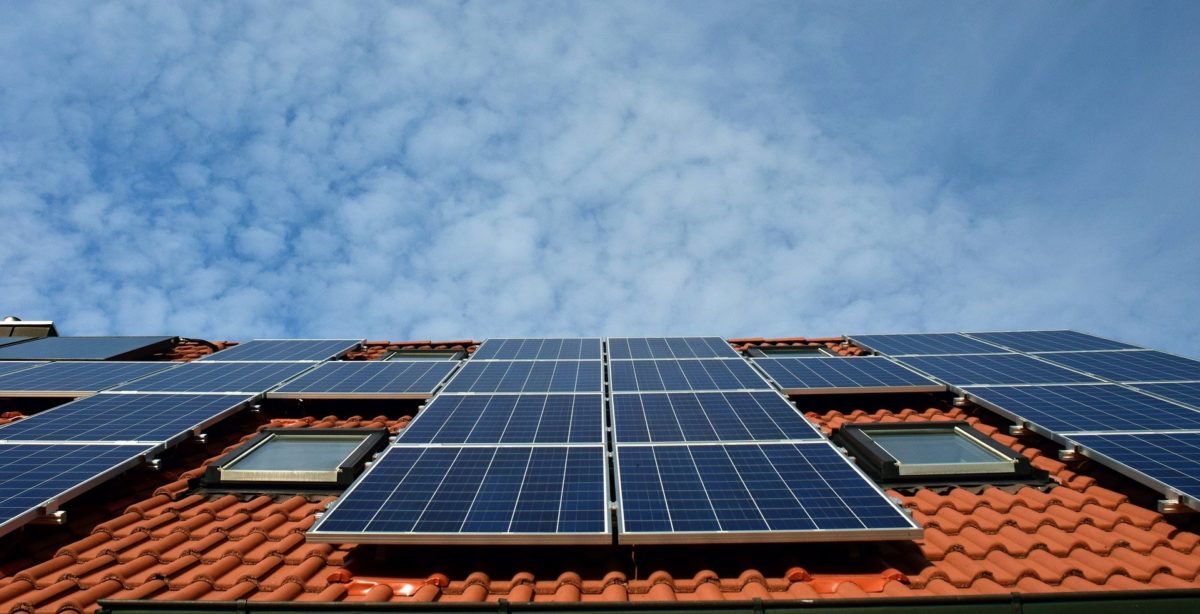





The Center for Biological Diversity, The Protect Our Communities Foundation, and the Environmental Working Group have appealed to the California Supreme Court to overturn the state’s new rooftop solar policy after a lower court approved it a second time. The policy significantly slashes the credit new solar users get for sharing extra solar energy with the grid and has reduced demand for new rooftop solar systems.
In March, the California Court of Appeals upheld the California Public Utility Commission’s December 2022 action for a second time, despite the Supreme Court ruling in August 2025 that the lower court gave the commission too much latitude and needed to revise its ruling.
Friday’s appeal to the state Supreme Court says the lower appeals court again ignored state law, which requires the court to review the commission’s statutory interpretations as it would those of any state agency. Instead, the three-judge panel resurrected the same flawed review standard giving extreme deference to commission decisions. That leaves the agency virtually untouchable, which was what the legislature was trying to prevent when it passed the law in 1998.
“The appeals court ignored the Supreme Court’s order, so we’re asking the state’s highest court to force it to follow the law and stop capitulating to state regulators on this policy that’s devastating rooftop solar. It’s illegal to give undo deference to the utility commission. The Supreme Court agreed and ordered a do over. So why did the appeals court rubberstamp the commission’s decision again and basically endorse utility talking points? I’m hopeful another appeal gets this unfair policy thrown out so more Californians can afford rooftop solar, which is an essential tool to fight the climate crisis.” said Lin, a senior attorney at the Center for Biological Diversity
The petitioners are asking the California Supreme Court to provide additional clarity to the lower courts so that both its decision and the Legislature’s intent have real effect in practice.
California’s updated net-metering policy slashes customer credits by up to 80% for electricity generated on rooftops and sold back to the grid, which reduces the financial benefit of installing solar systems. This has crushed efforts to expand rooftop solar in California and led to widespread layoffs in the solar industry. It also violates state law, which requires that any policies ensure the rooftop solar market keeps growing. The net energy metering rollback also goes against the United States’ recent global agreement at COP28 to triple renewable energy by 2030.
“From rising costs to wildfires to blackouts to air pollution, California consumers are fed up with the state’s investor-owned utilities,” said Bernadette Del Chiaro, senior vice president for California with the Environmental Working Group. “And yet the one government agency that voters created over a 100 years ago to stand up to these monopoly utilities on behalf of consumers is now doing their dirty work, is blocking consumers from having access to the technologies needed to solve myriad problems. At its core, that’s what this lawsuit is really all about.”
In its 2025 ruling, the Supreme Court said the appeals court had overlooked the California Legislature’s 1998 direction to limit deference to regulators, rejecting arguments from the utility commission and the three large investor-owned utility companies in California, Pacific Gas and Electric Company, Southern California Edison, and San Diego Gas and Electric Company.
The California Supreme Court will now review the petition to determine whether it will take up the case for a second time, a decision that could either finalize the current net billing framework or force yet another legal reckoning for state regulators.
This content is protected by copyright and may not be reused. If you want to cooperate with us and would like to reuse some of our content, please contact: editors@pv-magazine.com.


God bless Roger Lin! Self reliance and Solar power.
CPUC board needs to be completely replaced with public members that have purely public representation for which it claims to protect, i.e. regular public members only, no industry representation or affiliation, re-elected every 2 years. No members term can exceed 2 years.
Naran,
I believe your idea has meaningful and significant merit, and perfectly reflects the [dying?] California progressive Leadership Mindset.
Hopefully, our legislature will realize the real value of the Solar Industry and “take a leadership role”.
Hopefully your idea will be Thee Straw[-man] that allows the unstoppable worldwide tide to reach the Shores and Halls of California.
Surf’s Up.
Wow, the same groups of people who fervently supported the concept behind Chevron deference, which allows “the experts” to interpret the law with reduced exposure by judicial meddling, get a taste of the monster they created and fed… Welcome to the misery you created and celebrated for forty years.
Why did they change the payout scheme?? Seems relevant and yet is mysteriously missing from the article. Gee, I wonder why??
Journalism is dead. Nothing left but paid hacks and propagandists.
Net metering probably has contributed to some emissions reduction, but it’s been a huge financial benefit to wealthy homeowners and rooftop solar companies at the cost of other ratepayers. NEM is literally a regressive policy, and it’s good that it’s being fazed out. It’s removal will actually make it easier for California to reach its emissions reduction goals.
The fact that none of that information is included in the article indicates this isn’t really journalism – it’s propaganda for the rooftop solar industry. Pretty sad.
Elec companies generate electricity and transport it, which is the source of revenue.
Solar reduces their source of revenue.
Thus they SHOULD shrink their costs.
They don’t. Instead they steal from those who took over the generation and transport function.
Similar story with water. 80 % of my bill is for the privilege to be connected.
The CPUC is the root problem – as described by others.