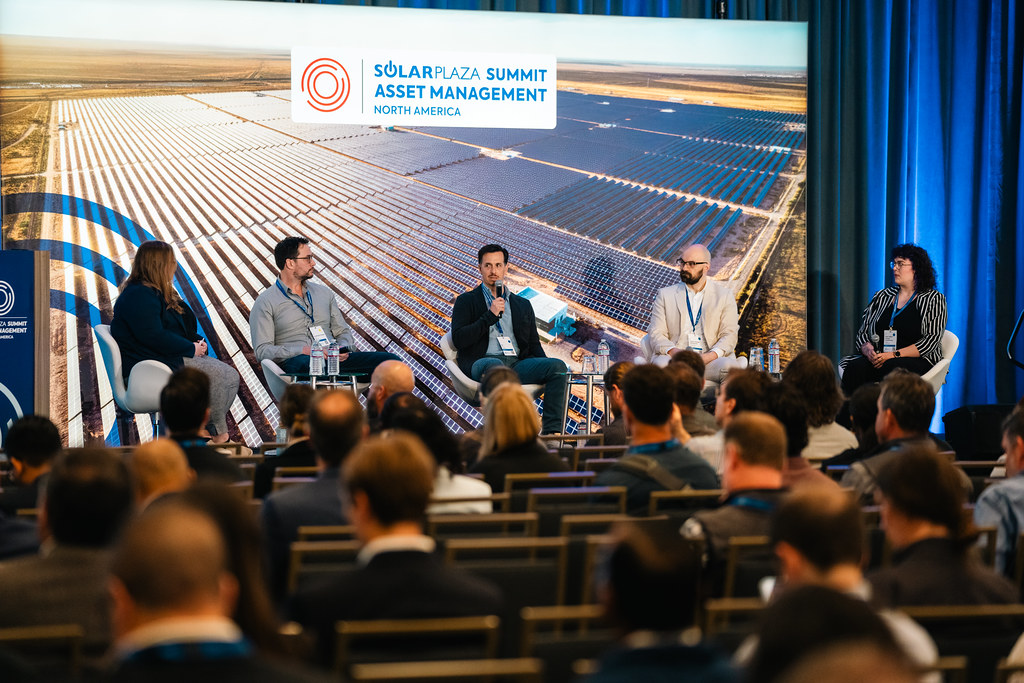





The annual Solarplaza Summit Asset Management North America conference (SAMNA) held its 2026 iteration at the Town & Country San Diego resort in early April, bringing together more than 650 solar industry professionals for three days of training, workshops, networking and collaborative discussions.
Key themes that emerged at the conference included the importance of addressing asset underperformance, the pressing need to mitigate risks from catastrophic events and the rapid growth of AI, both as it regards load growth from data centers and the use of AI tools in solar O&M.
The event is a small one compared to conferences that take a broader approach to the solar and storage industry, but its focus on asset management makes it an invaluable source of connection to those whose lives revolve around managing portfolios of existing assets.
Derek Mast, a solar technician who works on systems as large as 20 MW, commented on the event for pv magazine USA, “The NABCEP conference was the first time that I felt like, ‘oh, these are my people.’ The kind of people that do the boots on the ground stuff, that service these systems and see how they age. And then I go to SAMNA now, not having a whole lot of context aside from ‘it’s asset management.’ and realize these are even more my people.”
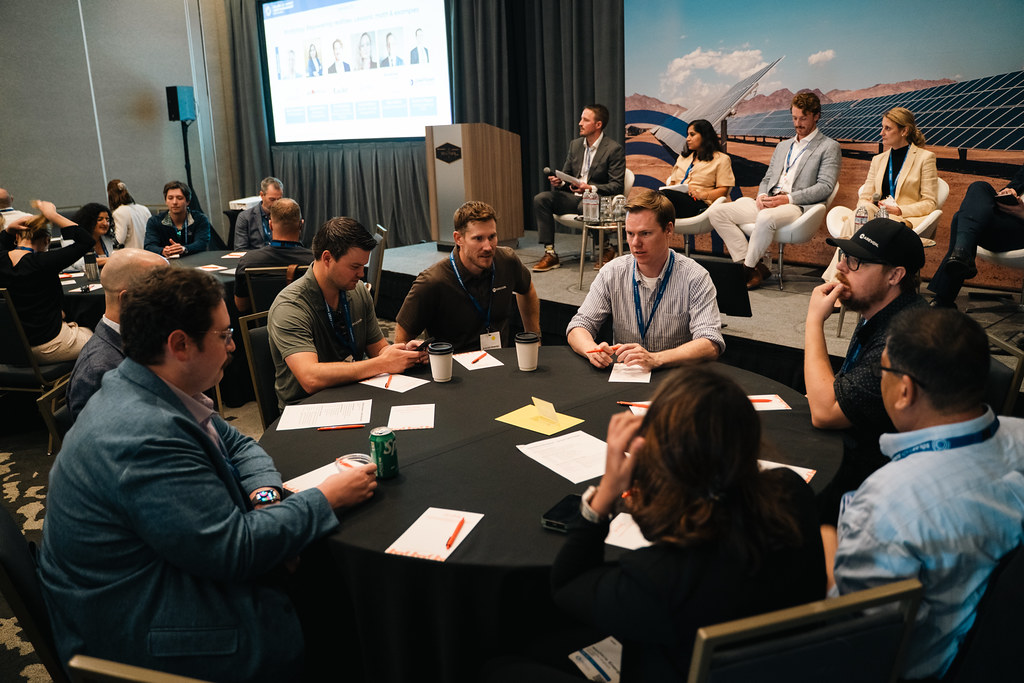
Image: Solarplaza
Mast, who, in addition to his day job, works as a solar educator and content creator under the nickname the Solarboi, spoke about residential solar O&M at the conference and hosted a panel discussion called “Solar f*ck ups,” in which O&M professionals took “an honest, introspective journey into all the unfortunate (and sometimes hilarious) mishaps of the energy world.”
“The panelists all had great stories to tell,” said Mast, “and hearing that somebody else had the exact same experience (as you) or a very similar experience at some point helps people to relax and laugh and understand how we’re all capable of mistakes, and how we can learn from each other.”
Kevin Crepps, an engineering project manager at technical advisory and risk mitigation service provider VDE Americas who spoke with pv magazine USA about the conference, echoed Mast’s comments. The 2026 SAMNA event was his first time attending, and he’s excited to come back to future shows.
Crepps said his main focus while at SAMNA was learning and connecting with other professionals about risk management. He felt the most valuable conference sessions had to do with assessing risk in the modern solar financing market and leveraging weather data to protect PV installations against natural catastrophes like hail storms.
VDE Americas, a subsidiary of the German VDE group, is an independent engineering (IE) and risk management firm widely recognized as an authority in solar hail risk intelligence.
“We’ve seen a lot of catastrophic events in the last couple years across the industry. It‘s becoming clear that hail was a larger risk than people had thought about previously,” said Crepps. “For single access trackers, hail stow features are becoming increasingly popular, even if they’re not available yet on all trackers. We always recommend that owners confirm any kind of hail stow functionality before purchasing.”
Other themes from the show
Underperformance of solar power plants was addressed across multiple discussions, but nowhere more thoroughly than Session 5A on day 2, which consisted of a presentation from Magnus Asbo of Kinematics and a panel discussion featuring professionals from Navisun, Next Wave Energy Monitoring, IED (Sunner) and more.
Attendees noted the importance of setting benchmarks for performances and implementing upgrades prior to repowering. A recent whitepaper from Kinematics covered a structured approach to testing underperforming sites and targeting updates to communications and motion control systems before taking more drastic measures.
Following the show, panelist Nicholas Davies of IED had this to say about his conversations at SAMNA with representatives from independent power producers (IPPs):
They (IPPs) know something is off at their plants, and often feel stuck between two options that don’t work: accept the underperformance as the new baseline, or wait for a full repower they can’t justify financially.
The middle ground, tactical intervention at the control system level, often doesn’t register as an option for most asset owners. And yet it’s where the economics actually make sense.
When a site’s performance is benchmarked against last year’s underperformance instead of design performance, the gap quietly compounds and degradation gets normalized. You can’t recover what you’ve stopped measuring.
Germane to any discussion of underperformance is the topic of monitoring and inspection, practices that are just starting to incorporate AI and robotics in addition to the work of field technicians.
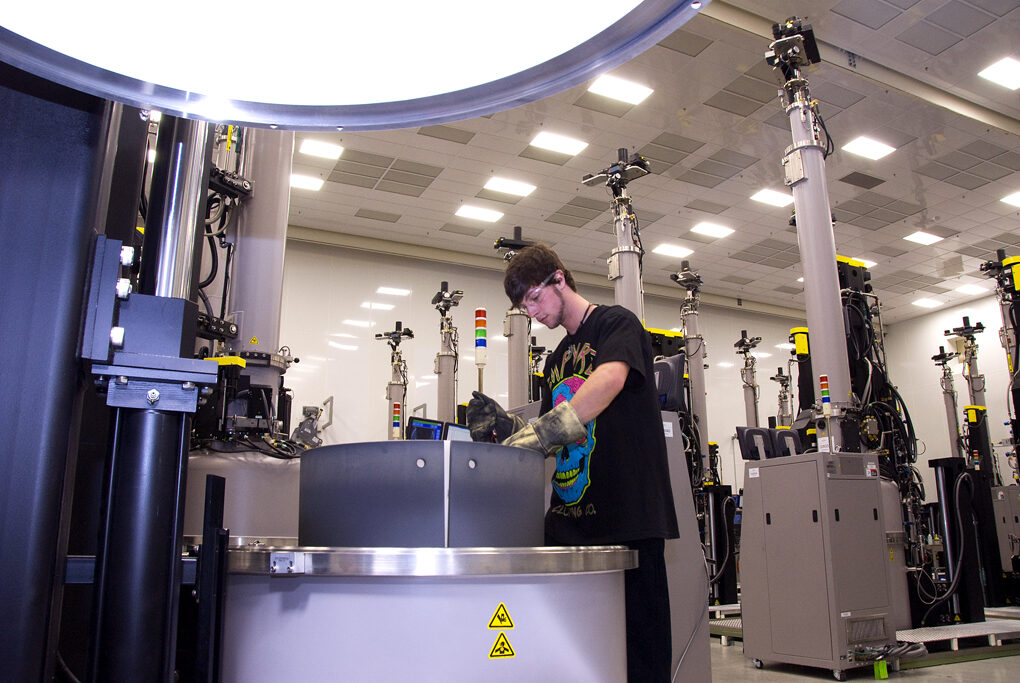
One company pioneering that work is Nextpower, which showcased its suite of solutions for inspecting sites, detecting risk and maximizing performance of solar power plants. These solutions include the NX Ranger ground-based robotic system that performs high-resolution optical and thermal inspections of under-module components and NX Vantage camera system, which uses AI detection to spot smoke, fire and thermal events at utility-scale sites.
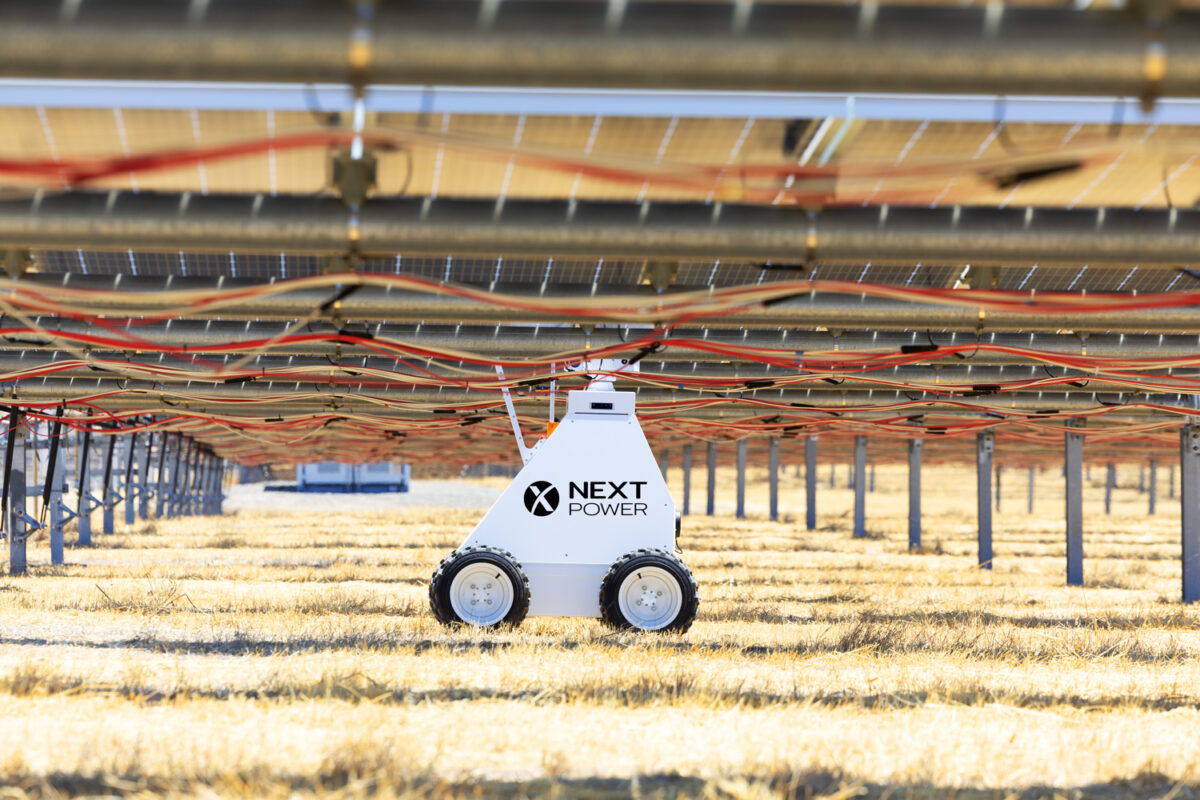
Image: Nextpower
“As solar scales, the biggest risks are often the ones operators can’t see,” said Derek Chase, VP of robotics & AI at Nextpower who participated in the “Ensuring long-term durability through smart QA/QC strategies” panel, in comments to pv magazine USA. “When something goes wrong, the root cause is often buried in the physical infrastructure — the connectors, wiring, fuses, and hardware that make up the DC balance of system. Our data shows 60%+ of issues occur under panels—out of sight for drones. Addressing that gap requires a different approach to inspection — one that prioritizes direct, high-resolution visibility of the components where risk actually originates.”
SAMNA also marked the debut of the Nextpower-branded soil monitoring system, NX Clario. The system was formerly known as Fracsun ARES, but was rebranded following Nextpower’s acquisition of Fracsun in late 2025.
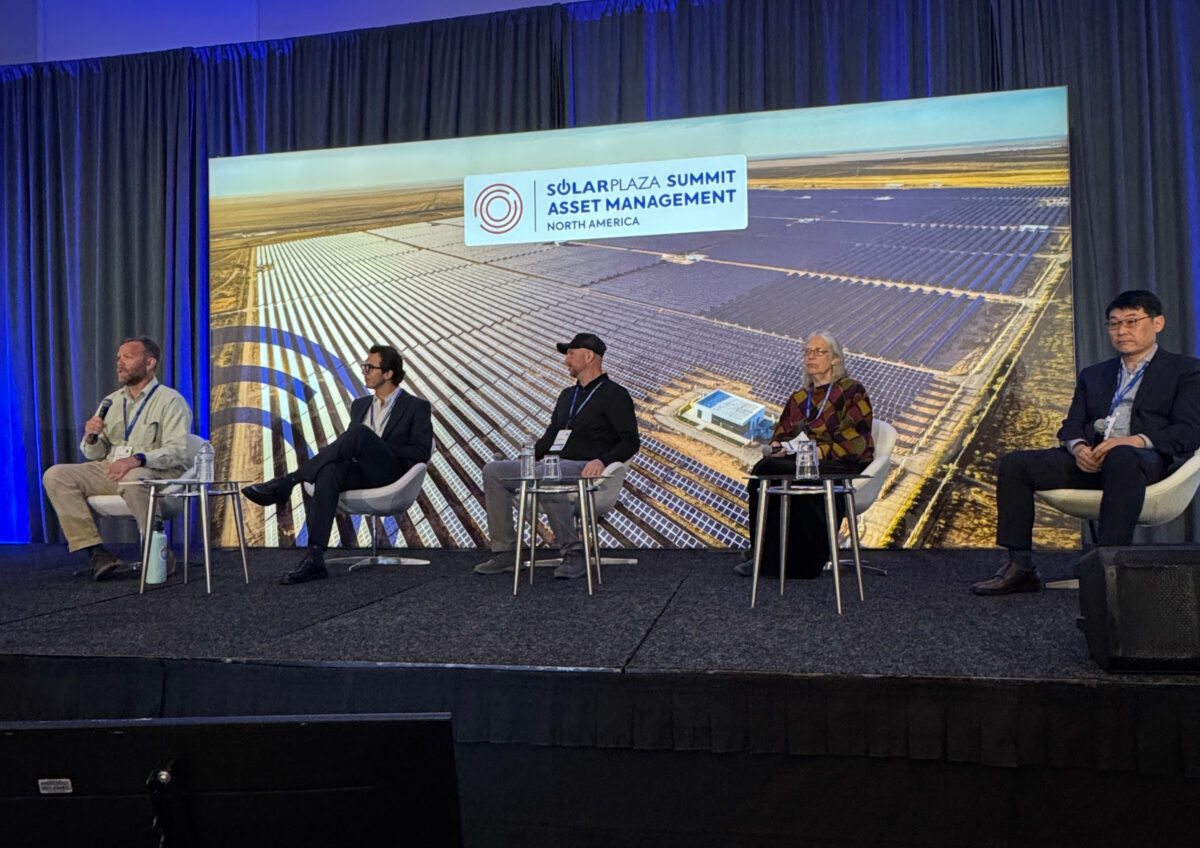
Image: Nextpower
While companies like Nextpower are pioneering AI solutions, some SAMNA attendees pointed out that it will take some time before the broader solar asset management space uses these tools.
“I think we haven’t hit a point where AI is easily applicable to most companies, but I foresee it becoming incredibly helpful,” said Mast, pointing out that many companies making tools for solar O&M are either not yet collecting large enough amounts of data necessary to feed into AI models, or maintaining their own separate data silos, making it difficult to bring everything together under a single umbrella.
Mast specifically pointed to the proprietary nature of thermal imaging formats in this regard, using it as an example of the kind of data that could be useful in a centralized solution that offers a usable interface where technicians can access all the data they need at once.
“There’s nothing out there that does company management, ticket management, inspection forms, data acquisition and storage and is able to put that all in one place where you can manipulate that data and gain insights based off of it,” he said. “The problem is going to be: do we actually have the data where we want it to be, in a place where we can put the AI tool to work for us, that has all the context and all of the data?”
Crepps said he anticipates the topic of AI to become much more important in SAMNA conferences over the next few years.
“While a lot of companies didn’t seem to be fully embracing AI yet, it seemed pretty clear that there are some that already are, especially as it relates to data analysis,” Crepps said. “That’s something I’ll be monitoring from the IE and advisory services perspective. We need to understand the evolution of AI and how it’s being used across the industry.”
This content is protected by copyright and may not be reused. If you want to cooperate with us and would like to reuse some of our content, please contact: editors@pv-magazine.com.




By submitting this form you agree to pv magazine using your data for the purposes of publishing your comment.
Your personal data will only be disclosed or otherwise transmitted to third parties for the purposes of spam filtering or if this is necessary for technical maintenance of the website. Any other transfer to third parties will not take place unless this is justified on the basis of applicable data protection regulations or if pv magazine is legally obliged to do so.
You may revoke this consent at any time with effect for the future, in which case your personal data will be deleted immediately. Otherwise, your data will be deleted if pv magazine has processed your request or the purpose of data storage is fulfilled.
Further information on data privacy can be found in our Data Protection Policy.