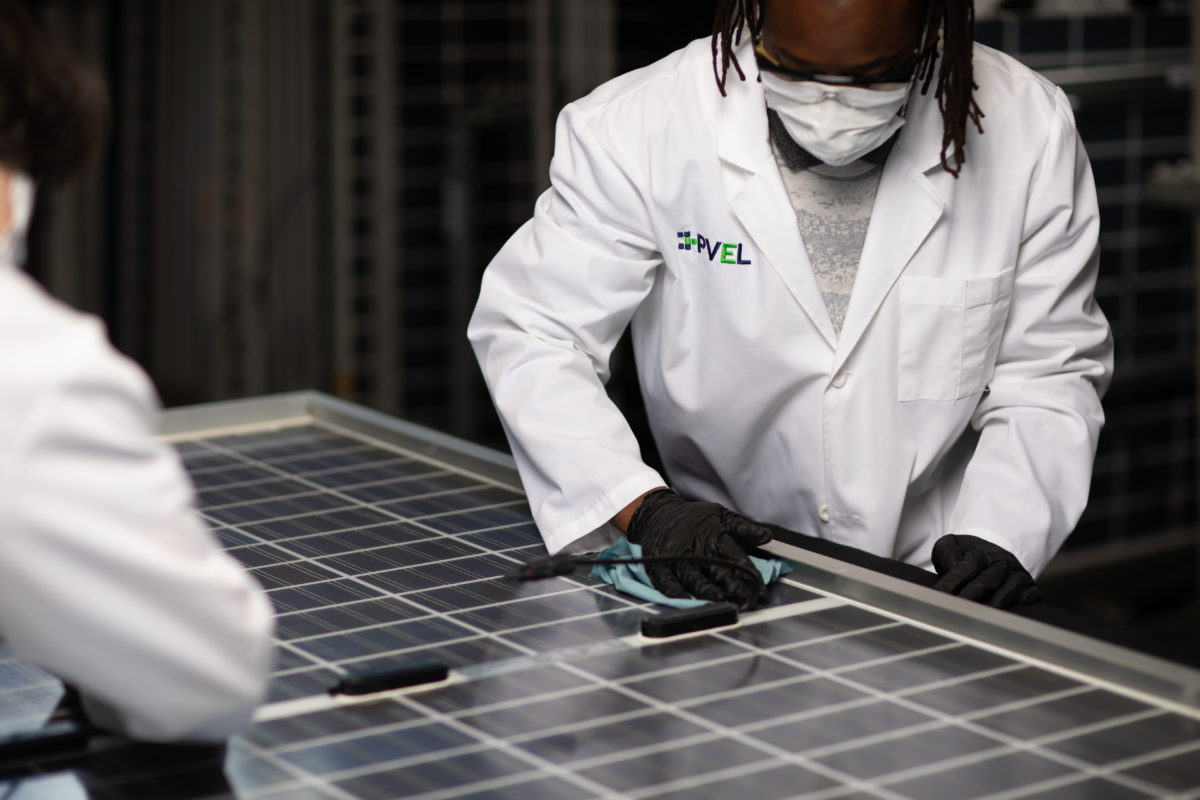





Kiwa PV Evolution Labs (PVEL), a leading independent test lab for the downstream solar industry, has announced a significant update to its PV Module Product Qualification Program (PQP). The revisions focus on identifying the physical limits of solar modules in response to rising reports of spontaneous glass breakage and hail damage in the field.
The updated PQP moves beyond traditional pass/fail criteria for several key sequences, implementing test to failure protocols. This shift provides developers, EPCs, and financiers with more granular data regarding the safety margins and durability of specific module designs.
“The improvements we’ve made in this PQP update incorporate critical feedback from our downstream partners and research institutes, keeping the Kiwa PVEL PQP at the forefront of the growing demand for PV module procurement due diligence,” said Tristan Erion-Lorico, vice president of sales and marketing at Kiwa PVEL.
Regarding the Hail Stress Sequence (HSS), the lab has transitioned to a Hail TTF approach, increasing the sample size to five modules. Testing now targets specific vulnerable areas such as edges, corners, and junction boxes, with ice ball diameters increased until breakage occurs.
Similarly, the Mechanical Stress Sequence (MSS) now includes Static Mechanical Load (SML) TTF to evaluate the threshold of glass breakage. This sequence also utilizes five samples to provide a more statistically significant assessment of mechanical durability.
The Ultraviolet Induced Degradation (UVID) sequence has been streamlined into a continuous 120 kWh/m² exposure to improve testing efficiency while maintaining rigorous standards for backsheet and cell durability. Additionally, to address metastability issues where module performance measurements can be temporarily skewed after stress, the lab has added light soaking and UV soaking steps following Damp Heat and PID testing.
The empirical data generated by these tests informs the annual Kiwa PVEL PV Module Reliability Scorecard. Participation in the program remains voluntary for manufacturers, with the scorecard highlighting top performing models that demonstrate superior reliability under accelerated stress conditions.
“The module buying landscape has changed dramatically in recent years with advancements in technology and new players entering the market,” said Erion-Lorico. “In response, Kiwa PVEL has focused our globally acclaimed test program on addressing these changes.”
This content is protected by copyright and may not be reused. If you want to cooperate with us and would like to reuse some of our content, please contact: editors@pv-magazine.com.




By submitting this form you agree to pv magazine using your data for the purposes of publishing your comment.
Your personal data will only be disclosed or otherwise transmitted to third parties for the purposes of spam filtering or if this is necessary for technical maintenance of the website. Any other transfer to third parties will not take place unless this is justified on the basis of applicable data protection regulations or if pv magazine is legally obliged to do so.
You may revoke this consent at any time with effect for the future, in which case your personal data will be deleted immediately. Otherwise, your data will be deleted if pv magazine has processed your request or the purpose of data storage is fulfilled.
Further information on data privacy can be found in our Data Protection Policy.