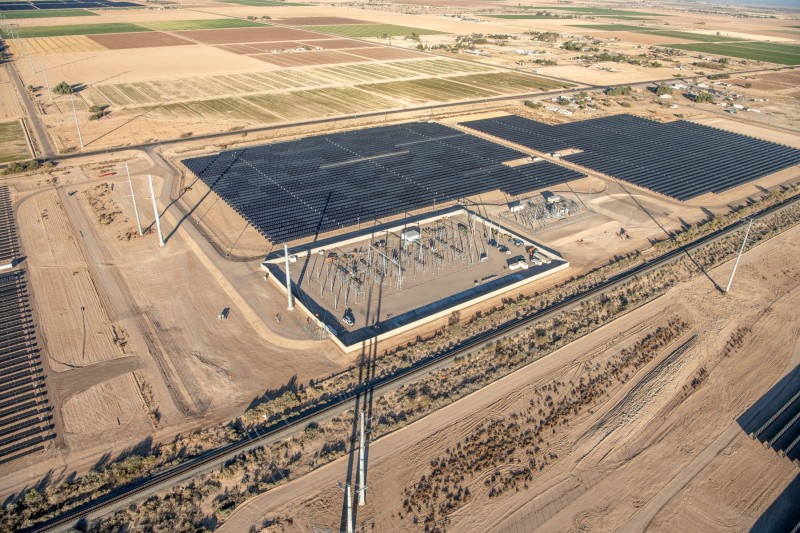





Salt River Project has commissioned its first utility-owned solar plant, a 55 MW facility at the Copper Crossing Energy and Research Center that marks a pivot from the utility’s traditional reliance on third-party power purchase agreements. Located in Pinal County, the project occupies 270 acres of land and is designed to act as a high-stakes testing ground for photovoltaic hardware durability in extreme desert environments.
By owning and operating the asset directly, the utility aims to gain granular data on hardware performance to inform a planned 2 GW solar expansion by 2035.
The site features a diverse mix of hardware, including three different types of solar panels, three distinct inverter technologies, and three separate solar tracking systems. This side-by-side configuration allows engineers to monitor how various materials and mechanical designs withstand the intense heat and dust of the Sonoran Desert.
The project spans approximately 270 acres of SRP-owned land, strategically sited adjacent to the existing 69-kV Abel Substation and the original Copper Crossing Solar Ranch to streamline grid interconnection. This footprint allows for a robust energy output capable of powering between 11,000 and 12,375 average Arizona homes annually.
The solar project is part of a larger integrated energy complex designed to address the intermittency of renewables through a phased technology rollout. The array is supported by an existing 99 MW flexible natural gas facility capable of rapid starts, stabilizing the local grid when cloud cover impacts output.
Additionally, the utility has deployed high-resolution sky cameras across the site to provide real-time imagery of cloud movement for more precise forecasting and ramping adjustments.
Looking toward 2027, the site will host two pilot projects for non-lithium energy storage to further the utility’s goal of reducing carbon intensity. These include an iron-flow battery system and an organic flow battery pilot, both targeting 10-hour discharge durations.
The launch of the Copper Crossing project is a cornerstone of the broader goal to reduce carbon intensity by 82% by 2035. Performance data gathered at this site will be critical in selecting the hardware for the utility’s future multi-gigawatt procurement rounds as it moves toward a net-zero emissions target by 2050.
This content is protected by copyright and may not be reused. If you want to cooperate with us and would like to reuse some of our content, please contact: editors@pv-magazine.com.





By submitting this form you agree to pv magazine using your data for the purposes of publishing your comment.
Your personal data will only be disclosed or otherwise transmitted to third parties for the purposes of spam filtering or if this is necessary for technical maintenance of the website. Any other transfer to third parties will not take place unless this is justified on the basis of applicable data protection regulations or if pv magazine is legally obliged to do so.
You may revoke this consent at any time with effect for the future, in which case your personal data will be deleted immediately. Otherwise, your data will be deleted if pv magazine has processed your request or the purpose of data storage is fulfilled.
Further information on data privacy can be found in our Data Protection Policy.