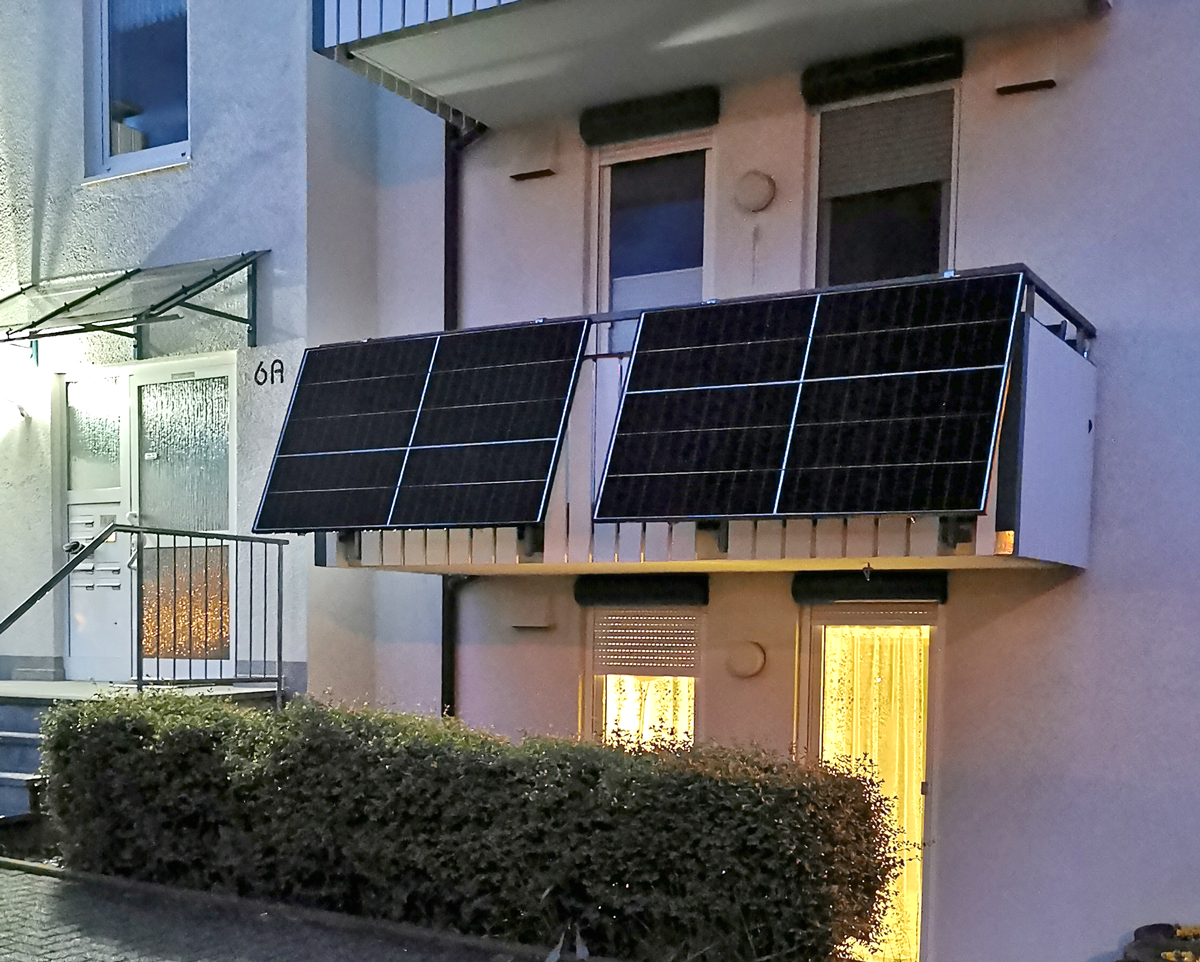





With the signing of LD 1730 by Governor Janet Mills on April 6, 2026, Maine became the second state in the U.S. to enact rules to govern portable “plug-in solar” devices.
According to state law, non-emergency bills like LD 1730 take effect 90 days after the legislature adjourns for the session in which the bills were passed. This places the effective date for the law on or after July 15th.
When it takes effect, the law will allow a homeowner or renter to connect a single portable solar device with 420 watts or less of power output, or work with a certified electrician to connect a device of up to 1,200 watts output. The law contains a provision requiring devices to be listed or certified under the UL 3700 outline of investigation, but allows alternatives to that rule, including allowing devices “configured in accordance with the National Electrical Code” (NEC) adopted by the state’s Electricians’ Examining Board.
Despite the fact that the rules are not yet official, some companies that sell plug-in solar devices are already selling their products to Maine residents.
When reached for comment, representatives from APsystems and CraftStrom confirmed that their plug-in solar products are now available to Maine residents.
A statement provided to pv magazine USA by APsystems’ U.S. head of marketing Sydney Delvan reads:
The intent behind LD 1730 is to enable small, safe, plug-in solar systems for everyday consumers. Balcony solar opens the door for renters, multifamily residents, and homeowners who may not have traditionally been able to adopt solar. That’s a huge step forward for the industry and APsystems is excited to be a part of the continued momentum balcony solar has had this year.
Our EZ1 microinverter was designed with this use case in mind. It supports compact, plug-and-play solar configurations that align closely with the bill’s vision of accessible, behind-the-meter energy generation. We’re particularly thrilled to see policymakers embracing this category, as it reflects what we’re already seeing globally – a growing demand for simple, flexible solar solutions that meet people where they are.
Josh Levinson, APsystems vice president of sales, added the following: “APsystems is committed to offering safe, affordable, portable, DIY inverters like the EZ1 to residents of Maine. We are currently working with Equity Solar in Maine as well as other distribution partners. These partners are offering kits that include solar modules, racking, and EZ1’s. We will continue to innovate and release more products that make it easy for the residents of Maine to take advantage of owning their own power.”
CraftStrom, for its part, says it has designed its products to comply with the NEC as required by the law — specifically Code section 705.13, which outlines the requirements for power control systems to control the current flowing through circuits and busbars to which a load-side power source is interconnected.
In an interview that covered the company’s participation in several state plug-in solar lawmaking proceedings and its plans for obtaining listing for its products under UL 3700, CraftStrom co-founders and brothers Michael and Stephan Scherer told pv magazine USA about what it learned from operating in the German market, where more than 1 million balcony solar systems are registered.
The Scherers explained that their product offering is unique because it includes a smart meter that must be installed inside a home’s electrical panel and a smart breaker that plugs into an outlet and physically disconnects the CraftStrom device from the home circuit in case of an overload. Together, these devices enable compliance with the NEC rules.
Not all companies with products available in the U.S. are selling in Maine; EcoFlow is waiting to sell its products until the law takes effect.
“We plan to have the EcoFlow STREAM microinverter available for sale in Maine as soon as the new law goes into effect,” said Ryan Oliver, head of communications in North America for EcoFlow, in a statement to pv magazine USA. “For STREAM Ultra, which includes a microinverter with built-in battery storage, we are currently in contact with UL for certification.”
This content is protected by copyright and may not be reused. If you want to cooperate with us and would like to reuse some of our content, please contact: editors@pv-magazine.com.



By submitting this form you agree to pv magazine using your data for the purposes of publishing your comment.
Your personal data will only be disclosed or otherwise transmitted to third parties for the purposes of spam filtering or if this is necessary for technical maintenance of the website. Any other transfer to third parties will not take place unless this is justified on the basis of applicable data protection regulations or if pv magazine is legally obliged to do so.
You may revoke this consent at any time with effect for the future, in which case your personal data will be deleted immediately. Otherwise, your data will be deleted if pv magazine has processed your request or the purpose of data storage is fulfilled.
Further information on data privacy can be found in our Data Protection Policy.