




Solar PV plays a central role in the growing buzz around building data centers in space. The Feb. 2 statement from SpaceX and its founder Elon Musk states that “current advances in AI are dependent on large terrestrial data centers, which require immense amounts of power and cooling. Global electricity demand for AI simply cannot be met with terrestrial solutions, even in the near term, without imposing hardship on communities and the environment.”
As Musk pointed out in an interview at WEF with Larry Fink, the founder and CEO of the global investment firm BlackRock, “when you have solar in space you get five times more effectiveness, maybe even more than that, than solar on the ground. It’s always sunny, so you don’t have a day-night cycle or seasonality or weather and you get about 30% more power in space because you don’t have atmospheric attenuation of the power. The net effect is any given solar panel will do five times more energy in space than on the ground.”
Space also offers excellent thermal conditions. Musk elaborates: “It’s a no brainer for building solar powered AI data centers in space, because, as I mentioned, it’s also very cold in space. When you’re in the shadow, it’s very cold in space, 3 degrees Kelvin. So you have solar panels facing the sun and then a radiator that’s pointed away from the sun, so it has no sun incidence, so it’s just cooling, it’s a very efficient cooling system. The net effect is that the lowest cost place to put AI will be space and that will be true within two to three years, three at the latest.”
But how do we get all this gear into space? Much will depend on the pace of innovation at SpaceX as the company heads for a blockbuster IPO later this year. In Davos, Musk revealed that SpaceX is on course to further dramatically reduce what he calls the “cost of access to space”: “Hopefully this year we should prove full reusability for Starship, which would be a profound invention, because the cost of access to space would drop by a factor of 100 when you achieve full reusability.” He goes on to say: “That gets the cost of access to space below, we think, the cost of freight on aircraft, so under $100 a pound easily.”
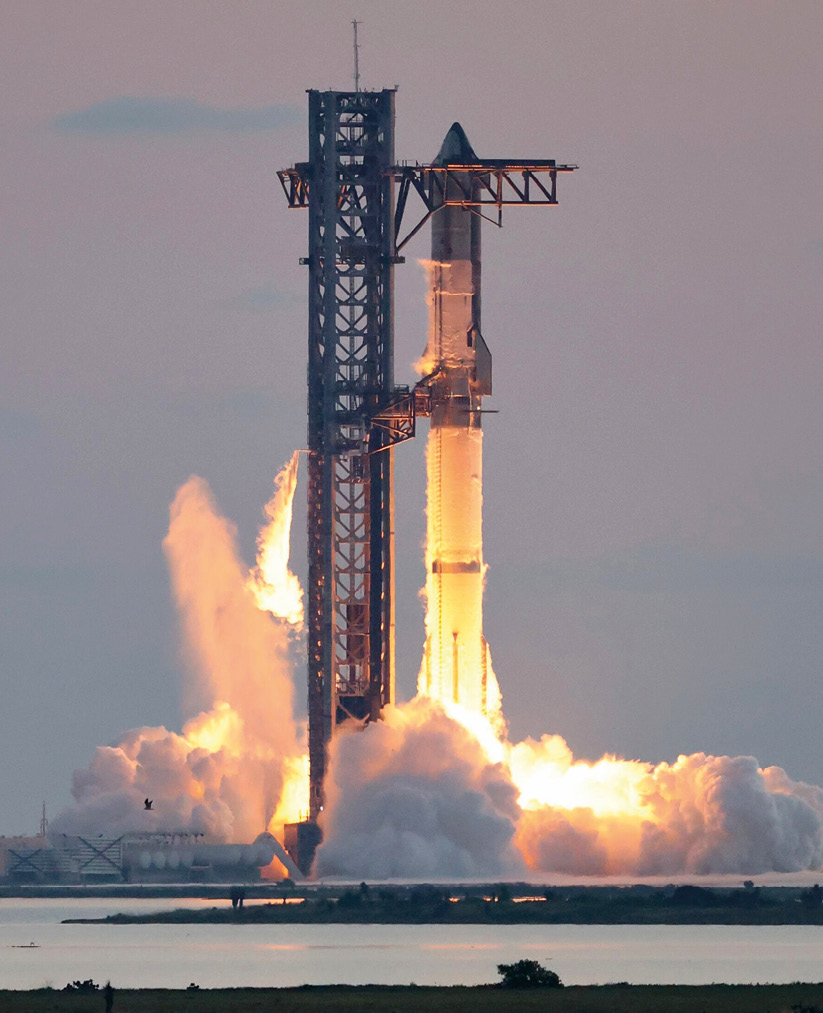
Starship is the largest rocket ever built and would be the vehicle to position solar-powered AI infrastructure in space. Ultimately, solar-powered AI infrastructure on the moon and planets like Mars could follow, especially as smart AI-powered robots become commonplace to build and maintain such space-based assets. The first step in this roadmap will be solar-powered AI satellites. According to Musk, “one of the things we’ll be doing with SpaceX within a few years is launching solar-powered AI satellites. Space is really the source of immense power and then you don’t need to take up any room on earth, there’s so much room in space, and you could scale to ultimately, I think, hundreds of terawatts a year.”
As the Wall Street Journal reported on Feb. 2, the day SpaceX announced the acquisition of xAI, the combination creates a $1.25 trillion company even before the company goes public in what will most likely be the biggest IPO ever, topping Saudi Aramco’s IPO in 2019 in terms of company valuation. Much of the money raised with this IPO will go into this solar-powered space-based AI vision, since sending swarms of AI satellites into space will cost billions of dollars, not to mention the R&D and product development that is required to pull this off.
Solar manufacturing
It will also require the massive manufacturing of solar panels. During the interview at WEF, Musk revealed that “the SpaceX and Tesla team, both separately, are working to build to 100 GW a year of solar power in the US, of manufactured solar power. That’ll probably take us three years or something. These are pretty big numbers and I’d encourage others to do the same.” Tesla’s record in PV manufacturing is less than stellar with plans to produce 1 GW of panels, first with Silevo technology and then with Panasonic, not materializing in a Buffalo, New York, factory acquired by Tesla in 2016 as part of its acquisition of SolarCity. However, in an exclusive interview with pv magazine USA in late January, the Tesla Energy team revealed details of the new Tesla Solar Panel and plans to get the Buffalo Gigafactory ramped-up to 300 MW per year in an initial phase.
But that is back on earth. In space, different panels will be needed and we can only speculate what kind of cell and panel technology SpaceX has up its sleeve. Scale will certainly play a pivotal role in space-based PV and AI, just as it has in PV and battery storage on Earth. As production scales, economies-of-scale kick in and the cost of the technology steadily declines. In the SpaceX Feb. 2 statement, the scale of the undertaking is sketched out:
“The basic math is that launching a million tons per year of satellites generating 100 kW of compute power per ton would add 100 gigawatts of AI capacity annually, with no ongoing operational or maintenance needs. Ultimately, there is a path to launching 1 TW/year from Earth.”
Both the scale and ramp-up required are massive. As the same statement mentions, “even in 2025, the most prolific year in history in terms of the number of orbital launches, only about 3,000 tons of payload was launched into orbit, primarily consisting of Starlink satellites carried by our Falcon rocket.”
Another venture focused on solar-powered space-based AI is Starcloud Inc., based in Redmond, Washington. As their September 2024 white paper describes, “orbital data centers can be scaled almost indefinitely without the physical or permitting constraints faced on Earth, using modularity to deploy them rapidly.” It goes on to describe a 5 GW AI data center with a solar array measuring 4 km by 4 km, far smaller than a 5 GW terrestrial AI data center would need, given the much higher capacity factor and peak generation in space compared to Earth. This data center would span hundreds of individual satellites, all on a dawn-dusk sun-synchronous orbit to optimize PV generation.
In its 2024 white paper, Starcloud advocates the use of thin film cells, since “these cells use silicon wafers <25 µm thickness and achieve power densities >1,000 W/kg, allowing for highly mass and volume efficient arrays.” Thin-film panels can also offer flexibility, a key feature to achieve a compact configuration during launch.
Obviously, plenty of innovation has to happen in the field of solar-powered space-based AI to achieve a competitive position versus Earth-based AI data centers. This includes innovation at the photovoltaic cell and module level, the PV array configuration, thermal management, a big topic both on Earth and in space, the reusability of rockets, just to name some of the bigger challenges. Latency is another one, since some AI users, such as hedge funds, will require very fast responses from the data center in space.
The enormous capex involved probably triggered the merging of SpaceX and xAI in February. With a valuation of $1.25 trillion for the combined entity, a SpaceX IPO later this year will give the company a rather unique war chest to pursue its spatial ambitions. As in terrestrial PV, once the project is built and comes online, the opex is much less of an issue. In fact, in its white paper, Starcloud estimates the energy required for a 40 MW AI data center cluster to be $140 million over ten years for a Earth-based cluster paying $0.04/kWh for its electricity. In space there is simply the $2 million capex for the PV array with no opex at all. Ditto for water usage, a major cost of terrestrial AI data centers. Here the white paper estimates 1.7 million tons over ten years with each kWh consumed requiring 0.5 liters of water. In space there is only the capex of deploying a radiator to dissipate waste heat.
On the other hand, the Starcloud white paper allots $5 million for the “single launch of compute module, solar and radiators”, a figure that would probably come down a lot were full rocket reusability to be achieved in 2026 or 2027. At the end of the day, enormous capex will be required and on that front SpaceX clearly has an edge over the competition. Its vertical integration and deep pockets make the company the frontrunner to realize competitive solar-powered space-based AI in the not-too-distant future.
This content is protected by copyright and may not be reused. If you want to cooperate with us and would like to reuse some of our content, please contact: editors@pv-magazine.com.


Open the Pod Bay doors HAL.
Sorry Dave, the mission is more important than you.
This conversation is going nowhere, goodbye Dave.
Goodbye Elon.