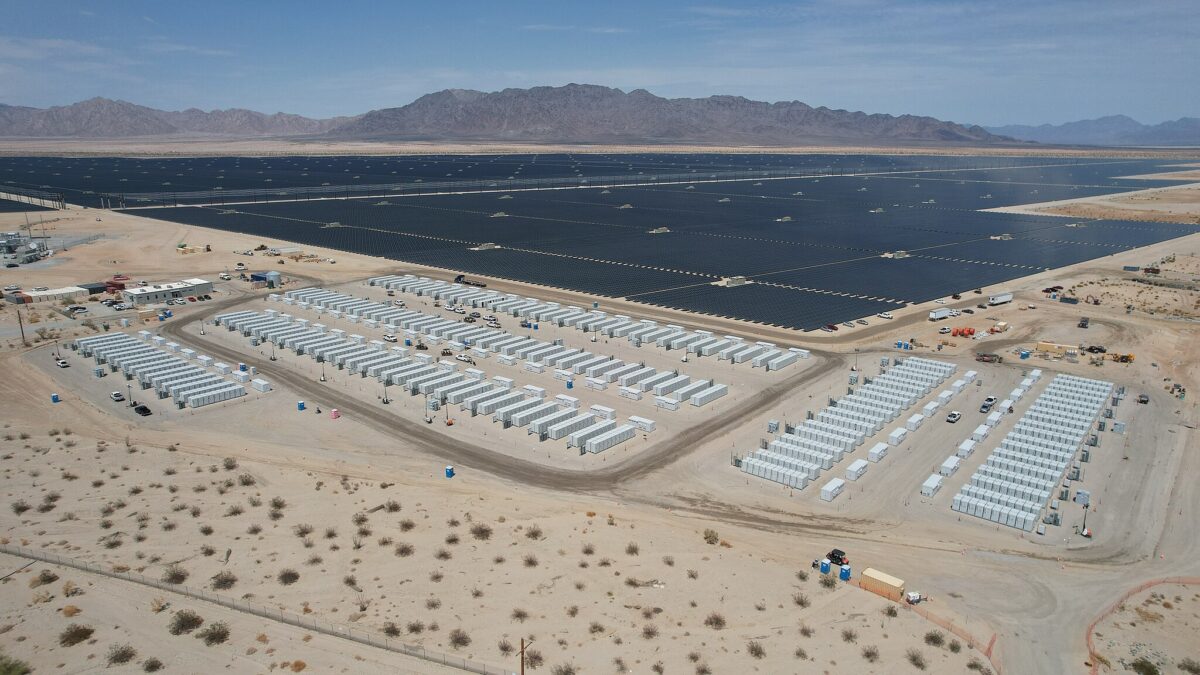





Developing and procuring utility-scale and distributed generation (DG) battery energy storage projects is getting quicker, easier and more high-tech. U.S.-based storage and solar supply chain platform Anza Renewables launched what it calls the first automated, market-wide modeling and configuration engine that is tailor-made for the energy storage market and covers data from 95% of U.S. battery storage suppliers.
The new tools, which are part of the company’s Energy Storage Pro (ES Pro) platform, are meant to automate spreadsheet-heavy, manual development workflows and incorporate a variety of technical, commercial and political variables including duration scenarios, tariff severity outcomes, delivery timing shifts and pricing assumptions.
Teams can also tweak the program’s configurations by adjusting equipment counts, inserting supplier-specific degradation curves and modeling AC/DC augmentation or overbuild strategies without needing to rebuild a model entirely from scratch. According to Kyle Cerniglia, Anza’s director of energy storage engineering, the software update reflects growing demand from developers for more control over project assumptions amid policy and pricing uncertainty.
“We are deliberately evolving ES Pro to give users more control over their designs and analysis,” he explained, adding that Anza wanted to let users work with their own prices. A primary motivation is enabling users to use their own pricing. Tariff policy and price volatility have strong, material influences on the renewables industry, he told pv magazine USA, so “project developers and owners need to quickly model risks and account for changes in their project economics.”
“This tool set enables them to supplement Anza’s data with their own to do just that,” he added. The tools draw on what he described as “dynamic infrastructure for techno-commercial analysis,” which lets users compare and evaluate a project’s economics against the real-time policy landscape. This includes modeling different tariff risk scenarios and foreign entity of concern (FEOC) regulations, he explained, both of which can help provide insights into whether a project will remain viable despite cost fluctuations.
By integrating FEOC risk ratings and ownership data directly into project scenarios, Anza aims to let developers assess eligibility implications alongside cost and performance assumptions.
In addition to the new scenario modeling tools, which are included in the ES Pro subscription, the platform also includes centralized quote benchmarking. Procurement teams can input supplier quotes and benchmark them against standardized market data to compare the CapEx, OpEx and tariff exposures.
As tariff regimes and domestic content rules continue to evolve, Cerniglia noted that Anza will continue updating its dataset to reflect official policy changes, while further strengthening its capacity maintenance planning and optimization tools.
This content is protected by copyright and may not be reused. If you want to cooperate with us and would like to reuse some of our content, please contact: editors@pv-magazine.com.



By submitting this form you agree to pv magazine using your data for the purposes of publishing your comment.
Your personal data will only be disclosed or otherwise transmitted to third parties for the purposes of spam filtering or if this is necessary for technical maintenance of the website. Any other transfer to third parties will not take place unless this is justified on the basis of applicable data protection regulations or if pv magazine is legally obliged to do so.
You may revoke this consent at any time with effect for the future, in which case your personal data will be deleted immediately. Otherwise, your data will be deleted if pv magazine has processed your request or the purpose of data storage is fulfilled.
Further information on data privacy can be found in our Data Protection Policy.