




PowerBank Corporation released its latest financial results today, showing a rise in revenue and improved gross margins. The company earned $22.3 million in revenue for the six-month period ending December 31, 2025. This is an increase from $19.2 million during the same period last year.
Gross profit reached $8.1 million, representing a 36% margin. This is up from the 30% margin recorded in the previous year. The company narrowed its six-month net loss to $6.7 million, compared to a $28.2 million loss in the same period of the prior fiscal year. Cash flow from operating activities turned positive, reaching $5.0 million.
“Fiscal year to date revenue and gross profit are up as we continue to improve financial performance,” said Dr. Richard Lu, president and CEO of PowerBank.
In a separate move, PowerBank secured new financing to support its project pipeline. The company entered into a loan agreement with NY Green Bank for an $8 million revolving credit facility. It also closed $920,000 in mini-perm financing following the commissioning of the Geddes community solar and storage asset in New York.
The capital will fund development activities including grid interconnection deposits and equipment procurement. PowerBank recently secured safe harbor status for 15 distributed solar and storage projects in New York. These projects have a total construction value of $168 million.
Solar-powered Orbital Cloud
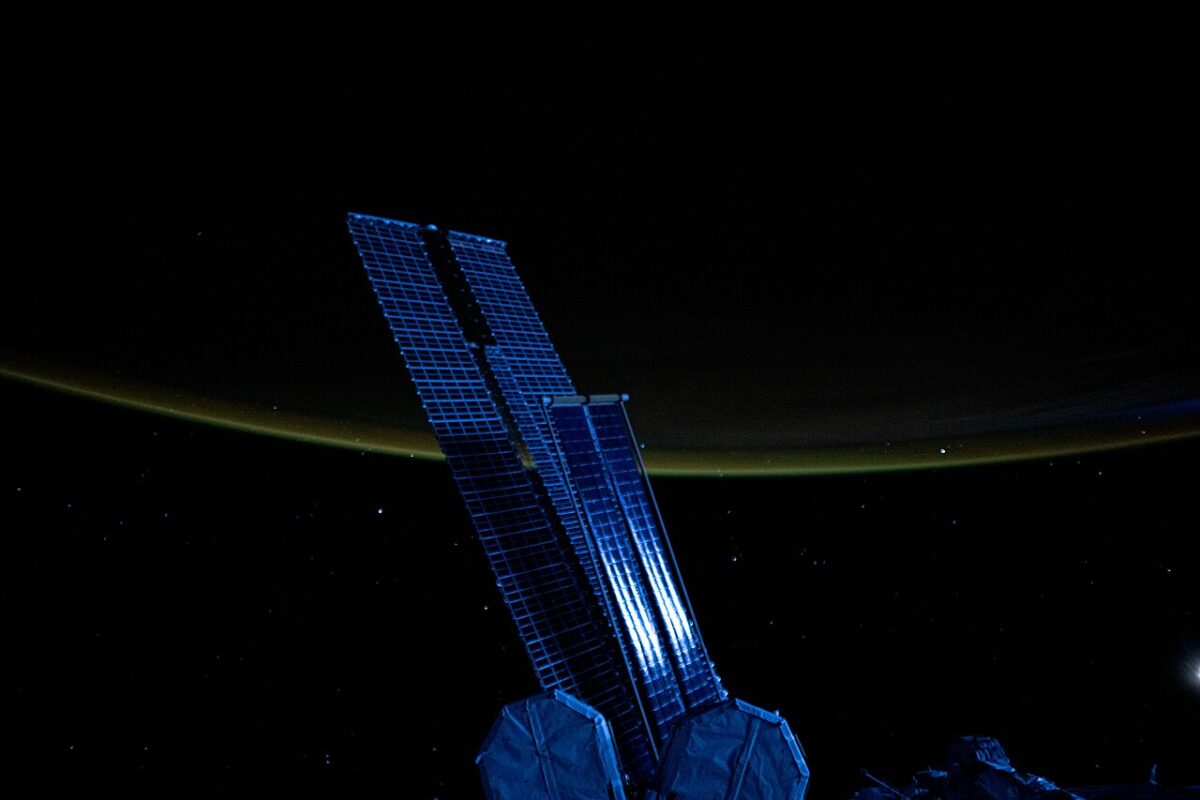
The company’s investment in space-based infrastructure centers on the “Orbital Cloud,” a project developed in collaboration with Orbit AI. This initiative aims to solve the energy and cooling bottlenecks facing AI data centers on Earth by moving them into low-Earth orbit (LEO). By operating in space, these data centers bypass terrestrial grid constraints and land-use regulations, utilizing the vacuum of space for passive radiative cooling.
A primary technical advantage of this system is the use of space-grade solar arrays to provide nearly continuous power. In specific sun-synchronous orbits, satellites can achieve a solar capacity factor of over 95%, as they are unhindered by weather, clouds, or the day-night cycle. This enables the onboard hardware to run intensive AI inference tasks around the clock with higher energy efficiency than ground-based facilities.
The project reached a milestone in December 2025 with the launch of the Genesis-1 satellite. This inaugural spacecraft validated the “execution layer” of the mission, proving that solar-powered hardware can successfully conduct AI processing and blockchain transactions in orbit.
Looking ahead, the roadmap for the Orbital Cloud includes the launch of five to eight additional satellites throughout 2026. PowerBank’s role focuses on the development of solar generation and thermal control systems designed to maintain operational integrity in the extreme temperature fluctuations of orbit.
The companies aim for full constellation deployment and commercial service availability by 2028, targeting a global market for orbital infrastructure projected to exceed $700 billion over the next decade.
This content is protected by copyright and may not be reused. If you want to cooperate with us and would like to reuse some of our content, please contact: editors@pv-magazine.com.





By submitting this form you agree to pv magazine using your data for the purposes of publishing your comment.
Your personal data will only be disclosed or otherwise transmitted to third parties for the purposes of spam filtering or if this is necessary for technical maintenance of the website. Any other transfer to third parties will not take place unless this is justified on the basis of applicable data protection regulations or if pv magazine is legally obliged to do so.
You may revoke this consent at any time with effect for the future, in which case your personal data will be deleted immediately. Otherwise, your data will be deleted if pv magazine has processed your request or the purpose of data storage is fulfilled.
Further information on data privacy can be found in our Data Protection Policy.