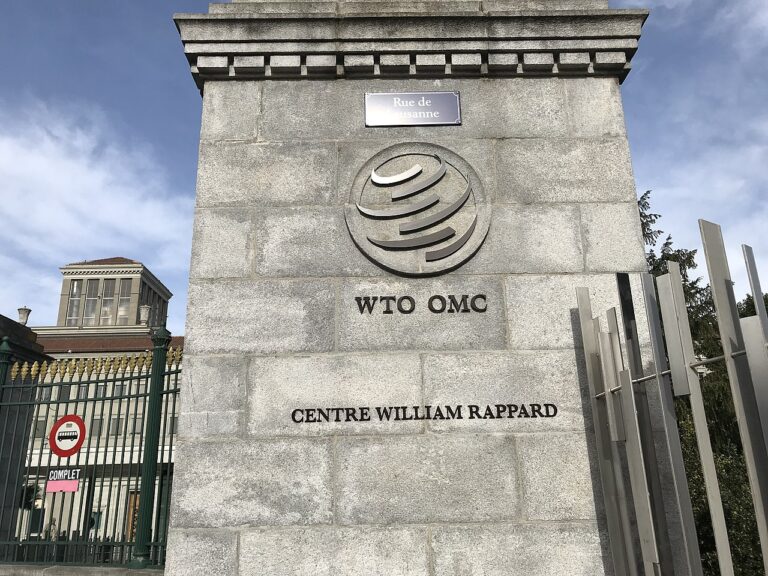





The World Trade Organization (WTO) has ruled that U.S. investment tax credits (ITCs) and production tax credits (PTCs) for domestic clean energy manufacturing under the Inflation Reduction Act (IRA) violate multiple articles of the General Agreement on Tariffs and Trade 1994 (GATT 1994), a WTO framework designed to promote fair trade by reducing tariffs and other barriers.
The ruling found that by linking bonus subsidies to U.S.-made goods, the United States treated Chinese products less favorably than domestic ones in terms of sales, distribution, and use.
The WTO document notes that China withdrew its claims against one of the two contested measures – the Clean Vehicle Credit – after the U.S. terminated the program in July 2025 through the One Big Beautiful Bill Act (OBBBA). The ruling applies specifically to the ITC and PTC Domestic Content Bonus Credits.
China had requested the WTO to examine the legality of the ITCs and PTCs in March 2024.
The case comes amid a broader crisis at the WTO, where its main dispute settlement authority, the Appellate Body, has been paralyzed since 2019 due to U.S. blocks on judge appointments under both the Trump and Biden administrations. With the remaining judges’ terms expired and no replacements approved, the system cannot hear appeals, effectively undermining the enforcement of WTO rulings.
“Decisions by the panel can be appealed, but they are appealed into the void,” energy and environmental law expert Anatole Boute recently told pv magazine. “This paralyzes the dispute resolution process because without an appeal, disputes cannot be fully resolved and decisions cannot be enforced.”
Despite the WTO’s ongoing paralysis, China lodged a case in December with the international organization against India over the country’s subsidies for its photovoltaic sector. The Chinese government claims the measures violate several WTO obligations, including binding tariffs and national treatment, and constitute import substitution subsidies.
This content is protected by copyright and may not be reused. If you want to cooperate with us and would like to reuse some of our content, please contact: editors@pv-magazine.com.






By submitting this form you agree to pv magazine using your data for the purposes of publishing your comment.
Your personal data will only be disclosed or otherwise transmitted to third parties for the purposes of spam filtering or if this is necessary for technical maintenance of the website. Any other transfer to third parties will not take place unless this is justified on the basis of applicable data protection regulations or if pv magazine is legally obliged to do so.
You may revoke this consent at any time with effect for the future, in which case your personal data will be deleted immediately. Otherwise, your data will be deleted if pv magazine has processed your request or the purpose of data storage is fulfilled.
Further information on data privacy can be found in our Data Protection Policy.