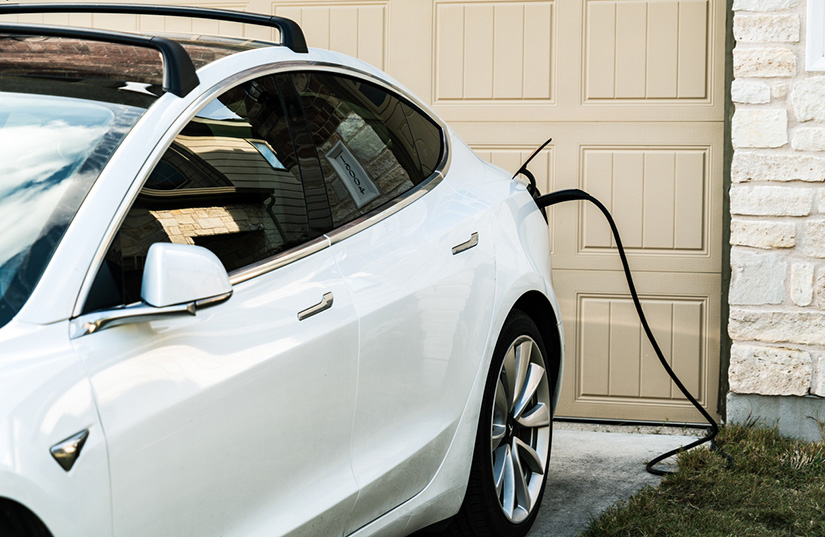





California’s transition to electric vehicles and heat pumps can put downward pressure on electric rates, despite the billions of dollars of investments needed to upgrade electric utility distribution circuits, a study has found.
The electrification impacts study projects a potential reduction in electric rates of about 3 cents/kWh, compared to what the rates would be without electrification. The Public Advocates Office of the California Public Utilities Commission prepared the study using data from Kevala.
The study states that the analysis was needed because electrification, an “important strategy” to reduce the state’s greenhouse gas emissions, will require electric utilities to plan for “major” distribution grid upgrades.
Electrification will “significantly increase” the amount of electricity consumed, the study said, and as the costs of providing electric service, “including the costs to upgrade the distribution system,” are recovered across more units of electricity sold, “electrification may cause downward pressure” on rates of about 3 cents per kWh.
Achieving that downward pressure will depend on efficient infrastructure buildout, cost constraints and other factors, yet “other drivers such as wildfire safety may still push rates higher.” Electrification would require grid upgrades costing $25 billion by 2040 in the study’s central scenario, and ranging from $17 billion to $38 billion in other scenarios.
Savings would increase with higher levels of managed charging of electric vehicles, achieved either through dynamic rate structures or enrollment programs in which EV owners allow utilities or third-party operators to manage charging while the vehicle is plugged in. California regulators have ordered the state’s major utilities to offer dynamic pricing to all customer classes, and the California Energy Commission has reported a plan to develop a flexible demand appliance standard for EV chargers.
“Mass shifting” of peak EV load “to beneficial times” could save between $5 billion and $18 billion in grid upgrade costs by 2040, the study said. Those savings “vary greatly by circuit, suggesting that targeted programs may yield the greatest benefits.”
Electrifying buildings by switching to heat pumps for space heating and hot water could change total grid costs by $3.4 billion and have a “minimal impact” on rates of less than 0.6 cents/kWh, under the building electrification scenarios considered.
The CPUC study projects grid upgrade costs by 2035 that are $12 billion lower than were projected in a similar 2023 study by Kevala, with the difference “driven primarily” by updated data on infrastructure costs.
The Public Advocates Office, which is the independent consumer advocate at the CPUC, intends for the study “to contribute to the continuous discourse on the future of the distribution grid and the most effective strategies for achieving California’s climate goals.”
The study is titled “Distribution Grid Electrification Model 2025 Study and Report.” A slide deck summarizing the study is also available.
This content is protected by copyright and may not be reused. If you want to cooperate with us and would like to reuse some of our content, please contact: editors@pv-magazine.com.

By submitting this form you agree to pv magazine using your data for the purposes of publishing your comment.
Your personal data will only be disclosed or otherwise transmitted to third parties for the purposes of spam filtering or if this is necessary for technical maintenance of the website. Any other transfer to third parties will not take place unless this is justified on the basis of applicable data protection regulations or if pv magazine is legally obliged to do so.
You may revoke this consent at any time with effect for the future, in which case your personal data will be deleted immediately. Otherwise, your data will be deleted if pv magazine has processed your request or the purpose of data storage is fulfilled.
Further information on data privacy can be found in our Data Protection Policy.