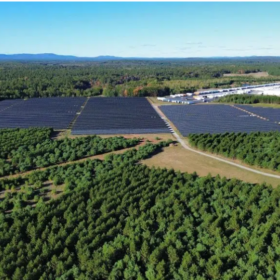
Poland Spring water bottling plant powered by solar
The 13 MW solar array at a Maine facility was constructed by PowerFlex and is owned and operated by Onyx under a long-term power purchase agreement.

Alabama senator seeks statewide ban on solar installations
An untitled bill has been submitted which, upon implementation, would immediately cease all “large-scale, ground mounted” solar construction in Alabama.
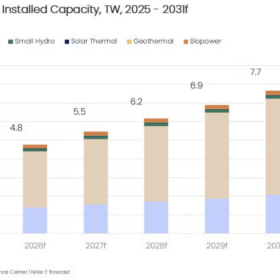
Global solar capacity to reach 6 TW by 2031, says GlobalData
GlobalData says global renewable capacity will more than double to 8.4 TW by 2031, with PV reaching nearly 6 TW, a 13% compound annual growth rate from 2025 levels of 4.1 TW.
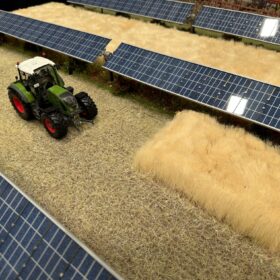
Increased spacing between solar module rows boosts agrivoltaics viability
U.S. researchers developed a framework showing that wider spacing between solar PV rows can make agrivoltaic systems economically viable for large-scale mechanized farming. Their simulations in Colorado demonstrated that optimized row spacing maintains crop production while improving combined agricultural and energy revenues.
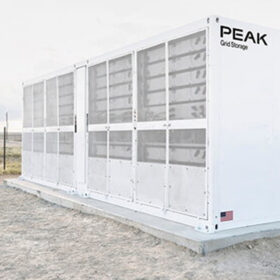
RWE, Peak Energy to deploy first sodium-ion battery in U.S. grid
Peak Energy says it will deploy the first sodium-ion battery in the Midcontinent Independent System Operator (MISO) service area with RWE Americas in eastern Wisconsin, using passively cooled grid-scale storage that cuts auxiliary power use by 90% and lowers lifetime storage costs by $70/kWh.

AI datacenters rewrite the solar PPA playbook
Power purchase agreements (PPAs) are evolving into complex risk-sharing structures as hyperscale data center operators trade fixed pricing for physical delivery and grid-bypass certainty. The US solar industry is entering 2026 as the foundational technology for a new era of power demand, even as the sector navigates a volatile federal policy landscape.
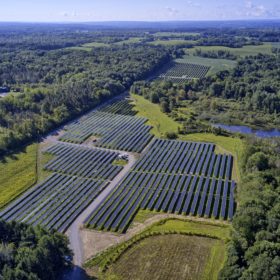
Community solar matures as grid congestion pushes a pivot to storage
Industry experts suggest the next era of distributed generation will be defined by hybrid projects, consolidated billing, and federal tax credit bonuses.

Lessons from the solar frontier
Utility-scale solar projects are larger, interconnections are slower, and engineering decisions must anticipate regulation and supply chains years in advance. At the CT Solar Platform in Snyder, Texas – a 1.6 GW AC single-site development – the first phase, CT Solar One (110 MW AC), has been a test bed for integrating civil design, BOS optimization and domestic-content strategy. Levona Renewables led the development and engineering of the project and CEO Fernando Queiroz shares some key lessons.
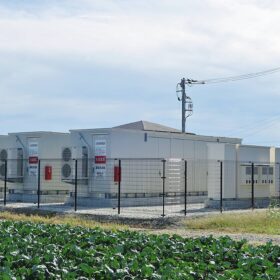
Beyond resilience: Unlocking the revenue of battery storage
The shift from backup power to dynamic revenue generation is transforming energy storage into a core pillar of modern solar project economics.

Graphene could improve durability of perovskite solar cells
Nearly 20 years after the first perovskite solar cell was developed, its efficiency and durability are drawing interest from industries worldwide. The defense sector is among the most active, as rising geopolitical tensions drive record government spending to protect critical systems from disruption and attack.